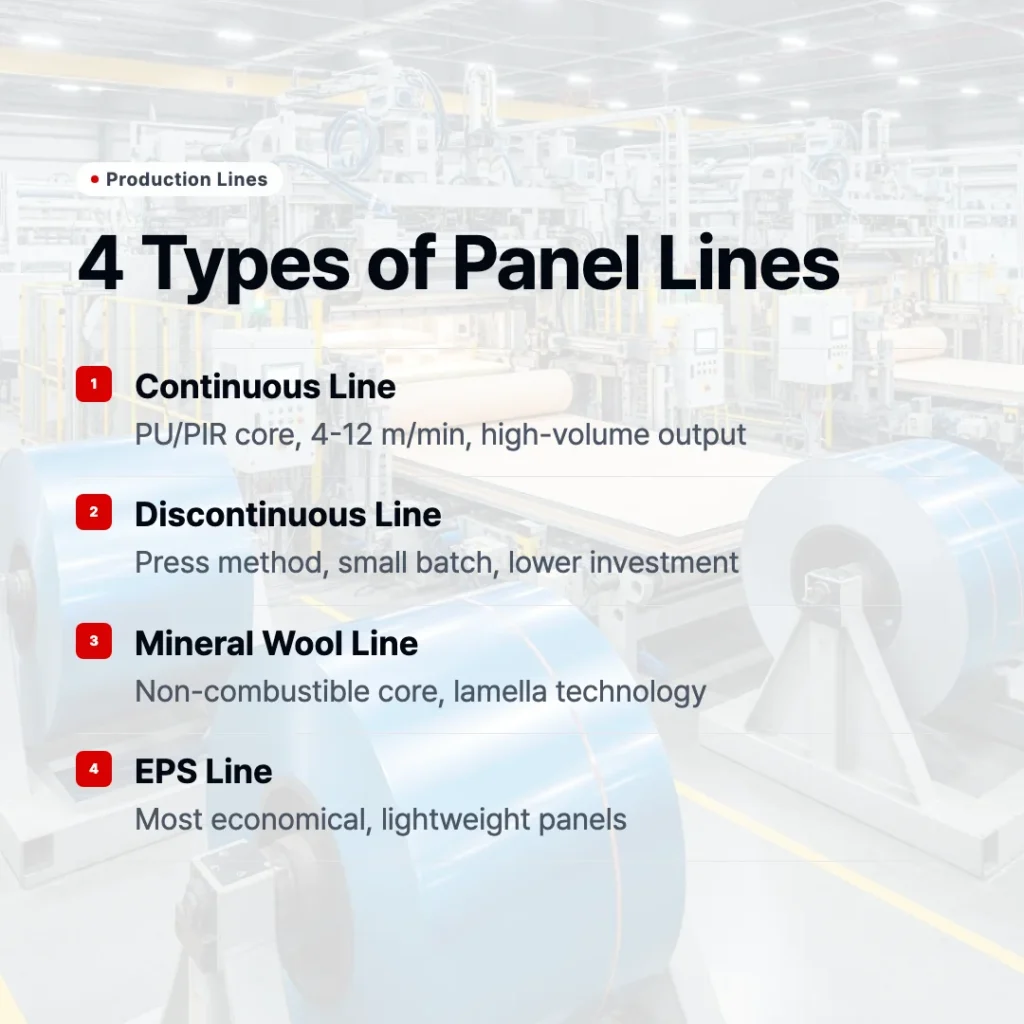
Choosing between a continuous sandwich panel line and a discontinuous, or batch, line is usually the first big decision in a panel factory project. Both produce PU and PIR panels, but they suit different markets. One is built for steady high volume, the other for flexibility and special shapes at a lower entry cost. Picking the wrong one leaves either idle capacity or an order book the line cannot serve.
In this article, we will look at how the two methods work, how they compare on output, consistency, labor, investment and flexibility, and how to decide which one fits your plan.
What Continuous and Discontinuous Production Mean
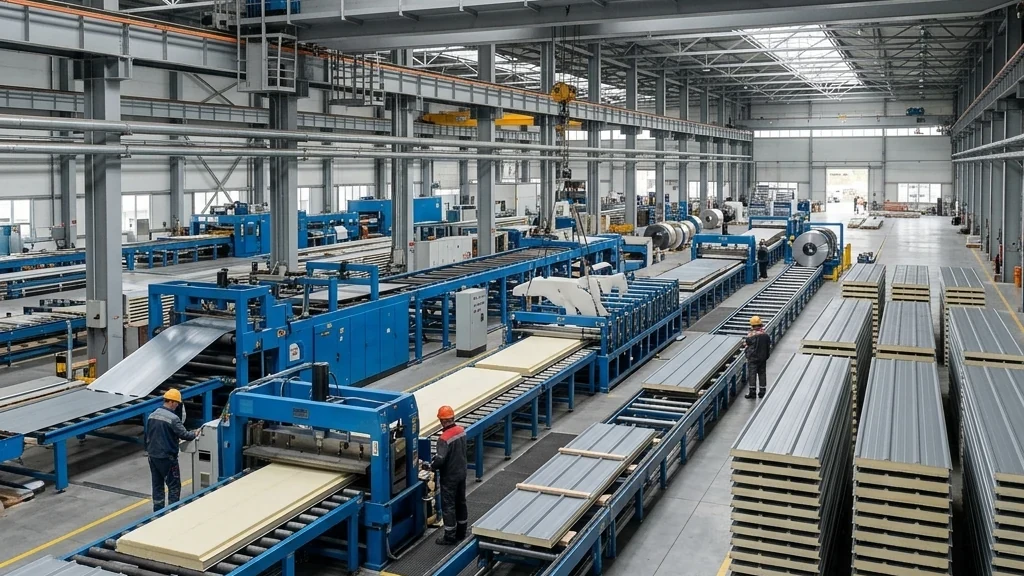
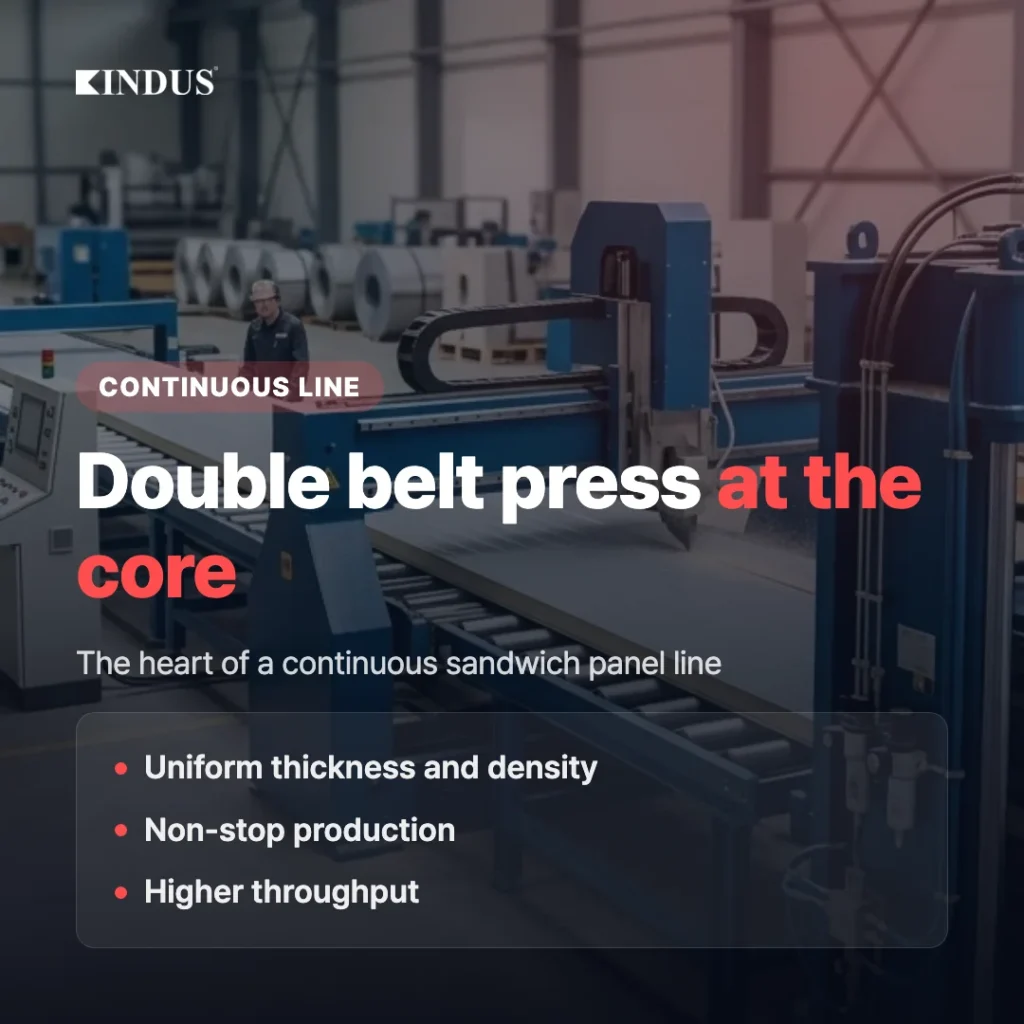
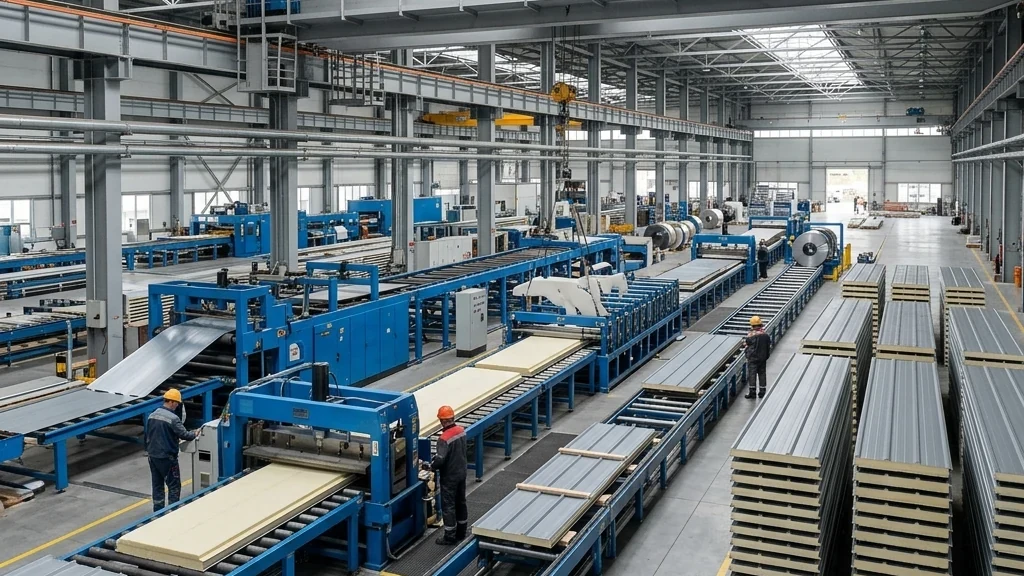
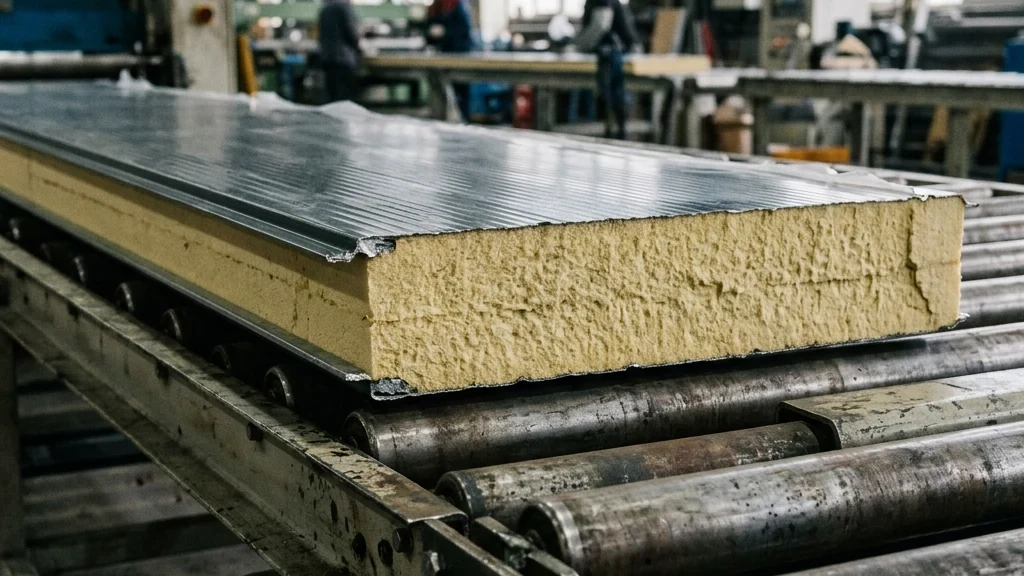
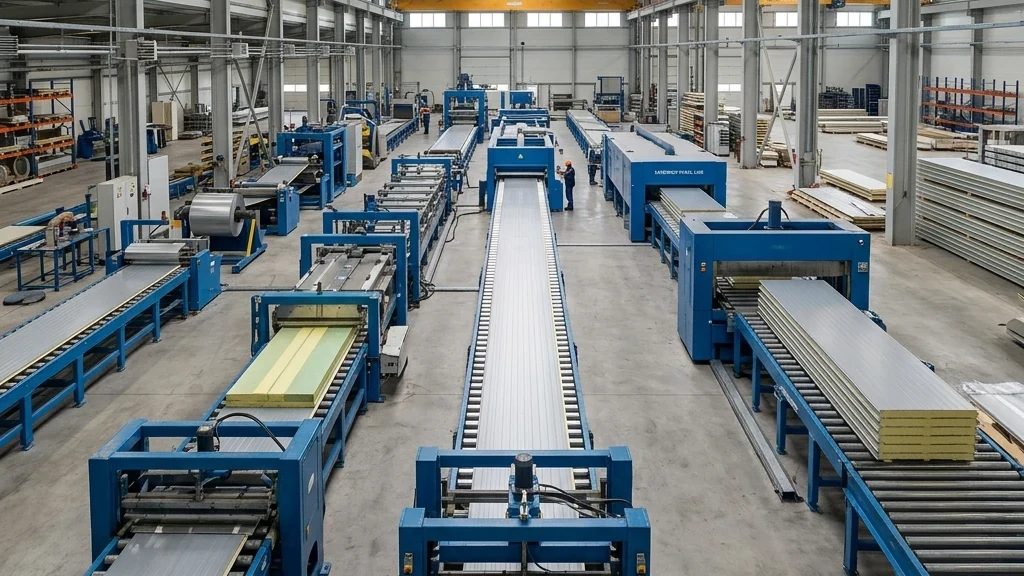
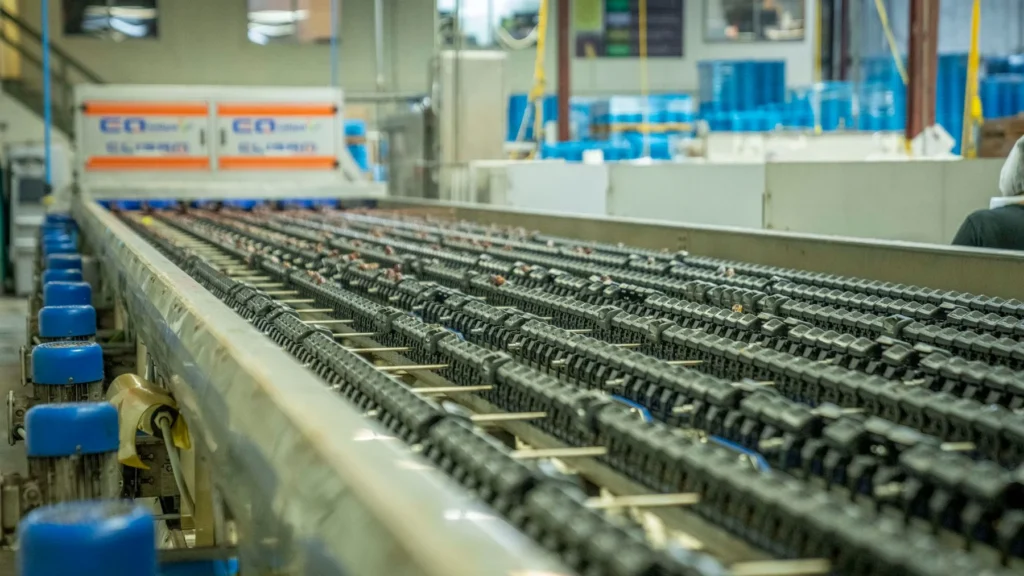
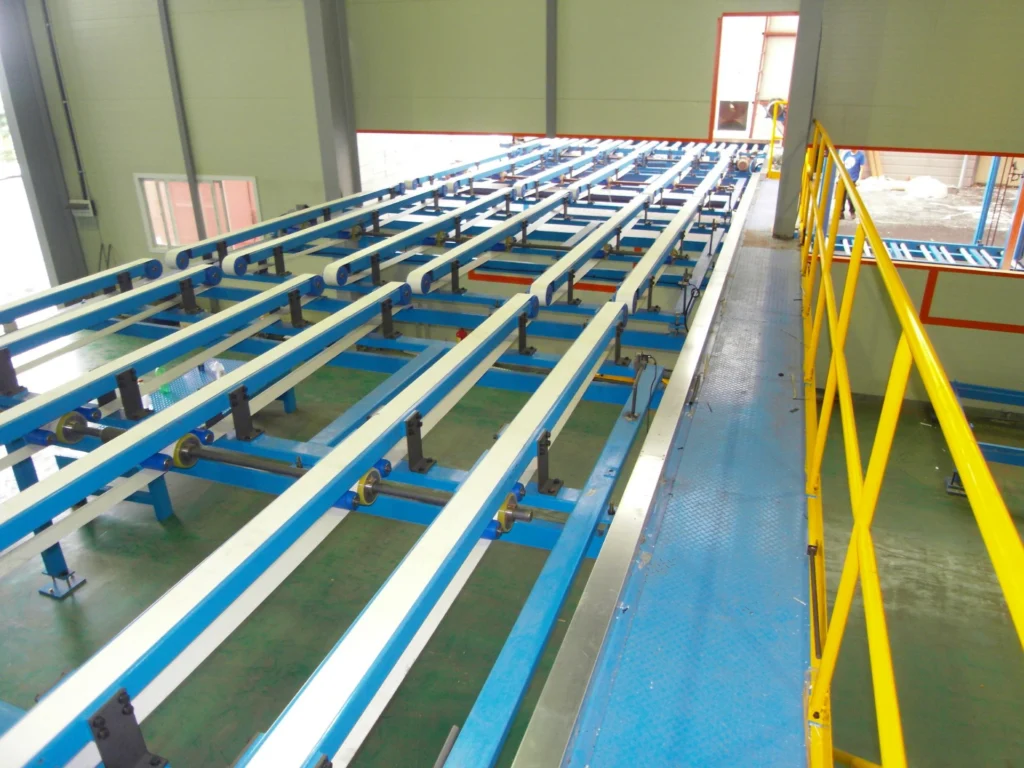
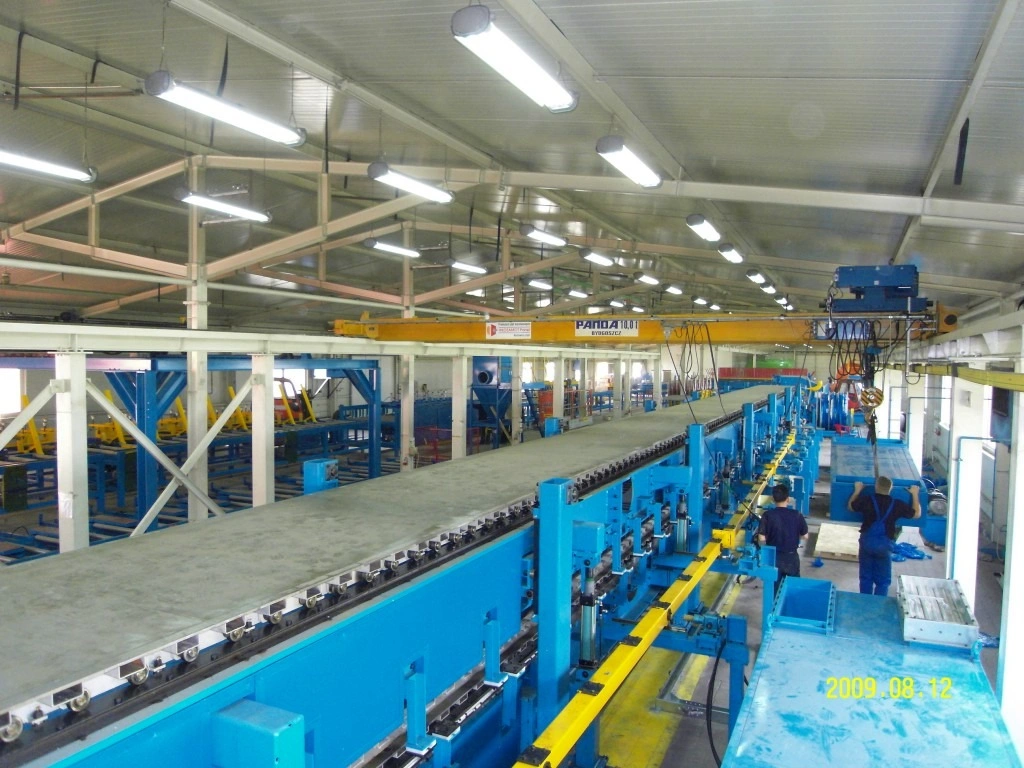
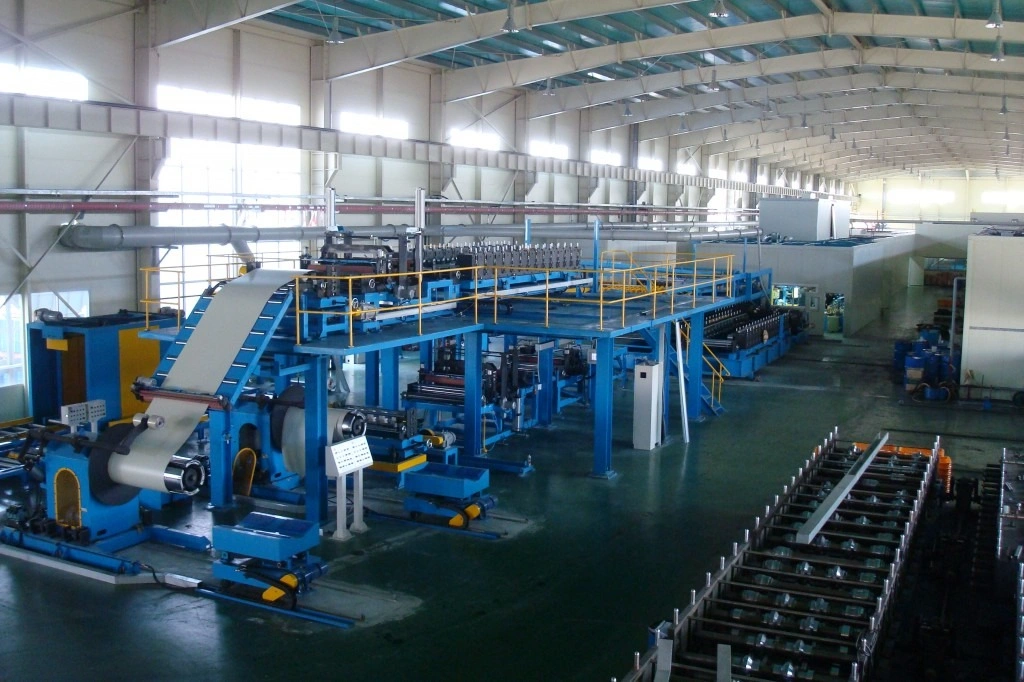
A continuous sandwich panel line is a fully automated line in which steel skins move without stopping while PU or PIR foam is laid between them and cured inside a double belt conveyor. Panels come out in an unbroken strip and are cut to length at the end.
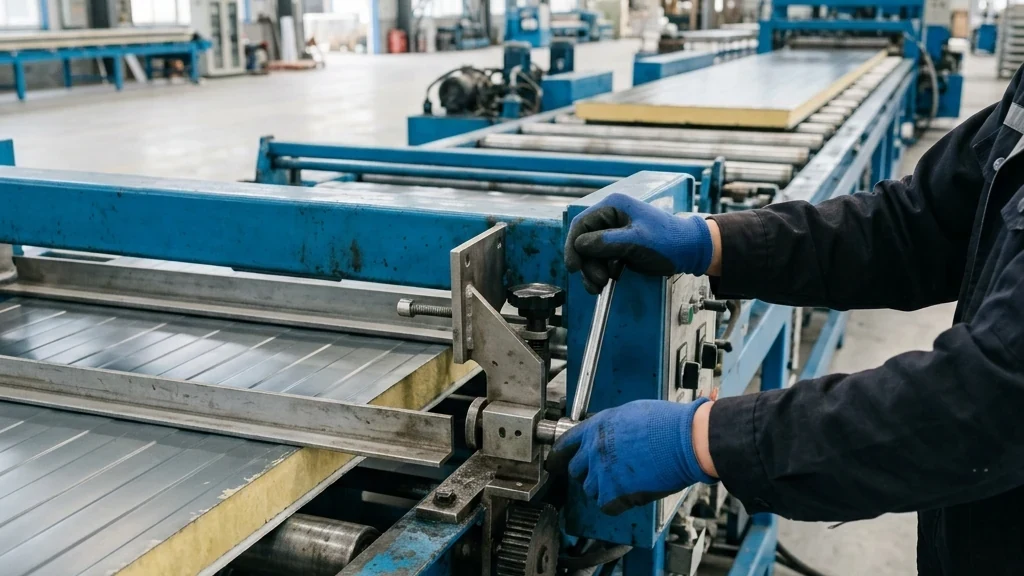
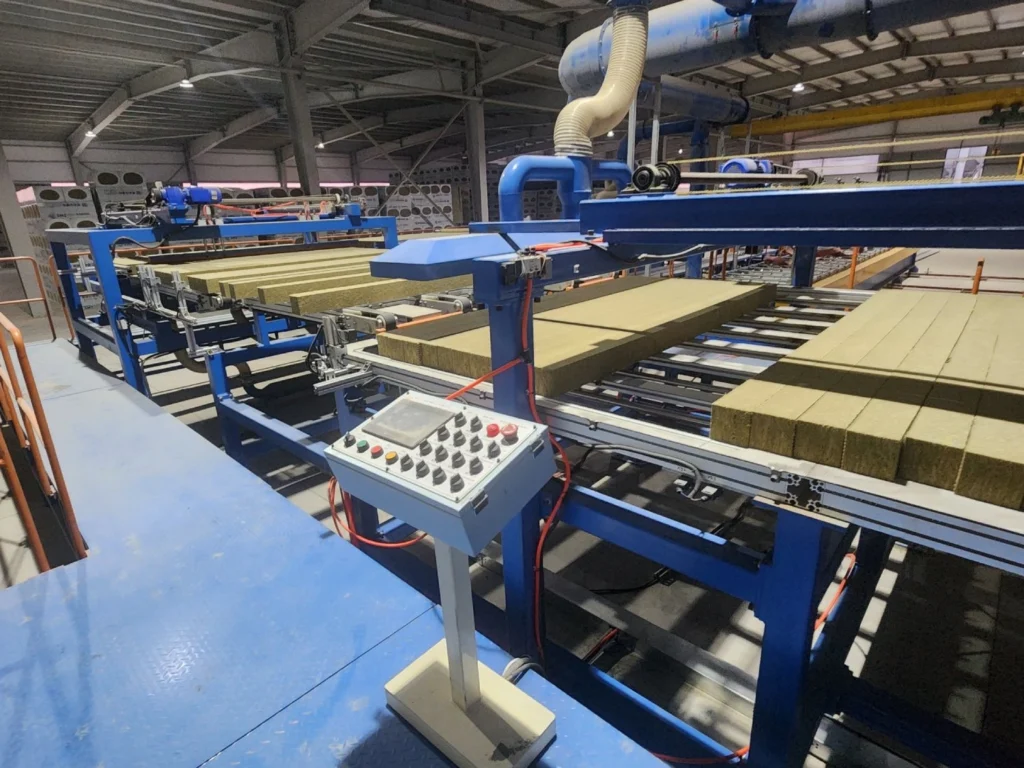
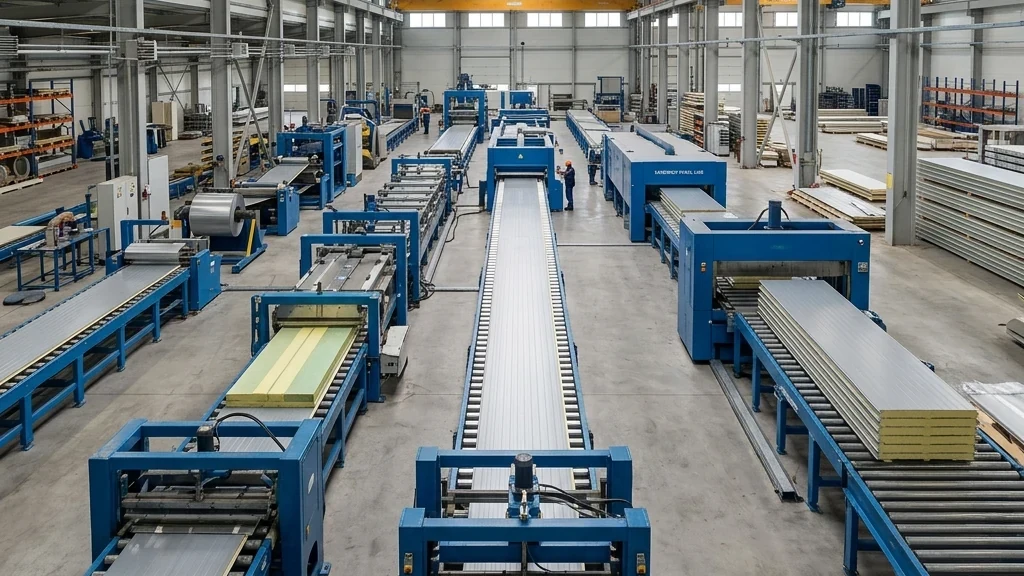
A discontinuous line produces panels one at a time. The skins are formed and cut first, then placed in a heated press where foam is injected and cured before the panel is removed and the next one goes in.
The difference between the two is that a continuous line foams and cures panels in motion, while a discontinuous line foams and cures each panel in a stationary press. Almost every other contrast in this comparison follows from that single point. For a deeper look at the continuous method on its own, see Continuous Sandwich Panel Line: Technology, Benefits & Applications.
Output Speed and Annual Volume
A continuous line is designed for volume. Kindus continuous PU/PIR lines run at an average of 4 to 12 m/min with an annual capacity of about 1,000,000 m². The double belt slat conveyor is what makes this possible, and its length determines the maximum speed.
A discontinuous line has limited production capacity compared with a continuous line, because every panel waits for its own foaming and curing cycle in the press. It is optimized for small batch production rather than for filling a large regional market.
| Criterion | Continuous line | Discontinuous line |
|---|---|---|
| Production method | Panels foamed and cured in motion | Panels foamed and cured one at a time in a press |
| Automation | Fully automatic | Manual type with machine assistance |
| Output | High, about 1,000,000 m² per year | Limited, suited to small batches |
| Panel shapes | Standard wall, roof, siding, metal and tiled roof profiles | Special and custom shapes |
| Investment | Higher, large building and utilities | Lower, cost-efficient setup |
| Best fit | Large and steady market demand | Niche products and project-based orders |
The table makes the trade visible: continuous lines buy volume with capital, and discontinuous lines buy flexibility with throughput.
Product Consistency and Panel Range
On a continuous line, foam thickness is held by calibration inside the double belt, and every panel passes through identical conditions. Kindus continuous lines work with standard core densities of 35K ±5 or 40K ±5, and the steady process keeps thickness and density uniform over long runs. This consistency is what large building projects expect when they order thousands of square meters of the same panel.
A discontinuous press gives each panel individual attention, which is why it suits exquisite and special shapes. The trade is that quality depends more on operator control, since loading, foaming and unloading are handled panel by panel.
Which method offers better consistency?
For long runs of the same product, the continuous line, because every panel goes through the same calibrated belt. For unusual shapes in small quantities, a well run discontinuous press gives more precise control of each piece.
Labor, Footprint and Investment
m/min
1,000,000 m²
400 kW
bar
A continuous PU/PIR line needs a building of approximately W20 x L120 x H7 m, about 400 kW of electric power and compressed air at 6 to 7 bar. Its automation reduces the number of operators per square meter produced, but the up-front investment in equipment, building and utilities is substantial.
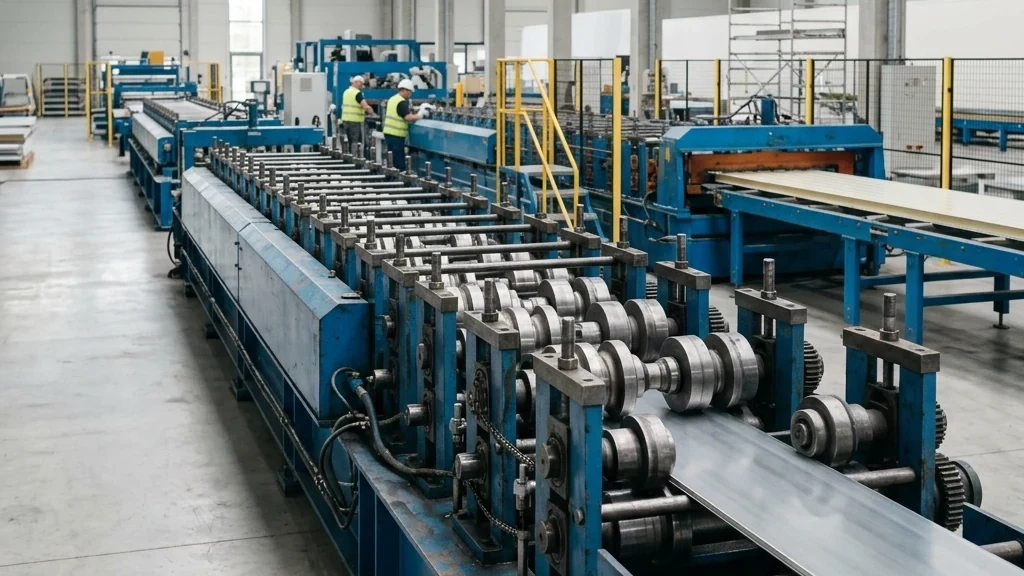
A discontinuous line is a simpler three part system: a roll forming line with uncoiler, roll former and cutter; a multi hot press section with lifter, loader, unloader and stacker; and a foaming section with low pressure and high pressure units. This simpler composition gives a cost-efficient production setup with a smaller initial investment, which is why it is often the starting point for new producers or for companies adding special products next to an existing line.
The configuration and utility needs of the continuous method are detailed in Continuous PU Sandwich Panel Line: Configuration, Specs & Throughput.
Flexibility for Different Panel Types
A continuous line produces interior wall, exterior wall, corrugated roof, siding, metal and tiled roof panels, but each profile change means a roll forming change and a short interruption of a high speed process. It is most economical when long runs of standard products fill the schedule.
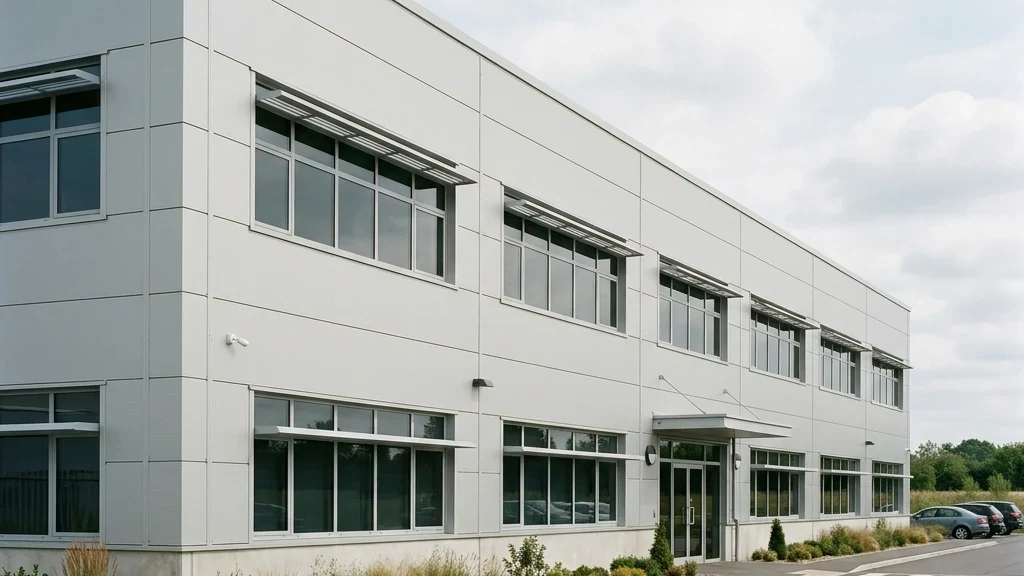
A discontinuous line handles flat panels with clean joints and various designs and colors, and it is used for office buildings, industrial and commercial buildings, warehouses and factories. Because each panel is pressed separately, special dimensions and project specific shapes can be produced without disturbing a continuous flow.
Some producers run both. The continuous line carries the volume products, while a discontinuous line takes custom orders that would otherwise interrupt it.
How to Decide
The right choice comes from your market and your product plan rather than from the equipment alone. Work through these questions before requesting quotations:
- Expected annual demand in square meters for standard wall and roof panels
- Share of orders that need special shapes or small quantities
- Available building length and power supply
- Budget for equipment, building and utilities
- Number of trained operators you can hire and keep
- Plan for growth, including a second line later
If standard demand can fill a large share of a 1,000,000 m² annual capacity, a continuous line usually gives the lowest cost per panel. If demand is smaller, fragmented or project based, a discontinuous line lets you start production with less capital and grow into volume later.
Kindus manufactures both line types and was the first company in Korea to localize the entire continuous polyurethane sandwich panel line, in 2003. Running its own four continuous production lines, Kindus advises buyers from the producer’s side of the table, including when a smaller line is the better first step.
Frequently Asked Questions
Is continuous production always better than batch production?
No. A continuous line is better when steady volume demand exists. For custom shapes, small batches or a limited budget, a discontinuous line is often the more profitable choice.
What volume justifies a continuous line?
It depends on local prices and costs, but the line is designed for annual output in the range of about 1,000,000 m². Demand well below that level should be checked carefully against the investment.
Can one factory run both methods?
Yes. A factory can use a continuous line for standard products and a discontinuous line for special shapes and short orders.
To compare the two production methods in detail, review the specifications of the Continuous PU/PIR Sandwich Panel Line and the Discontinuous PU/PIR Sandwich Panel Line.