Buyers evaluating a rockwool sandwich panel machine often receive spec sheets running to dozens of pages, dense with line speeds, densities, tolerances, and motor ratings, yet nothing tells them which of those numbers actually determine whether the line will produce sellable panels at the throughput they were promised. The difficulty is not a shortage of data. It is that specifications arrive station by station, in the vendor’s own order and terminology, and the parameters that govern real output sit scattered among figures that are merely nominal. Reading such a sheet well means knowing where each number belongs and what it constrains downstream.
In this reference, we walk station by station through the specifications that define a rockwool sandwich panel machine and what each number tells you.

Line Overview and Headline Specifications
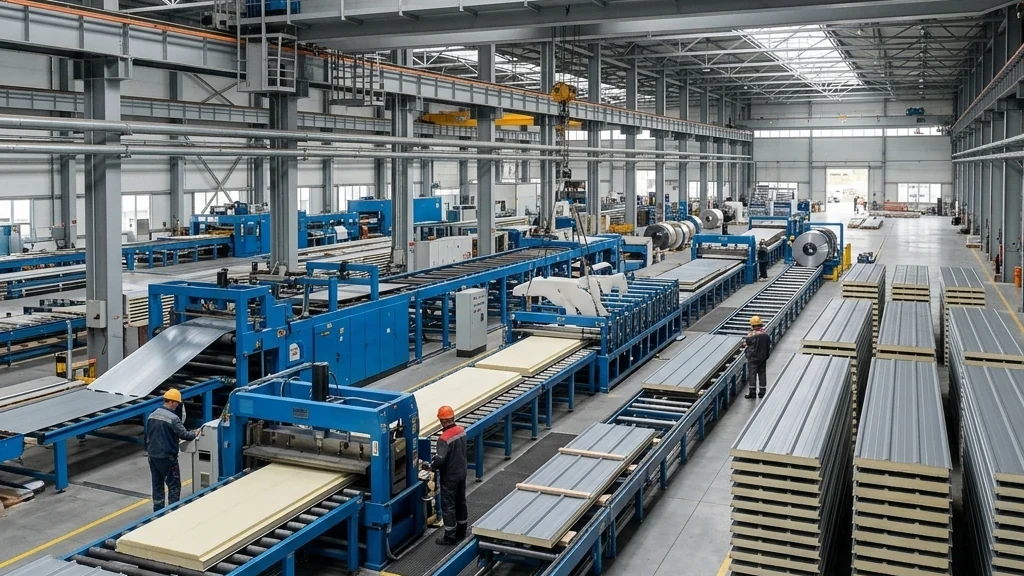
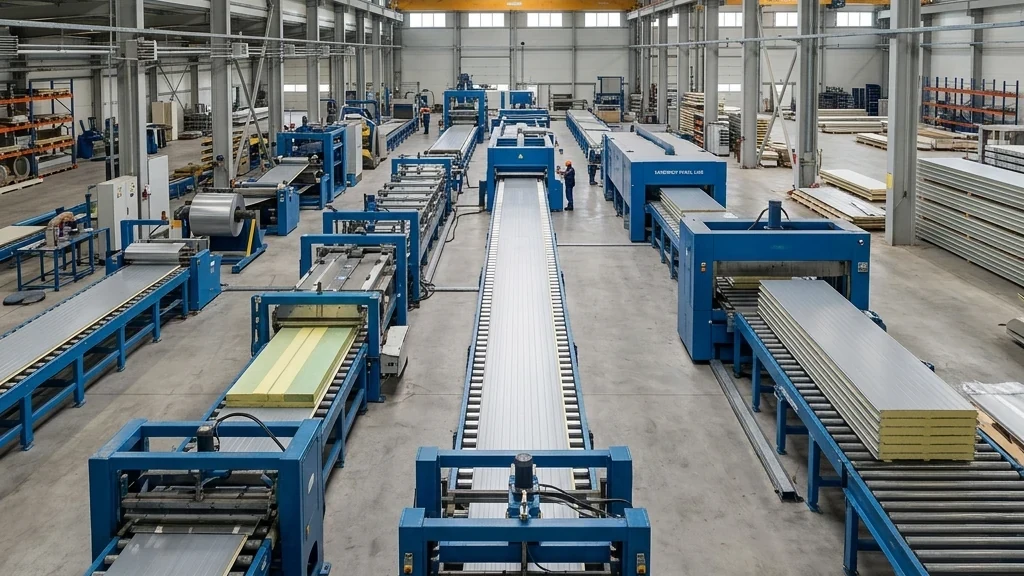
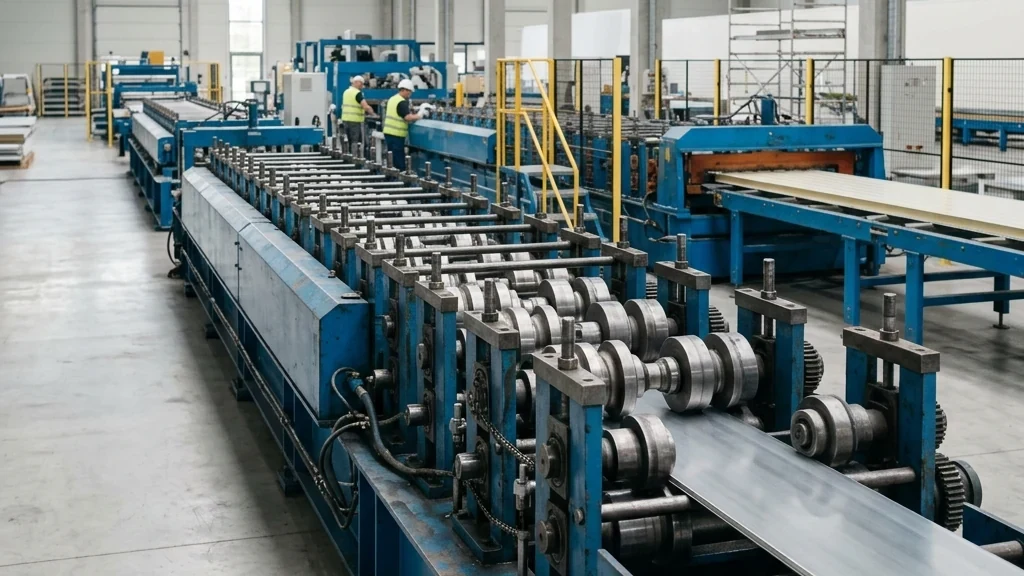
The line overview is the summary block that fixes the operating envelope of the entire machine, and it is the first place a technical buyer should look. Here you find the panel dimensional range, the density range, and the rated line speed, all of which cascade into every downstream station. For rockwool (mineral wool) panels, expect a panel thickness range of roughly 50 to 200 mm as the typical industry span, a density range of 40 to 150 kg/m³, and a line speed of 4 to 16 m/min. These three figures are interdependent rather than independent maxima. A vendor may quote 16 m/min and 200 mm thickness on the same sheet, but the line will not deliver both at once. Higher density and thicker panels run slower because more mass must be conveyed, laminated, and cured within the fixed length of the press and oven, so the headline top speed almost always corresponds to the thinnest, lowest-density product. A KINDUS line specification, like any credible sheet, ties speed to a stated density and thickness rather than presenting a single detached maximum, and reading it that way is the first check a buyer should make. For the full engineering context behind these figures, the full mineral wool line technology overview sets out how the stations combine into a continuous process.
Wool Handling and Lamellar Station Specifications
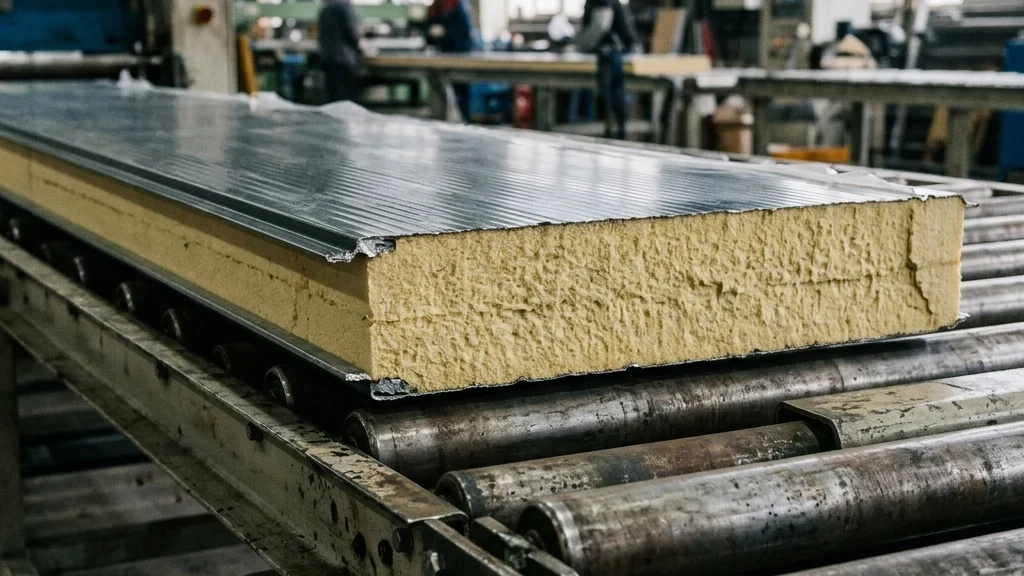
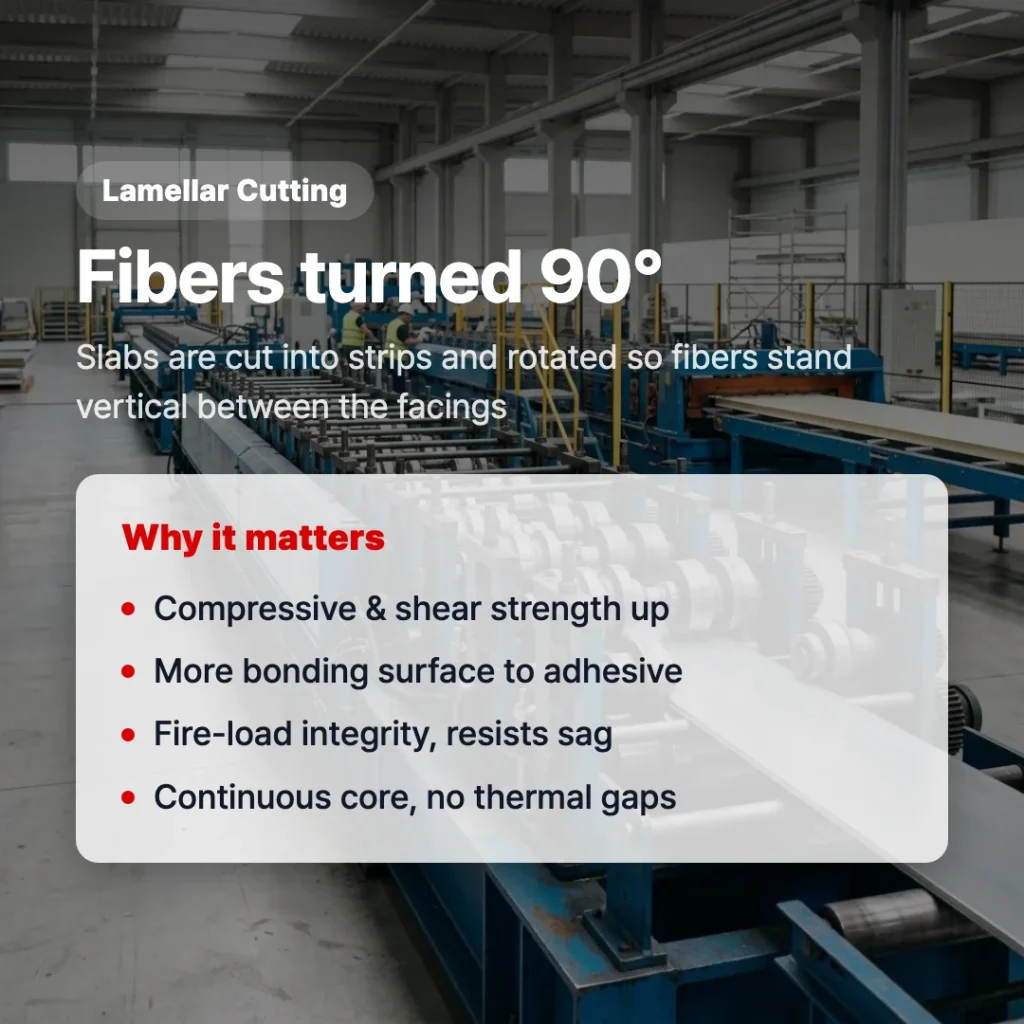
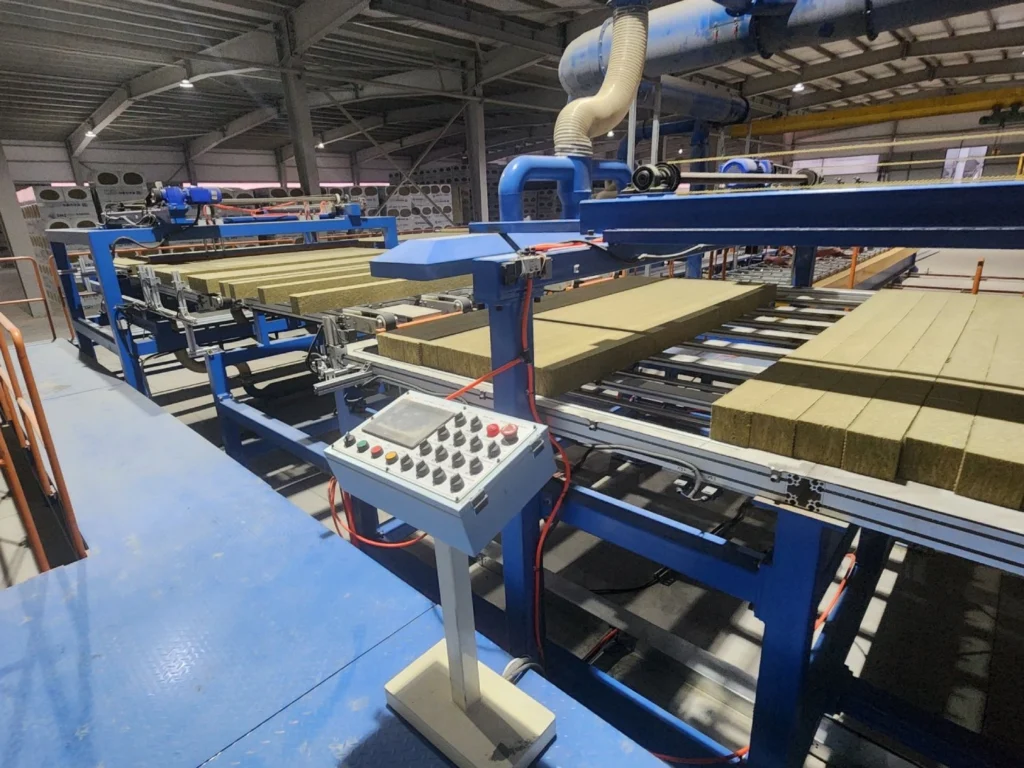
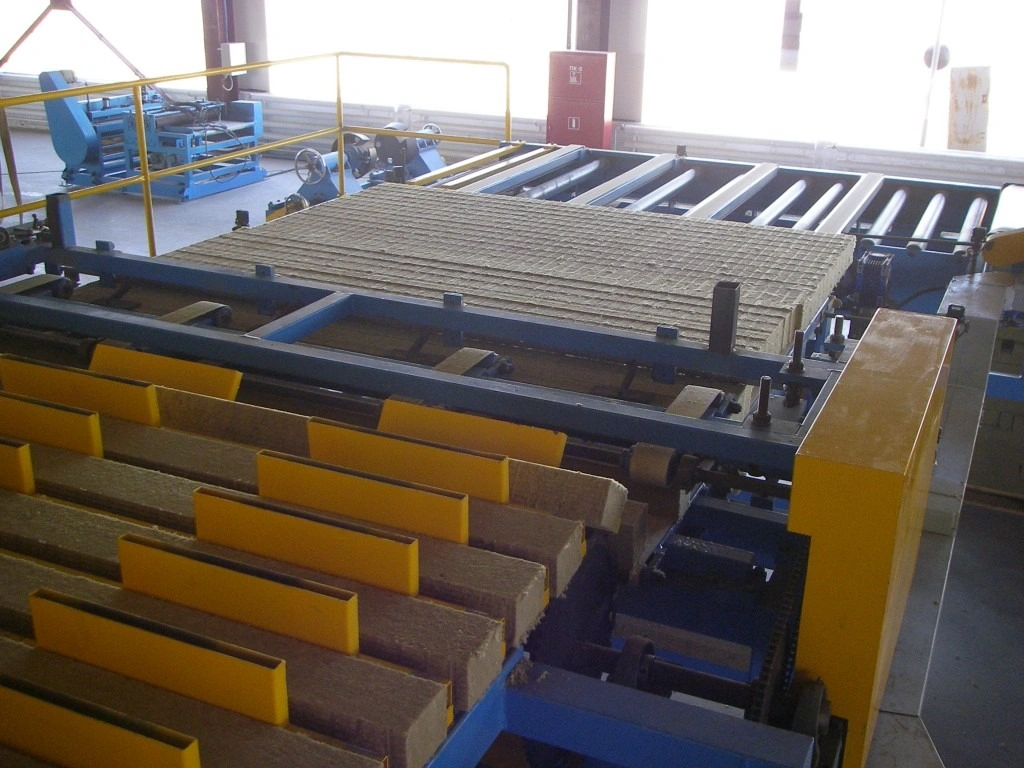
The wool handling and lamellar station is the section that prepares and orients the mineral wool core before lamination, and its specifications determine the structural quality of the finished panel. The critical distinction to read here is the core orientation the line supports. Continuous slab feeding keeps the wool fibers lying horizontally as the block is cut from the batch, whereas lamellar cutting slices the wool into strips and rotates them so the fibers stand vertically through the panel thickness. This reorientation matters because vertical fibers carry compressive load far more effectively and bond more strongly to the facings, which is why lamellar panels command a premium in load-bearing and fire-rated applications. On the spec sheet, look for the strip width the lamellar cutter produces, the rotation and re-gluing arrangement, and the throughput the station sustains at the densities you intend to run. A line built only for continuous slab will show no lamellar cutting parameters at all, so their presence or absence tells you immediately which product classes the machine can address. The mechanics of this reorientation and the parameters that govern it are covered in detail in how lamellar cutting sets fiber orientation.
Pressing and Curing Specifications
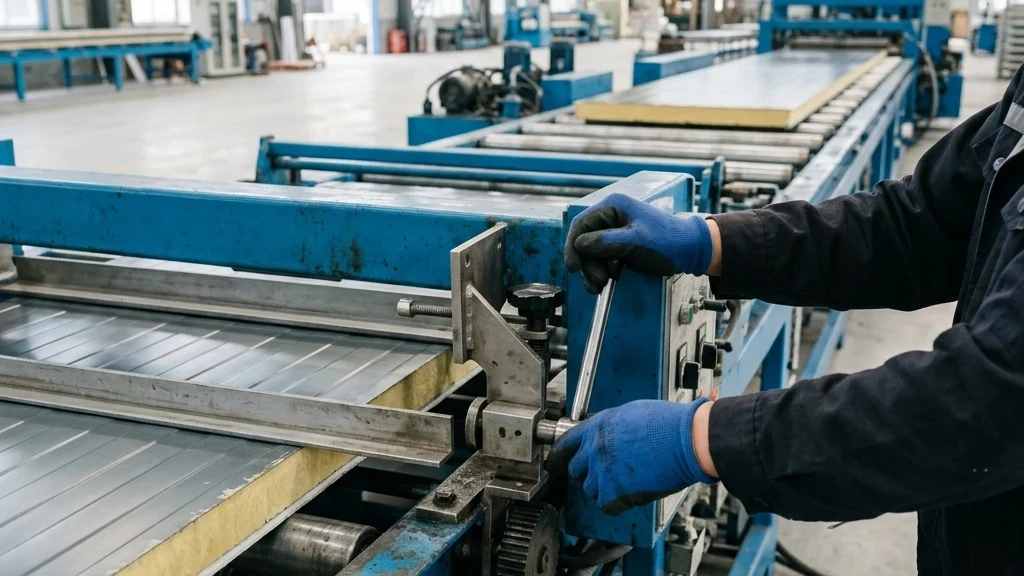
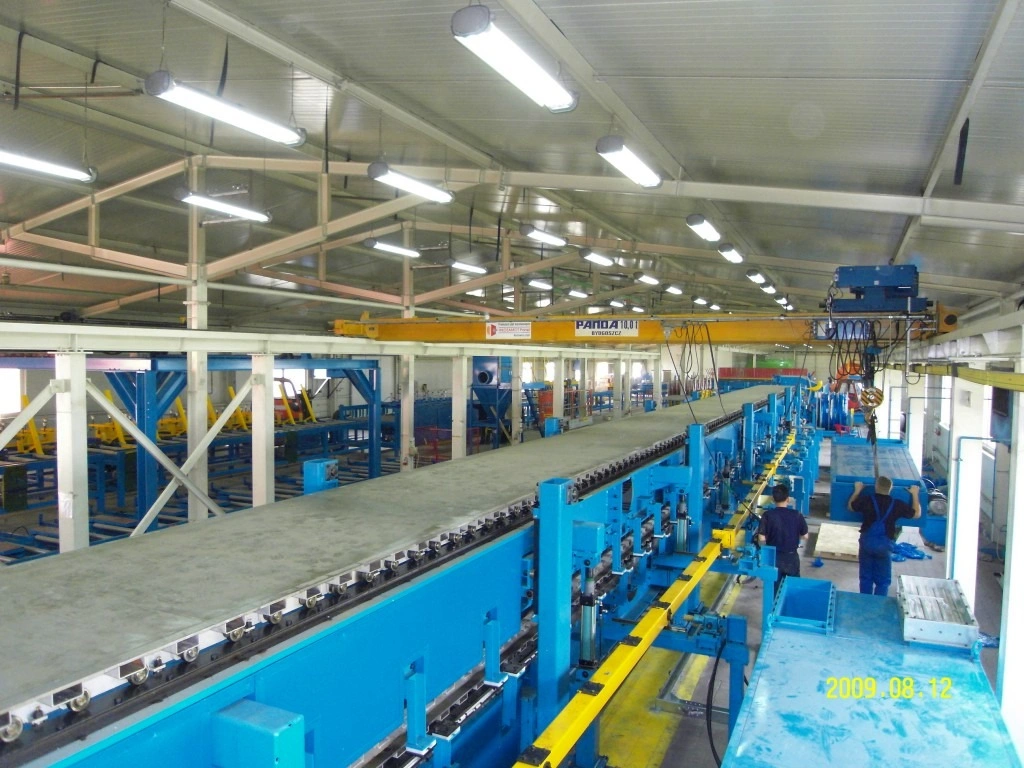
The pressing and curing station is where the adhesive between the wool core and the metal facings is compressed and heat-set, and its specifications set the upper bound on both bond quality and line speed. The parameters to verify are the effective press length, the pressure the platens or belts apply across the panel width, and the curing zone temperature profile. Press length matters more than raw pressure because the panel must remain under compression for the full time the adhesive needs to gel, and that dwell time, divided into the press length, is what actually caps the line speed for a given product. A longer press permits a faster line at the same cure quality. Vendors typically state curing temperature and applied pressure as typical operating ranges rather than fixed set points, since both are tuned to the adhesive chemistry and the density in production, and a spec sheet that presents them as single immovable numbers should be questioned. What a buyer needs to confirm is that the stated press length and cure profile are consistent with the headline speed at the thickest, densest panel in the intended product mix, not merely at the nominal maximum.
Cutting, Stacking, and Control System Specifications
The cutting, stacking, and control station is the finishing and automation section that sizes finished panels and coordinates the line, and its specifications govern accuracy, output handling, and operability. On the cutting side, the figures that matter are the length tolerance the flying saw holds and the range of panel lengths it can cut without a stop, since a saw that must halt the line to change length will erode the throughput the overview block promised. Stacking specifications cover the stack height and weight the handling system manages, which should be matched to the density and thickness at the heavy end of the range, where a stack of 150 kg/m³ panels is far heavier than the same stack at 40 kg/m³. For the control system, read the automation architecture and the degree of recipe-based changeover rather than fixating on a particular controller brand; a well-specified line stores product recipes so that speed, cut length, and press settings shift together when the operator selects a new panel type. Before comparing this station across vendors, it helps to understand how mineral wool automation differs from foam lines, which how mineral wool compares to PU production lays out.
How to Read a Rockwool Machine Spec Sheet
Reading a rockwool machine spec sheet is the discipline of tracing each headline number back to the station that produces it and forward to the constraint it imposes. The single most common error is treating the maxima as simultaneous, when in practice speed, density, and thickness trade against one another across the whole line. A disciplined review reads every figure as a conditional statement tied to a specific product, and it cross-checks the stations against one another so that no downstream section quietly limits what the overview claims.
The parameters worth verifying on any sheet before you commit are these:
- Rated line speed stated together with the density and thickness it applies to, not as a standalone maximum
- Panel density and thickness ranges the line actually sustains, checked against your intended product mix
- Whether lamellar cutting is included, if vertical-fiber panels are in your plan
- Effective press length and cure profile, confirmed as consistent with the speed at your heaviest panel
- Cutting tolerance and stacking capacity, matched to the density at the heavy end of the range
Vendor credibility is the last thing to weigh, and it is read less from the numbers than from the track record behind them. Founded in 1995, KINDUS has delivered more than 170 projects across 40 countries and holds CE certification, and a spec sheet backed by that kind of installed base is one whose conditional figures have been proven in production rather than asserted on paper.
Frequently Asked Questions
What is the most important single specification on a rockwool sandwich panel machine sheet?
There is no single number, because the headline figures are interdependent. The rated line speed is meaningful only when it is stated alongside the density and thickness it applies to. A line quoted at 16 m/min will run slower at higher density or greater thickness, so the most important thing to read is how speed, density, and thickness are tied together rather than any one figure in isolation.
Why does panel density affect the achievable line speed?
Higher density means more mineral wool mass per panel, and that mass must be conveyed, compressed, and fully cured within the fixed length of the press and curing oven. Because the adhesive needs a set dwell time under heat and pressure, a denser or thicker panel occupies the press longer and forces the line to slow down. This is why the range runs from 4 m/min at the heavy end to 16 m/min for the thinnest, lightest product.
How can I tell whether a line supports lamellar core panels?
Look for lamellar cutting parameters in the wool handling station, such as strip width and a fiber-rotation and re-gluing arrangement. A line built only for continuous slab feeding will list none of these, keeping the fibers horizontal. If your product plan includes vertical-fiber panels for higher compressive strength and bond, the absence of any lamellar specification tells you the machine cannot produce them.
Need the numbers for your product mix?