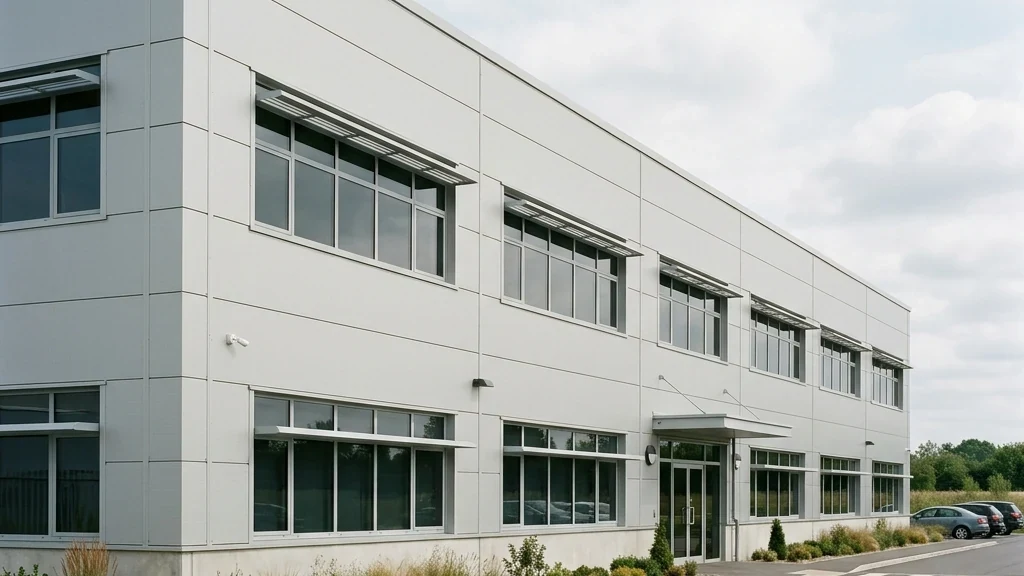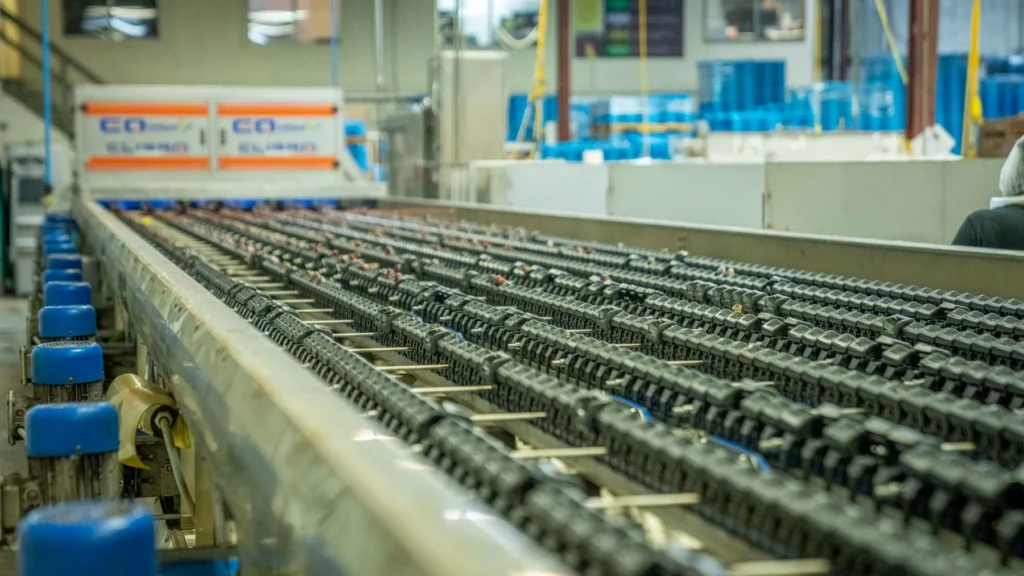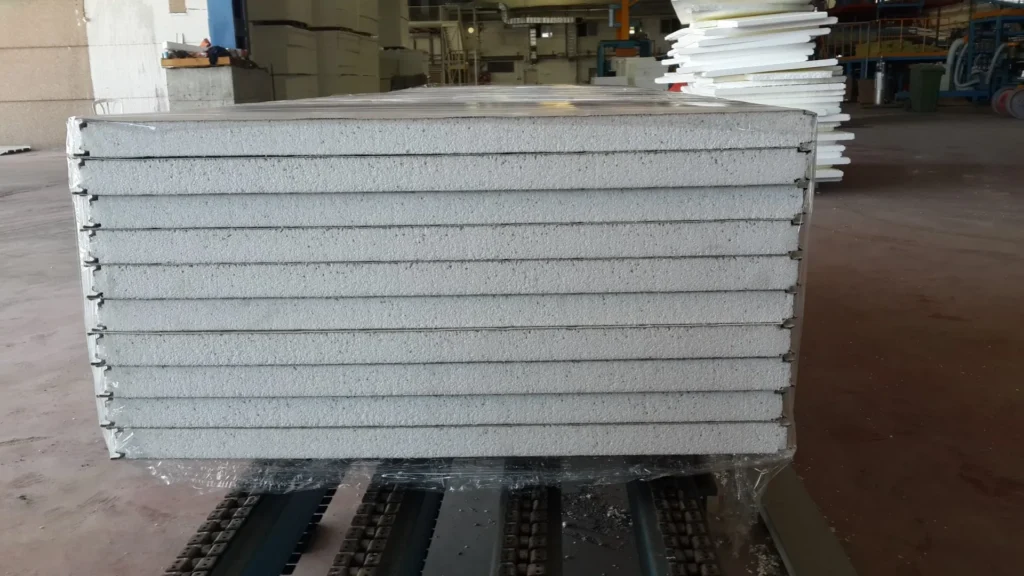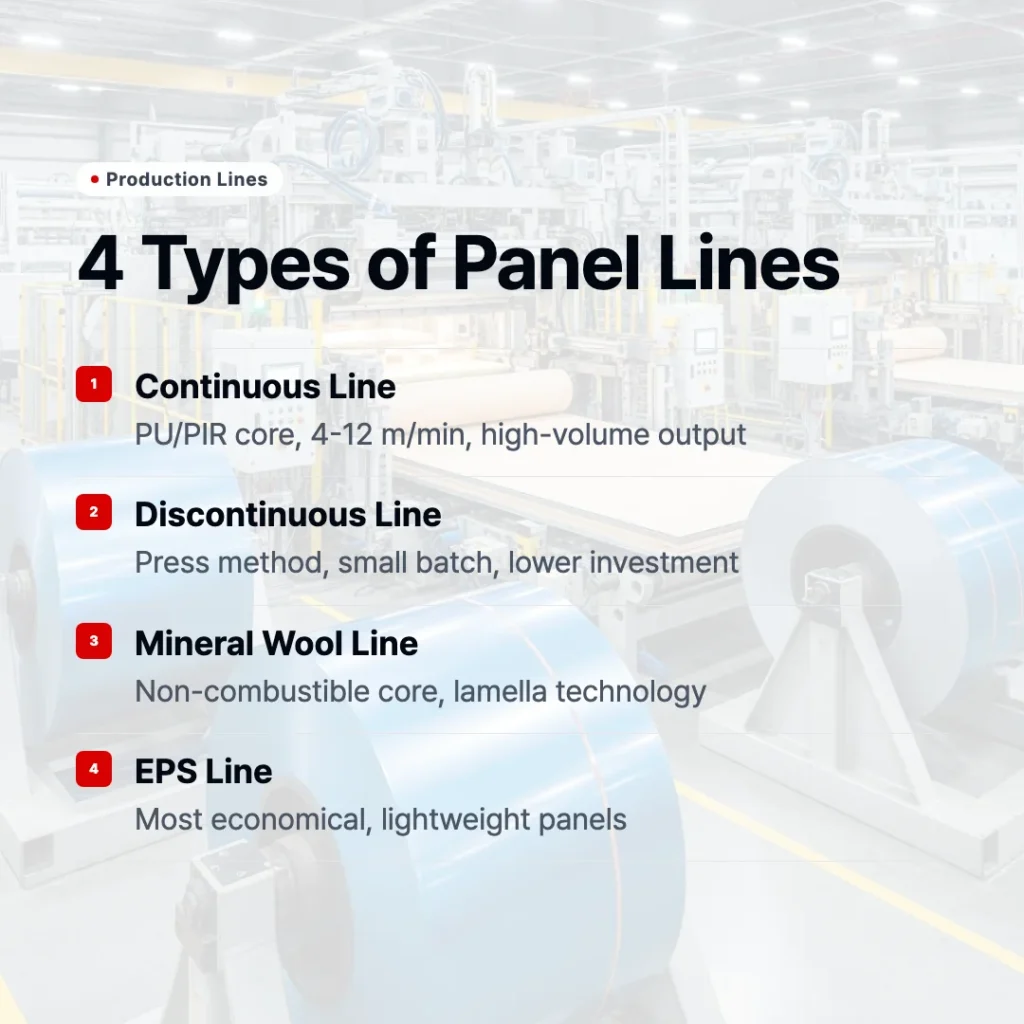
Choosing between an EPS line and a mineral wool line is one of the most consequential decisions a sandwich panel manufacturer will make. The two core materials sit at opposite ends of a single tension: cost versus fire safety. EPS (expanded polystyrene) is light, inexpensive, and thermally efficient, but combustible. Mineral wool is non-combustible and commands premium pricing in regulated markets, but it is heavier, more complex to manufacture, and demands higher capital investment. Neither is universally better — the right choice depends almost entirely on the building types and regional regulations your target market is governed by.
A sandwich panel is a composite element made of two metal facings bonded to an insulating core. The core material defines the panel’s thermal performance, fire behavior, weight, and cost, and it also dictates the type of production line you need to build. Because EPS and mineral wool behave so differently, the equipment, throughput, and economics of their respective lines diverge sharply even though the end products look superficially similar.
In this article, we will explore how EPS and mineral wool panels compare across thermal performance, fire classification, weight, cost, and application suitability — so factory owners can match line investment to the markets they intend to serve.


Thermal conductivity and R-value comparison
Thermal conductivity (lambda value, expressed in W/(m·K)) measures how readily a material transmits heat — lower is better for insulation. EPS typically falls in the range of roughly 0.032–0.040 W/(m·K), while mineral wool sits at approximately 0.035–0.042 W/(m·K). In practical terms the two are broadly comparable, with EPS holding a marginal edge per millimeter in some higher-density grades. For most building envelopes the difference is small enough that thermal performance alone rarely decides the material choice.
R-value, the measure of thermal resistance, rises in direct proportion to panel thickness. This means both EPS and mineral wool can reach the same insulation target — the manufacturer simply specifies a thicker core where conductivity is slightly higher. A mineral wool panel may need a few extra millimeters to match an EPS panel of identical R-value, which has minor implications for material volume and finished panel thickness but does not change the fundamental viability of either material.
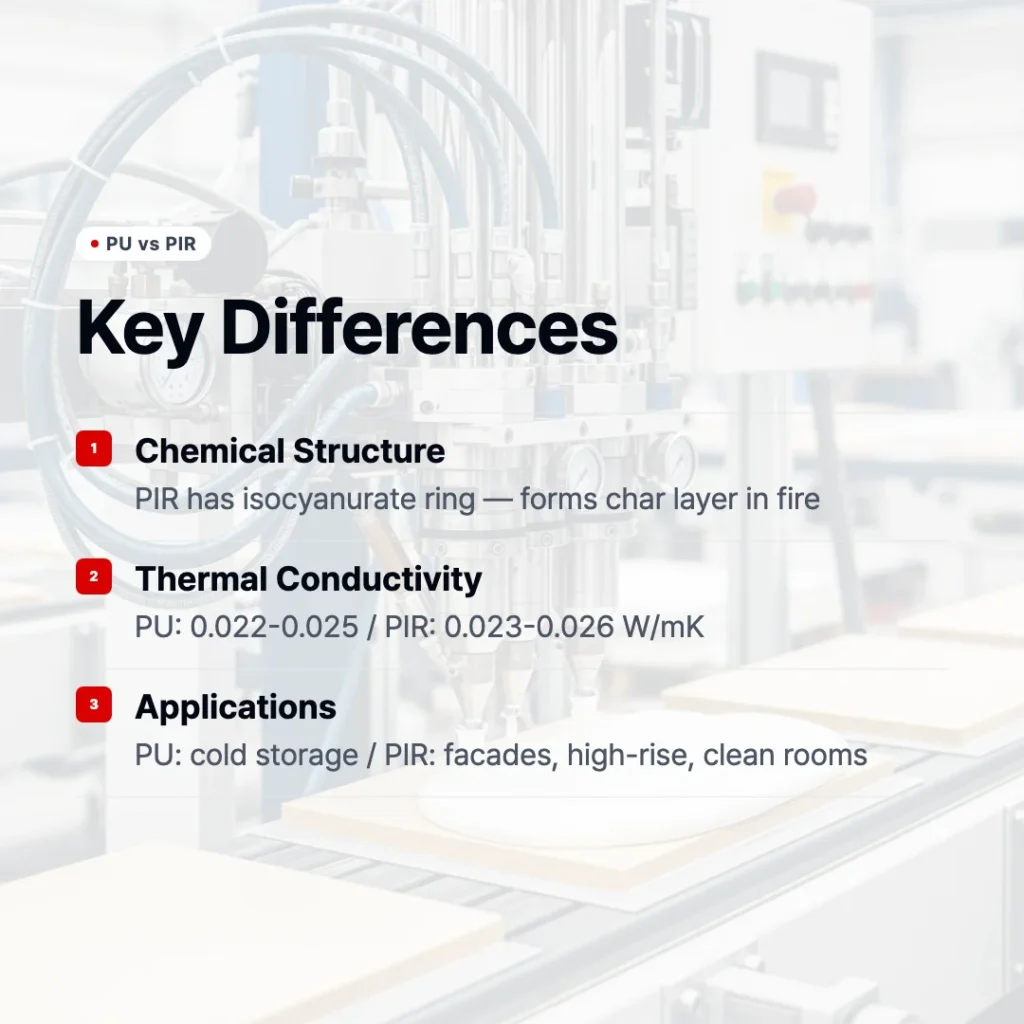
It is worth noting an aside for cold-chain investors: where deep-freeze or extreme low-temperature storage is the priority, polyurethane and PIR cores (~0.022–0.028 W/(m·K)) outperform both EPS and mineral wool. If a significant share of your demand is industrial freezing, a PU/PIR line deserves separate evaluation. For ambient and mild cold-storage construction, however, both EPS and mineral wool deliver adequate thermal results, and the decision shifts to the factors that follow.
Fire classification differences (A1 vs B-s1)
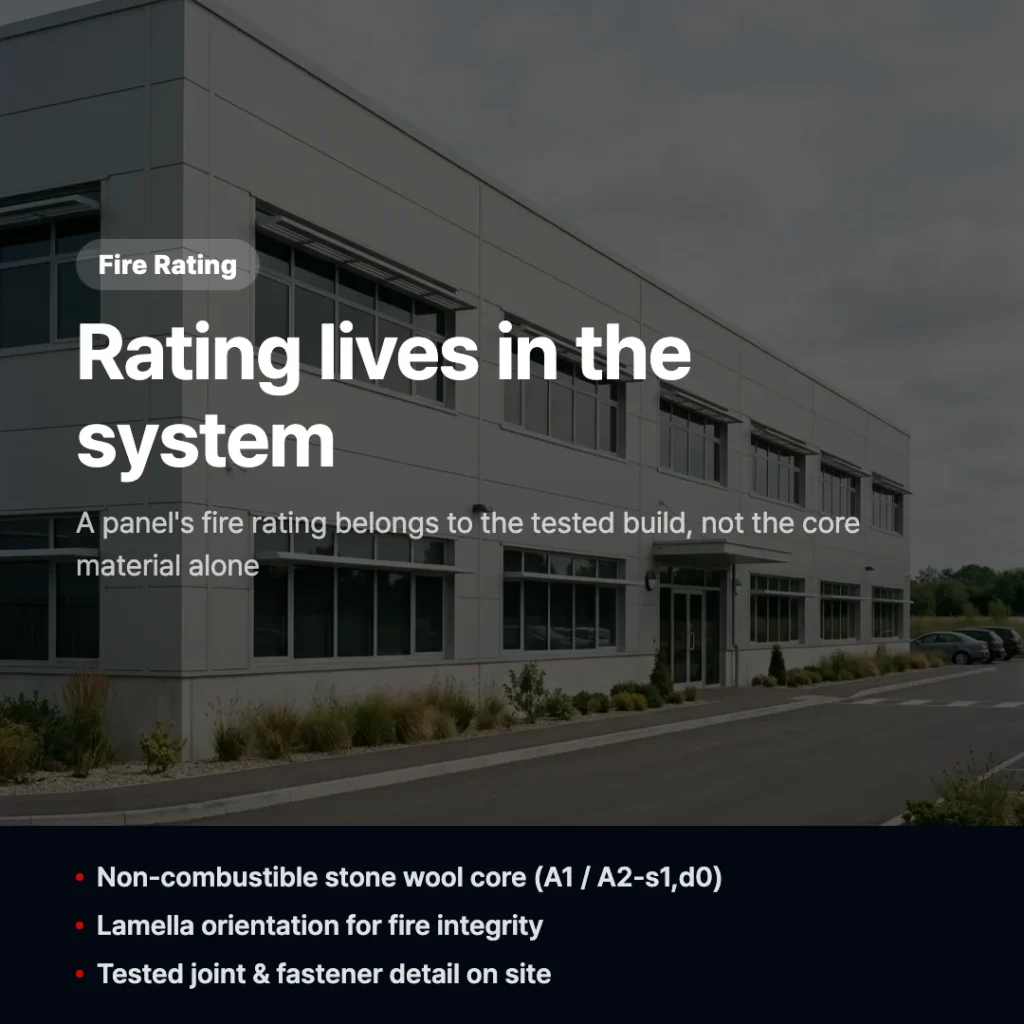
Fire behavior is the single biggest differentiator between these two materials, and for many markets it overrides every other consideration. Mineral wool is non-combustible, achieving Euroclass A1 or A2-s1,d0 under EN 13501-1 — the highest fire reaction classifications available for construction products. This makes mineral wool panels suitable for the most stringent fire-regulated applications without further qualification.
EPS, by contrast, is combustible. Even flame-retardant EPS grades typically reach only the mid-to-lower end of the Euroclass scale — often around class E, and achieving B or C classifications only within specifically tested panel systems rather than as a raw core property. As a direct consequence, EPS panels are restricted or outright banned in many jurisdictions for multi-story buildings, high-occupancy structures, and public facilities. This regulatory reality, more than any laboratory metric, shapes where each panel type can legally and commercially be sold.
Can flame-retardant EPS substitute for mineral wool in fire-regulated projects?
Generally no. Flame-retardant additives slow ignition and reduce flame spread, but they do not make EPS non-combustible. Where building codes require Euroclass A1 or A2 — typically high-rise, public, and commercial construction — only mineral wool (or other mineral-based cores) will satisfy the requirement. EPS remains appropriate for building types where combustible cores are still permitted.
The practical takeaway is that fire classification is less about which material is better and more about which markets you can enter. A manufacturer serving fire-strict European or Middle Eastern commercial sectors effectively needs mineral wool capability, while one supplying cost-sensitive low-rise and industrial demand can compete strongly with EPS.
Weight and structural load considerations
| Property | EPS | Mineral Wool |
|---|---|---|
| Thermal W/m·K | 0.032–0.040 | 0.035–0.042 |
| Fire class | Combustible ~E | A1 / A2-s1,d0 |
| Density kg/m³ | 15–20 | 40–150 |
| Cost per m² | Lower | Premium |
Core density drives both panel weight and handling characteristics, and here the two materials are dramatically different. EPS core density is very low, typically around 15–20 kg/m³, making EPS panels exceptionally light. Mineral wool core density is far higher, generally spanning 40–150 kg/m³ and commonly 100 or more for structural panels, so a mineral wool panel of the same dimensions can weigh several times more than its EPS equivalent.
This weight gap has real downstream consequences. Mineral wool panels impose greater structural load on the building’s supporting frame, which can influence the design and cost of the steel or concrete structure, particularly on large roof spans. They are also heavier to transport and more demanding to lift and install on site, often requiring more robust handling equipment and slower erection. EPS panels, being light, reduce freight cost per shipment, ease manual handling, and speed up installation — advantages that matter in remote sites and labor-cost-sensitive markets.
For the manufacturer, weight also affects logistics economics. Lighter EPS panels mean more square meters per truckload and lower delivered cost, which reinforces EPS’s appeal in price-driven and export-oriented supply chains. Heavier mineral wool shipments cost more to move, a factor that tends to favor production located closer to the end market.
Cost per square meter analysis
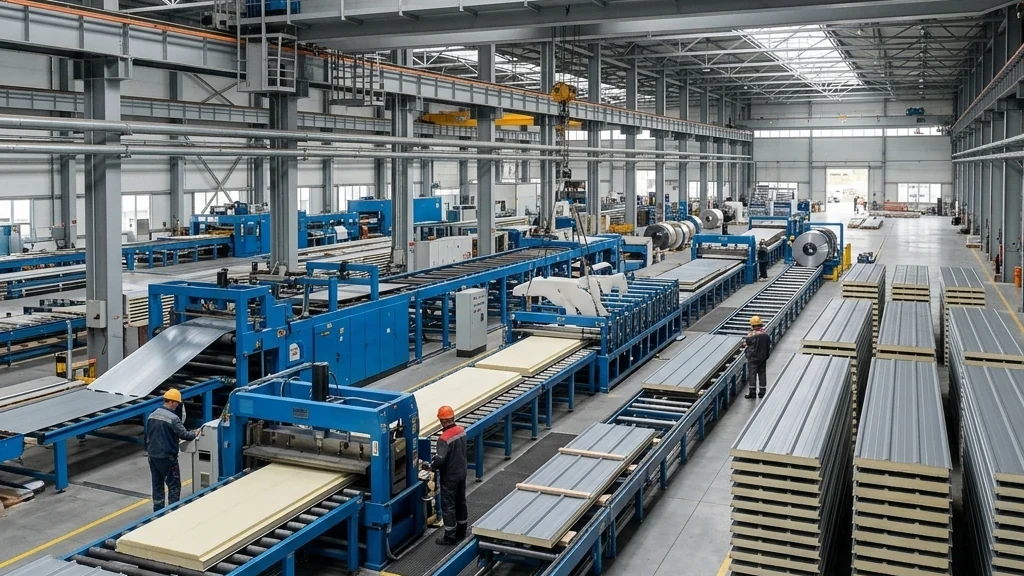
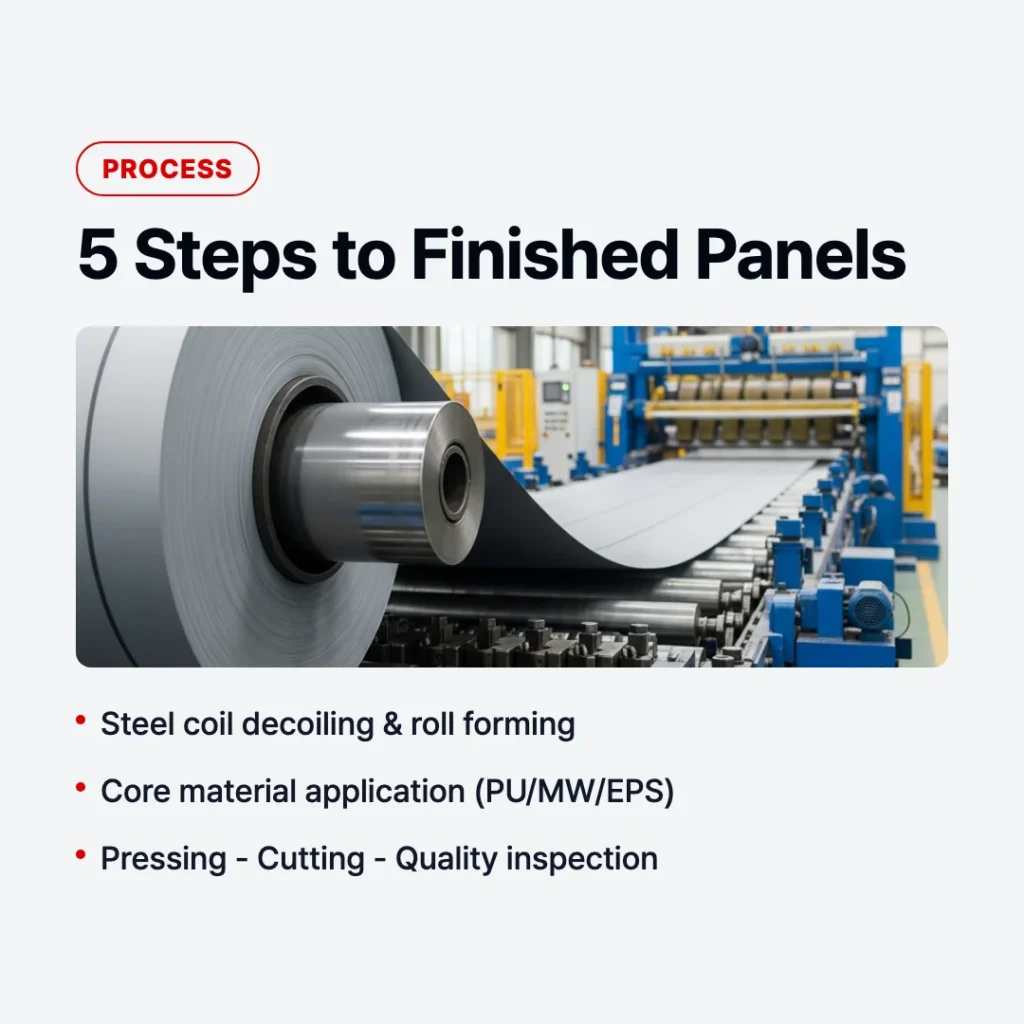
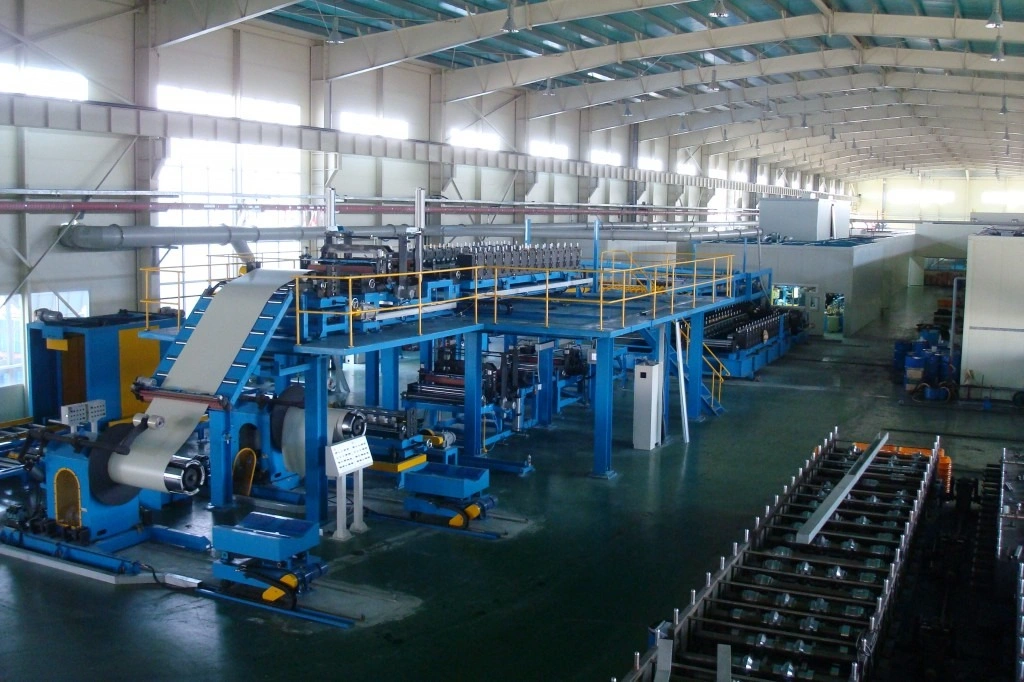
Cost is where EPS holds a decisive advantage. EPS is significantly cheaper per square meter on three fronts: the core raw material itself is inexpensive, the production line is mechanically simpler, and the capital expenditure to build the factory is lower. EPS panels are produced by adhesive bonding of pre-made EPS sheets to the metal facings — there is no in-line foaming and no complex fiber processing — which keeps both equipment and operating costs down. You can learn how this bonding process and line are configured in our EPS sandwich panel machine guide.
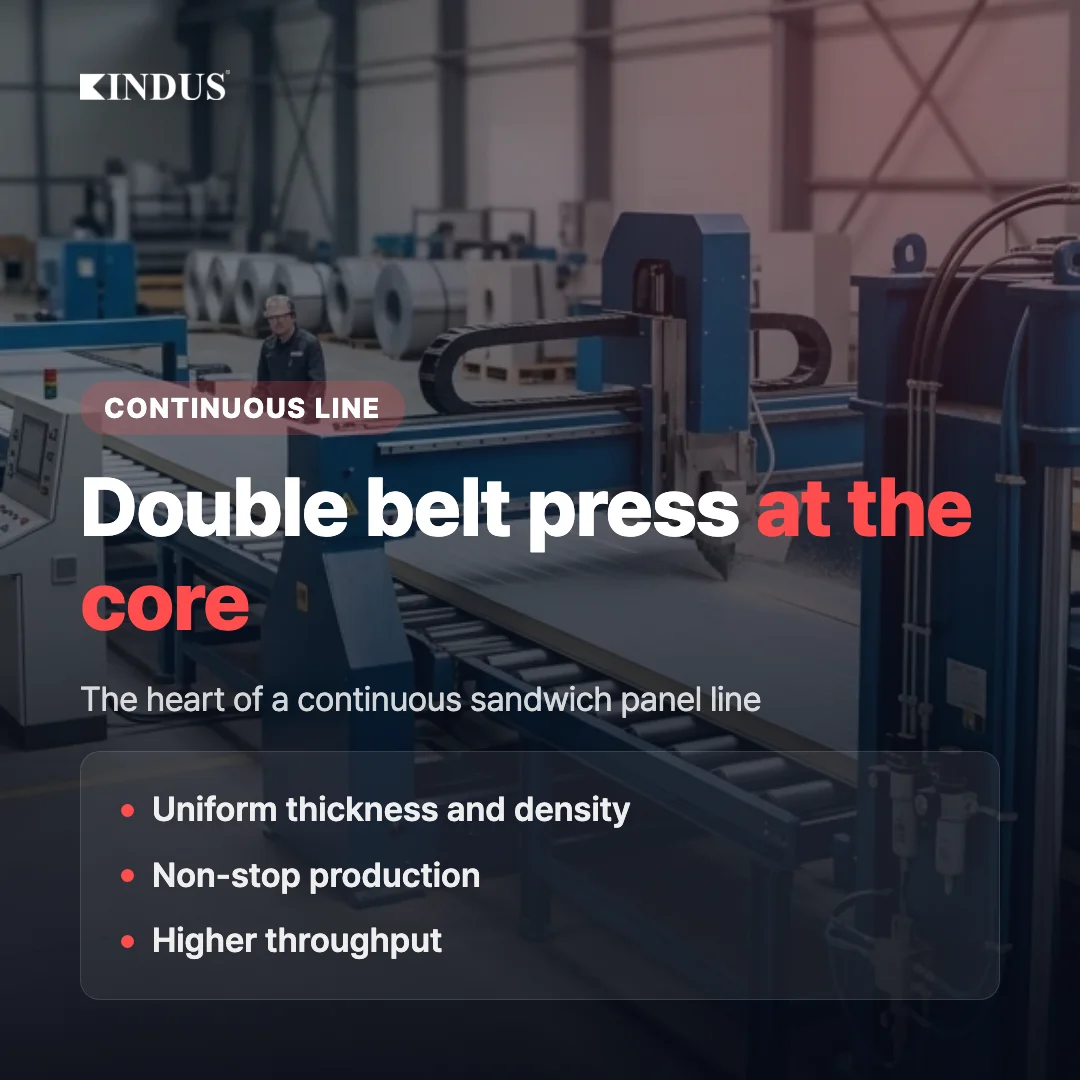
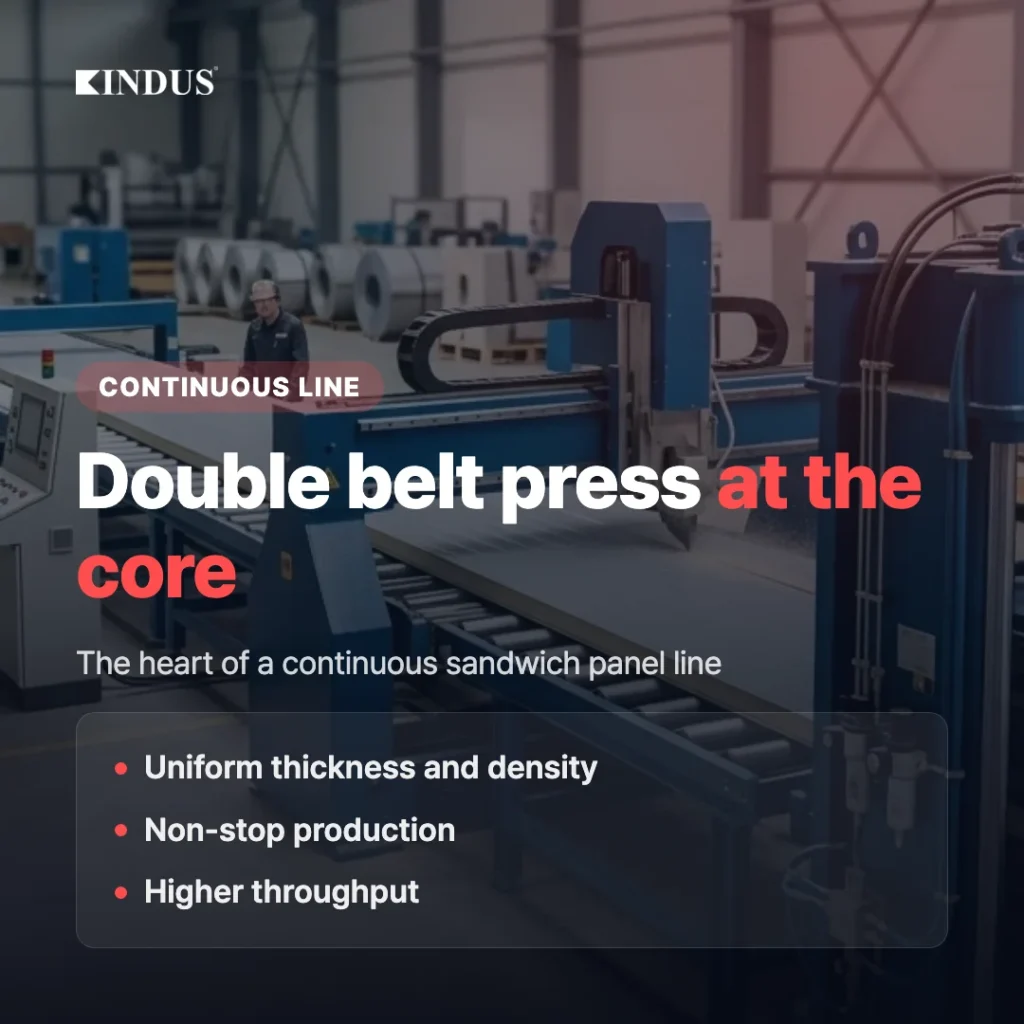
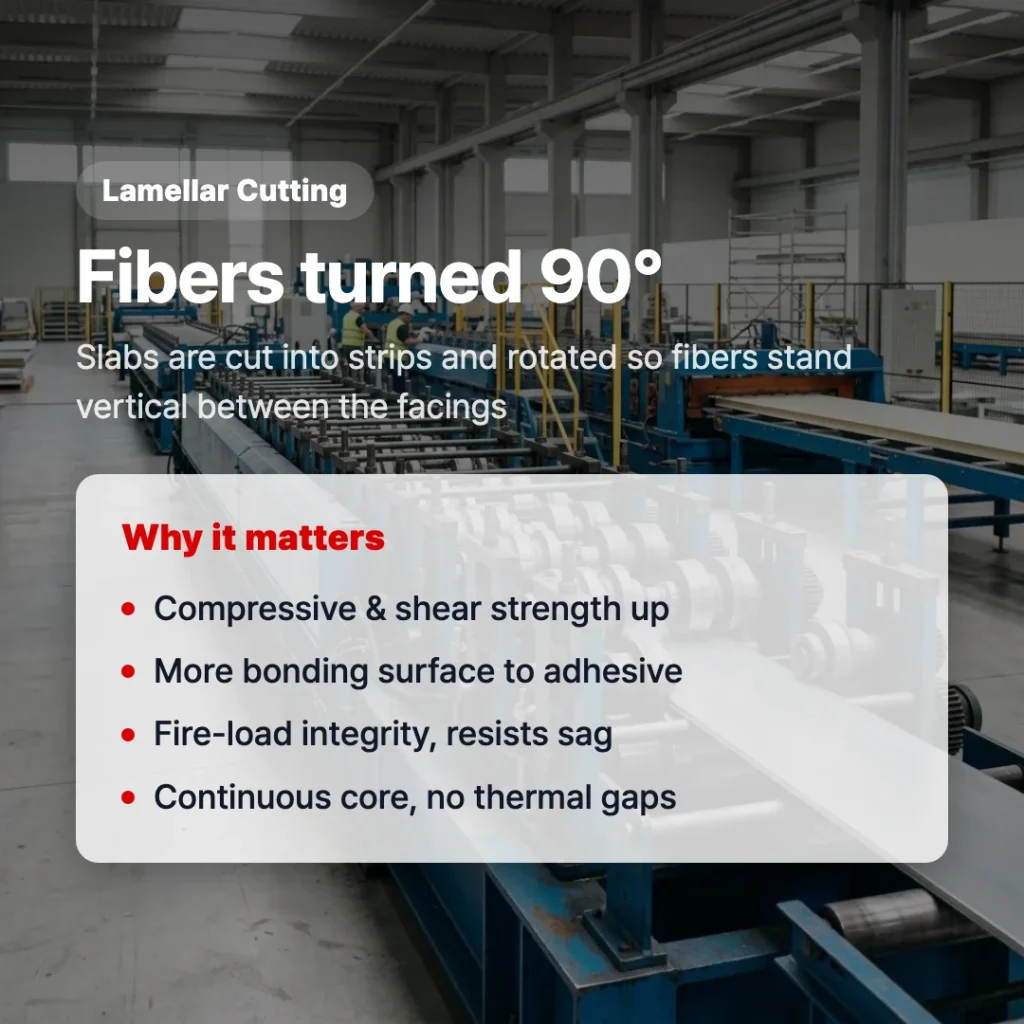
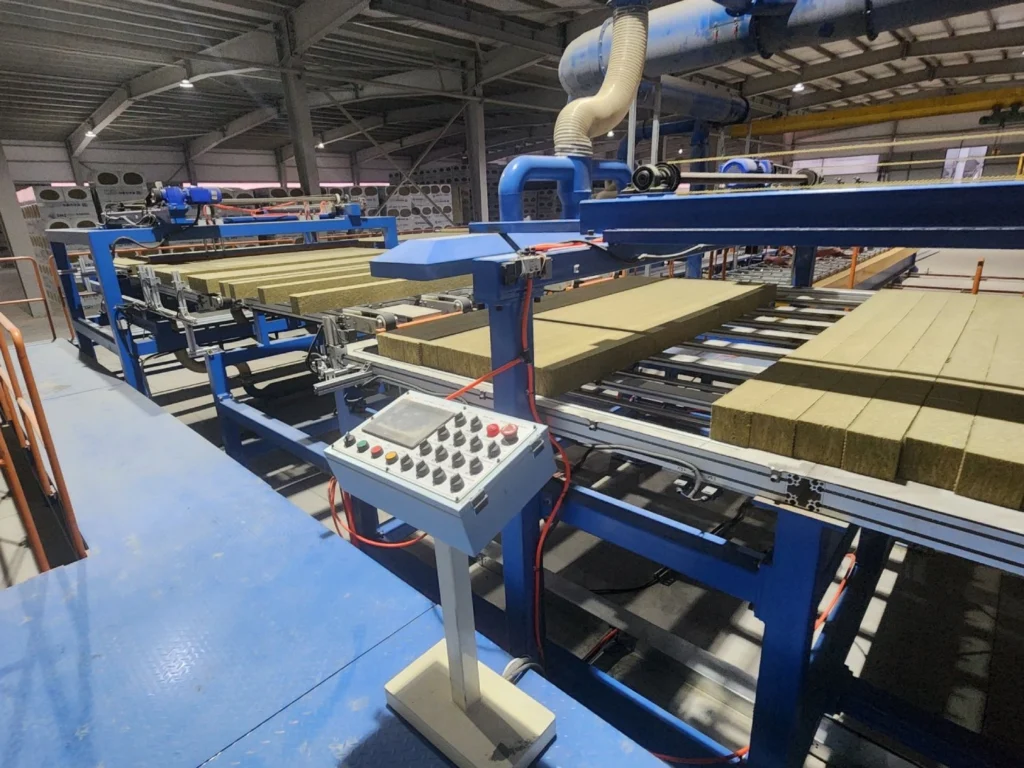
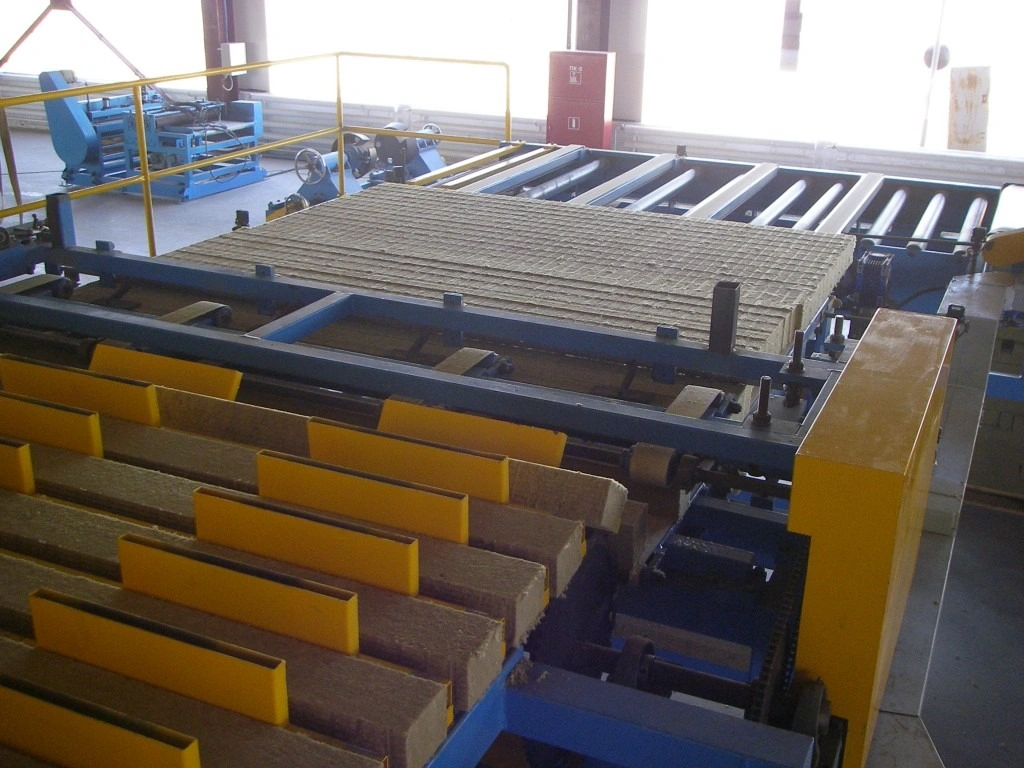
Mineral wool costs more across the board. The core material is more expensive, the production line is considerably more complex, and the capital investment is correspondingly higher. A mineral wool line involves lamellar cutting, a 90-degree fiber re-orientation step to align fibers for compressive strength, adhesive bonding, and a double belt press to consolidate the panel. These additional stages raise both equipment cost and per-unit production cost. The technology and specifications behind this are detailed in our mineral wool production line technology guide.
The crucial point is that mineral wool’s higher cost is not a weakness — it is matched by a price premium in fire-regulated markets where mineral wool is mandatory. In those segments, customers expect and accept the higher price, and margins can be healthy. EPS competes on volume and affordability; mineral wool competes on regulatory necessity and premium positioning. Many manufacturers ultimately conclude that the two serve different customers rather than competing head to head.
| Property | EPS panel | Mineral wool panel |
|---|---|---|
| Core material | Expanded polystyrene (pre-made sheets) | Stone/mineral fiber lamellas |
| Thermal conductivity (W/m·K) | ~0.032–0.040 | ~0.035–0.042 |
| Fire class (EN 13501-1) | Combustible; ~E, or B/C in tested systems | Non-combustible; A1 / A2-s1,d0 |
| Core density (kg/m³) | ~15–20 (very light) | ~40–150 (much heavier) |
| Relative cost per m² | Lower (cheaper core + line + capex) | Higher (premium in regulated markets) |
| Best applications | Low-rise, industrial, agricultural, mild cold storage | Fire-regulated, high-rise, public, commercial |
| Line type | Adhesive bonding of EPS sheets | Lamellar cutting + 90° re-orientation + double belt press |
Application suitability matrix by building type
Matching panel type to building type is the practical synthesis of everything above. EPS is well suited to low-rise warehouses, industrial and agricultural buildings, temporary structures, and mild cold-storage facilities — applications where fire codes permit combustible cores and where cost, weight, and speed of construction are the priorities. EPS also tends to dominate in emerging and cost-driven markets where affordability opens the largest share of demand.
Mineral wool is the choice for fire-regulated environments: high-rise buildings, public and commercial facilities, and any structure where occupant safety codes demand non-combustible insulation. It is the standard expectation across much of Europe and the Middle East premium segment, where regulation and specification culture favor A1/A2 materials. In these markets, offering anything less than mineral wool can exclude a manufacturer from the most valuable projects entirely.
A practical decision guide for factory owners:
- If your target market enforces strict fire codes for the buildings you’ll supply, prioritize a mineral wool line — it unlocks regulated, premium demand that EPS cannot serve.
- If your demand is dominated by low-rise industrial, agricultural, and cost-sensitive construction, an EPS line offers lower capex, faster payback, and strong price competitiveness.
- If you serve a mixed market or expect regulations to tighten over time, consider a dual-line factory so you can supply both segments and hedge regulatory risk.
- Factor in logistics: heavier mineral wool favors production near the end market, while light EPS travels economically over longer distances.
- Reassess if deep-freeze cold storage is a major segment — a PU/PIR line may serve that niche better than either EPS or mineral wool.
It is also worth distinguishing this comparison from the mineral-wool-versus-polyurethane decision, which weighs fire safety against superior thermal performance rather than against cost. If PU is on your shortlist alongside mineral wool, our mineral wool vs PU panel production comparison covers that trade-off in equipment and process terms.
KINDUS has built sandwich panel production lines since 1995, with more than 170 projects delivered across over 40 countries and 30 years of accumulated engineering experience. Our CE-certified lines cover both EPS and mineral wool, including dual-line factories, and our team advises clients specifically on matching line choice to the fire regulations and price expectations of their target market — rather than selling a single configuration to every customer.
Frequently Asked Questions
How does EPS manufacturing differ from mineral wool?
The two lines are fundamentally different in process. An EPS line bonds pre-made EPS sheets to the metal facings using adhesive, with no in-line foaming step — a relatively simple, lower-capex configuration. A mineral wool line is more complex: it involves lamellar cutting of the wool, a 90-degree fiber re-orientation to build compressive strength, adhesive bonding, and consolidation through a double belt press. Both differ from PU panel lines, which rely on in-line chemical foaming.
Which has better thermal performance, EPS or mineral wool?
They are broadly similar. EPS sits at roughly 0.032–0.040 W/(m·K) and mineral wool at about 0.035–0.042 W/(m·K), giving EPS a marginal edge per millimeter in some grades. Because R-value increases with thickness, both can reach the same insulation target. For deep-freeze cold storage, however, PU/PIR cores (~0.022–0.028 W/(m·K)) outperform both.
What are the fire rating differences?
This is the decisive distinction. Mineral wool is non-combustible and achieves Euroclass A1 or A2-s1,d0 under EN 13501-1. EPS is combustible; even flame-retardant grades typically reach only around class E, or B/C within specifically tested systems, and EPS is restricted or banned for many multi-story and high-occupancy buildings. Where codes require A1/A2, mineral wool is effectively mandatory.
Choosing between an EPS line, a mineral wool line, or a dual setup? Compare how each is built and specified on the dedicated production line pages below.