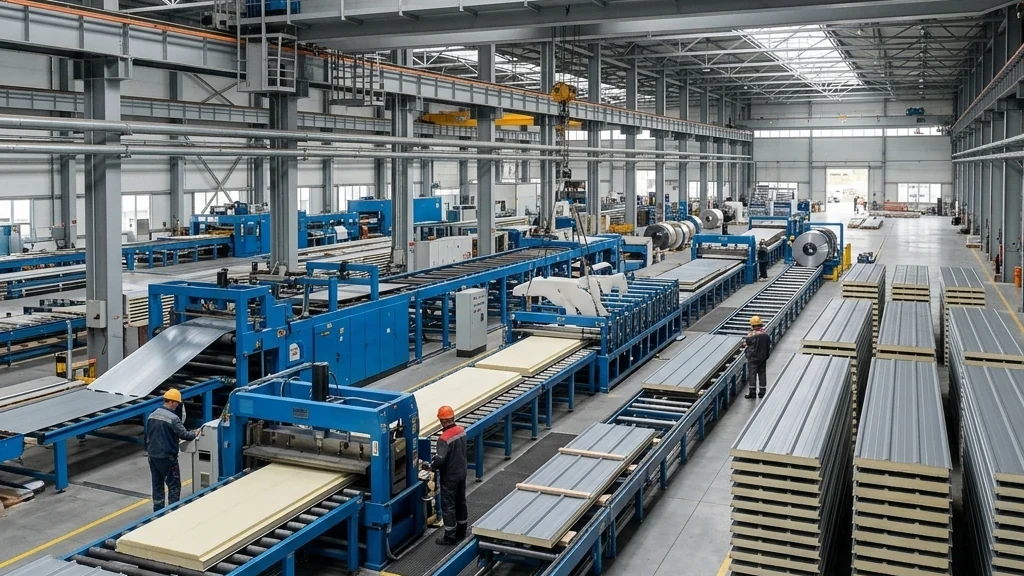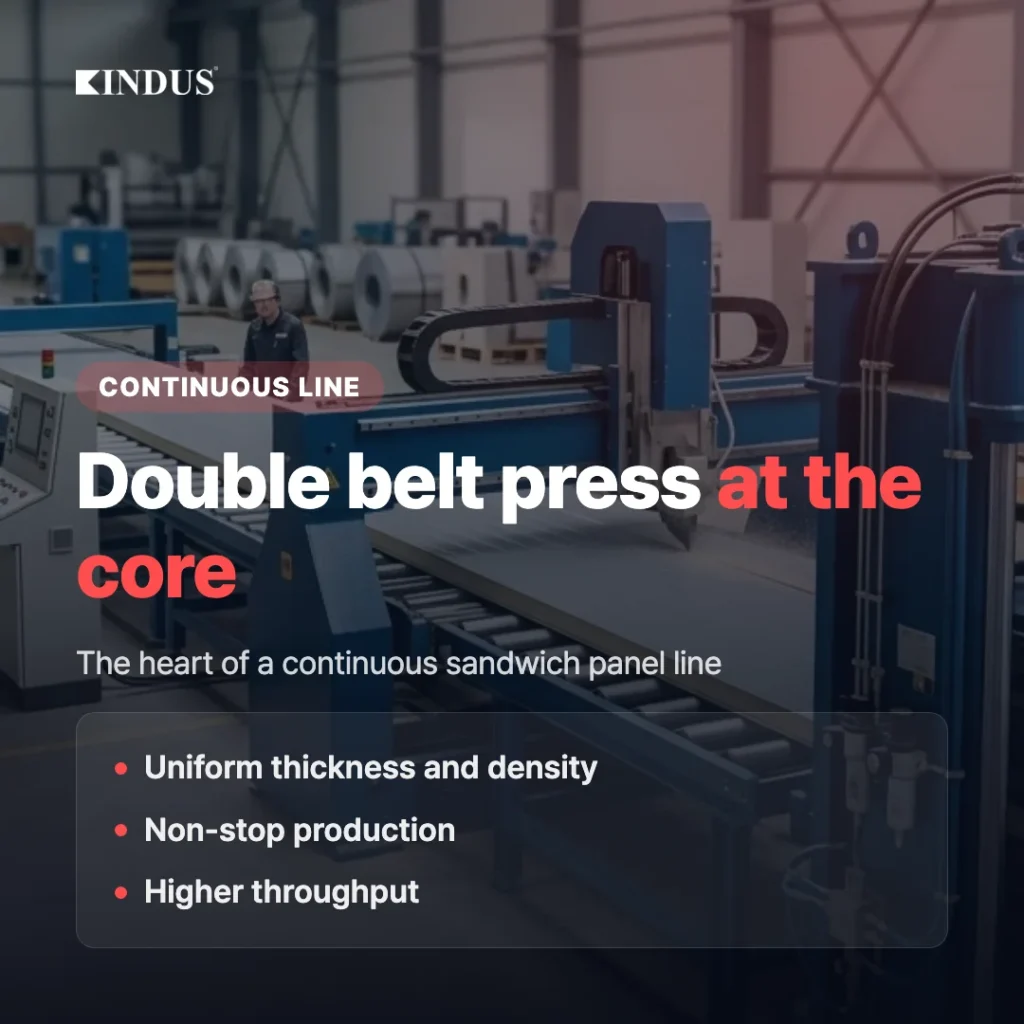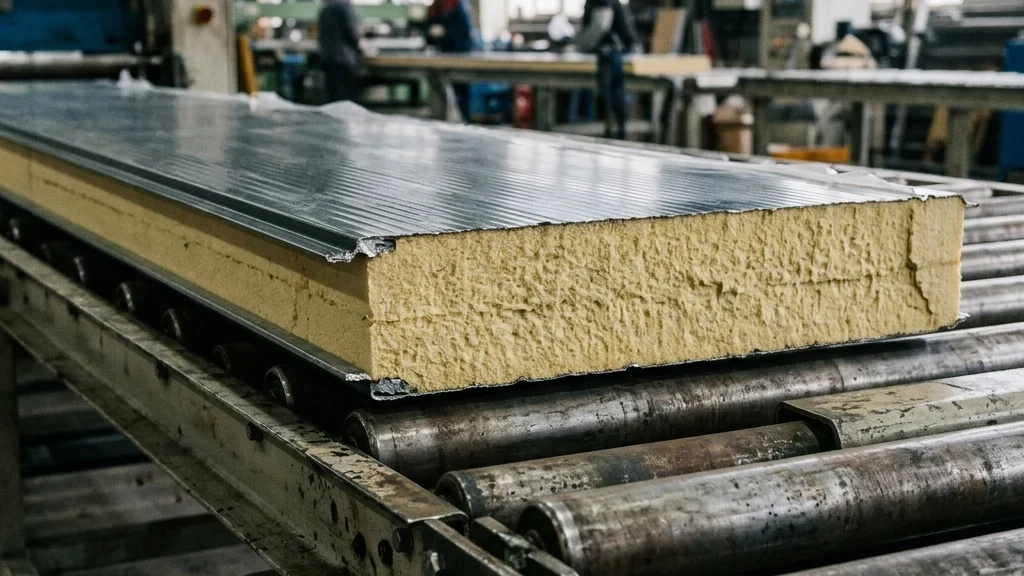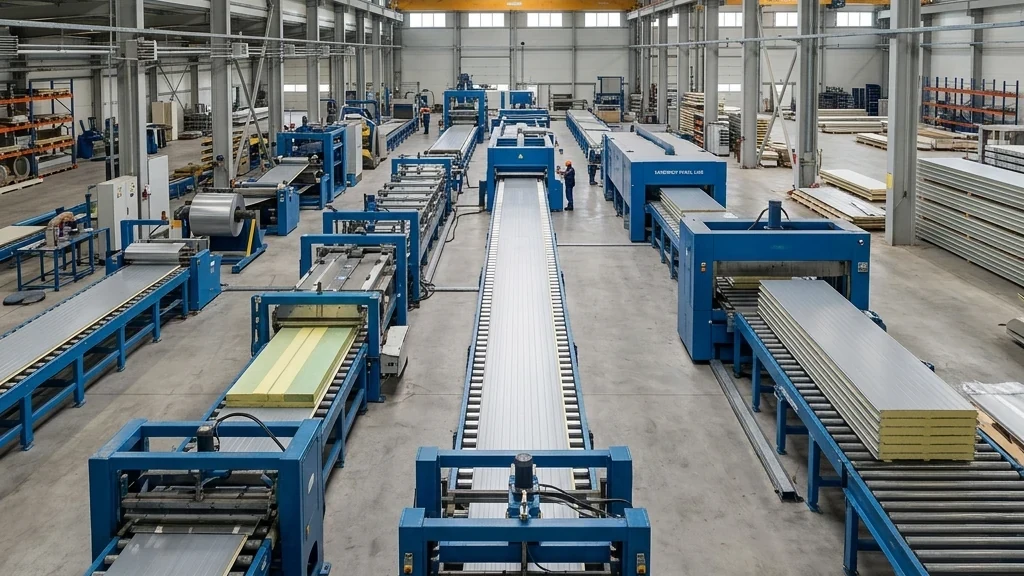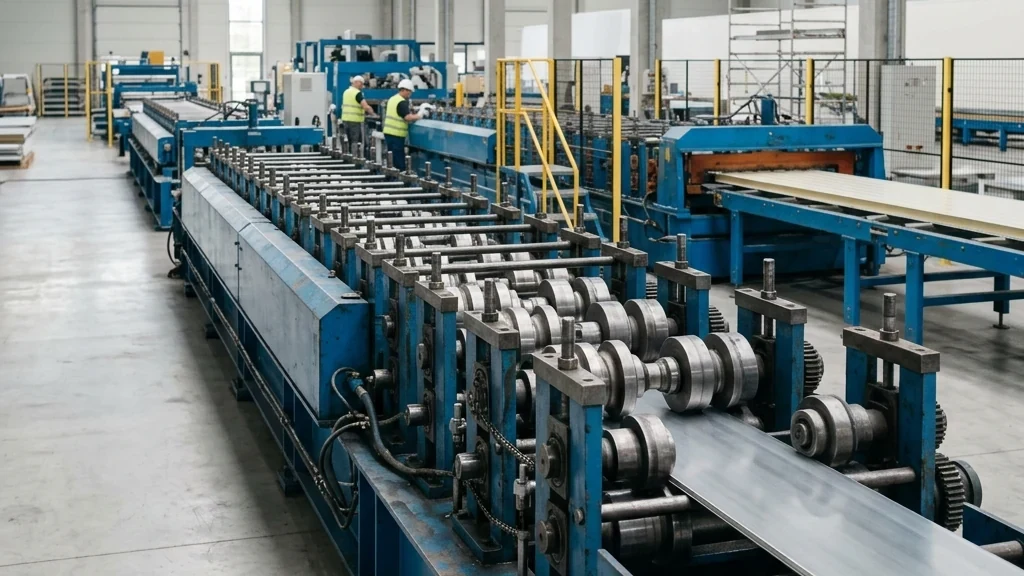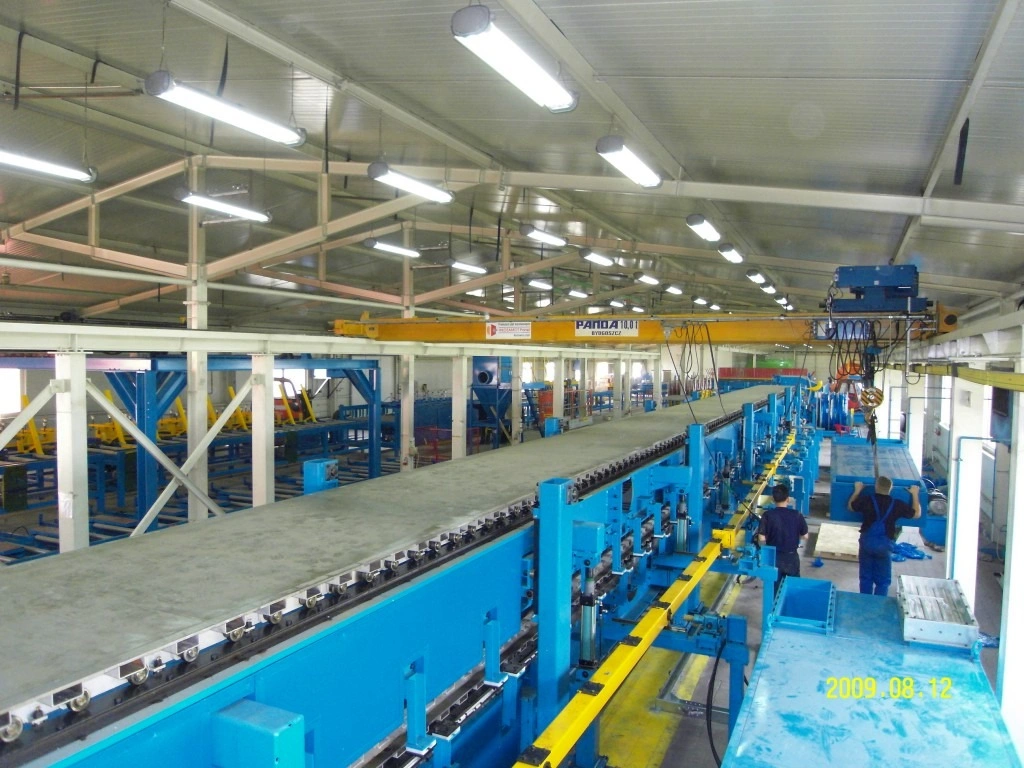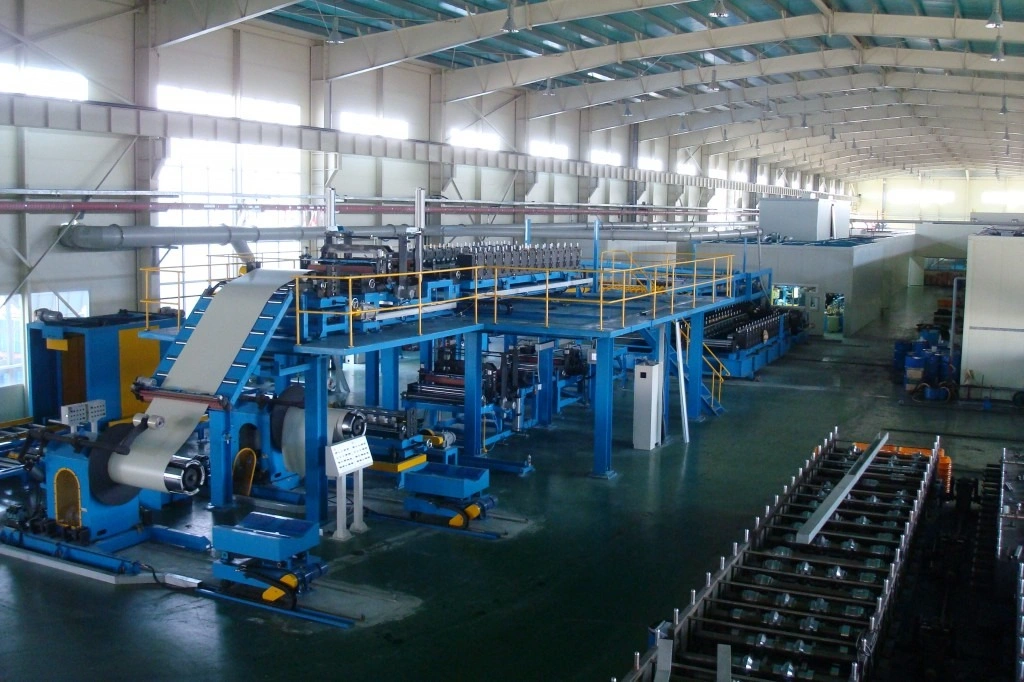
An EPS sandwich panel line runs steel uncoiling, roll forming, adhesive application, lamination, and cut-to-length in one continuous flow, so a single neglected component can halt the whole line. When a spray nozzle clogs or a saw blade dulls mid-run, the cost is not one part but the entire line standing idle, plus the reject panels already in the press. For plants targeting output near 800,000㎡ a year, an unplanned stop of a few hours quietly erases days of margin.
The problem is rarely a dramatic breakdown. It is the slow drift of small parts out of spec until bond quality fails or a station jams. Preventive maintenance replaces that guesswork with a fixed rhythm.
In this article, we’ll look at why preventive maintenance matters on an EPS line, a practical daily-to-monthly schedule, the wear parts that need tracking, adhesive system care, dust and cutting station upkeep, and how KINDUS supports both.
Maintenance
Why preventive maintenance matters for EPS lines
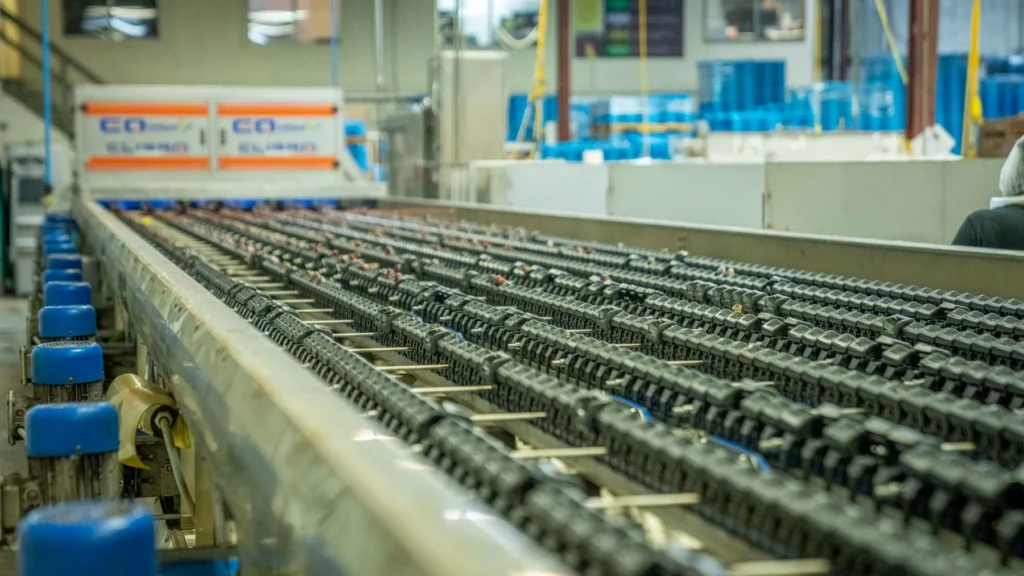
Preventive maintenance is the scheduled inspection and replacement of parts before they fail, rather than after. On a continuous EPS sandwich panel line, this matters more than on standalone machines because the stations are interdependent: the decoiler feeds the roll former, which feeds the laminating and cutting systems in one uninterrupted pass. A fault at any point stops everything downstream.
Compared with run-to-failure, where parts are used until they break, preventive maintenance costs a little planned downtime to avoid a lot of unplanned downtime. A blade changed during a scheduled slot takes minutes; the same blade snapping mid-run can jam the cutting station, scrap panels, and pull operators off other work.
At KINDUS, we design lines with maintenance access in mind so routine checks do not require major disassembly. The payoff shows up as consistent bond strength, cleaner cuts, and fewer surprise stops.
Daily, weekly, and monthly maintenance schedule

- DDailyClear nozzles and rollers, check the blade, confirm dust airflow
- WWeeklyInspect nip and forming rollers, belt tension, cut squareness
- MMonthlyLubricate drives, service pump seals, deep-clean extraction
A maintenance schedule is a fixed list of checks assigned to daily, weekly, and monthly intervals so nothing depends on memory. The value of a written schedule over ad-hoc fixing is coverage: every wear point gets seen on a known cadence instead of only when it fails.
A workable baseline for an EPS sandwich panel line:
- Daily: clear adhesive residue from nozzles and rollers, check saw blade condition, confirm dust extraction airflow, walk the line for loose fasteners and abnormal noise
- Weekly: inspect nip and forming rollers for wear or buildup, check belt and chain tension, clean the adhesive tank filter, verify cut squareness and panel dimensions
- Monthly: lubricate bearings and drives per the manual, inspect and torque forming station tooling, service the adhesive pump seals, deep-clean the dust extraction system
Assign each interval to a named operator or shift so accountability is clear. Log every check, since the log is what reveals a part trending toward replacement before it fails.
Wear parts and replacement intervals (blades, nozzles, nip rollers)
Wear parts are the components that degrade with normal use and are meant to be replaced, not repaired. On an EPS line the main ones are cutting blades (band or circular saw), adhesive spray nozzles, and the nip and forming rollers.
Rather than fixed hour counts, replace by condition, because interval depends heavily on line speed, panel width, and material abrasiveness. Practical triggers:
- Saw blades: replace when cut edges show tearing, burring, or rising cut force; dull blades load the motor and worsen dimensional accuracy
- Spray nozzles: replace or ream when spray pattern distorts or output drops, since an uneven pattern means uneven bond
- Nip and forming rollers: inspect for grooving, glue buildup, and surface pitting; resurface or replace before marks transfer to the facing
Keep a small stock of each critical wear part on the shelf. Waiting on a shipped nozzle or blade turns a ten-minute swap into a multi-day stop.
Adhesive system service: tank, pump, nozzle clogging prevention
The adhesive system is the tank, pump, lines, and nozzles that apply glue to the EPS core and facings, and it is the most clog-prone part of the line. Because bond quality depends directly on clean, even application, this system rewards preventive care more than any other.
Clogging almost always starts with dried adhesive left in nozzles and lines during stops. Compared with reactive cleaning after a clog, a purge-and-flush routine at every shift end keeps passages open with far less effort. Filter the adhesive at the tank so grit never reaches the pump, inspect pump seals monthly for weeping, and hold the adhesive within its specified temperature and open-time window so it neither skins over nor stays tacky too long.
What if a nozzle partially clogs during a run?
Do not push production through a distorted spray pattern, since it produces weak or patchy bonds that show up as delamination later. Stop, clear or swap the nozzle, and confirm the pattern before resuming; a few minutes here prevents a batch of reject panels.
Dust extraction and cutting station upkeep
Dust extraction is the ducting, filters, and airflow system that removes cutting debris from the line, and it protects both panel quality and the cutting station. Neglected extraction is a quiet failure: airflow drops gradually, debris settles on rollers and cut edges, and finish quality slips before anyone flags the cause.
Compared with the adhesive system’s sudden clogs, dust problems creep in, which makes the scheduled airflow check the key safeguard. Keep filters clean, clear duct buildup on the monthly slot, and check that the saw’s chip path stays open. At the cutting station, keep blade guides and the cut table clean so panels feed square and the cut stays within tolerance. Debris trapped under a panel at the saw is a common cause of out-of-square cuts and blade stress.
For plants running band or circular saw options for length control, matching blade type and tooth pitch to panel thickness also reduces both dust load and blade wear. Getting the cutting setup right at commissioning, as covered in the EPS Sandwich Panel Production Line Layout & Configuration guide, pays back in lower ongoing maintenance.
KINDUS maintenance and spare parts support
KINDUS builds EPS sandwich panel lines with after-sales support that covers commissioning, operator training, spare parts, and technical guidance. Because we manufacture the line, we can match wear parts to the exact stations installed and advise on replacement timing based on your speed and material.
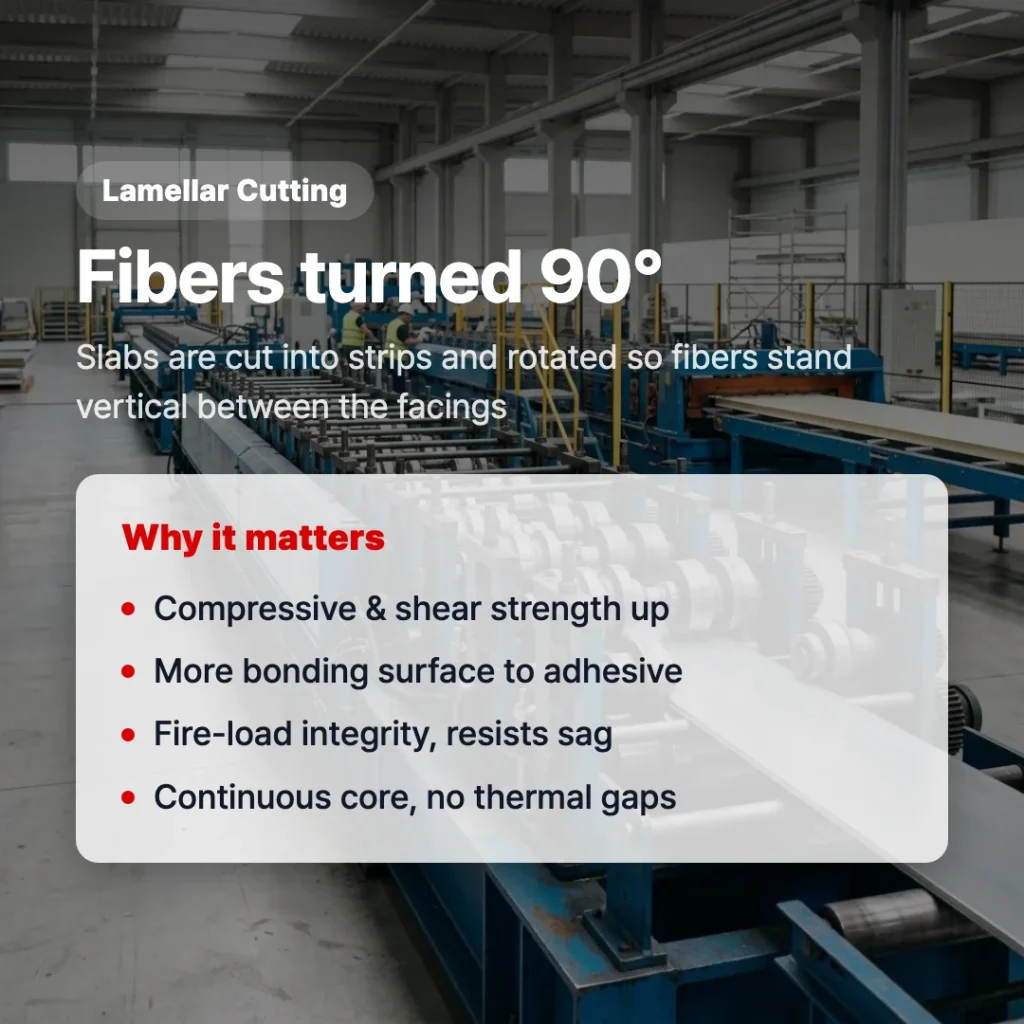
Operators moving between EPS and mineral wool cores can reference our Mineral Wool Lamellar Cutting System: Technical Guide for cutting-station differences, and teams selecting or upgrading equipment will find the trade-offs in our EPS Sandwich Panel Machine: Technology, Process & Selection Guide. Both help maintenance teams understand the machine they are servicing.
For line commissioning and maintenance support, see EPS Sandwich Panel Line.
How often should saw blades be replaced on an EPS panel line?
Replace by condition rather than a fixed hour count, since wear depends on line speed, panel width, and material. Swap the blade when cut edges start tearing or burring, when cut force rises, or when dimensions drift out of tolerance. A daily blade check catches these early and prevents a mid-run failure.
How do you prevent adhesive nozzles from clogging?
Clogging comes mainly from dried adhesive left in the nozzles and lines during stops. Purge and flush the nozzles at every shift end, filter the adhesive at the tank to keep grit out, and hold the adhesive within its specified temperature and open-time window. Inspect the spray pattern daily and clear any nozzle showing distortion before it affects bond quality.
How much downtime can preventive maintenance actually save?
The saving comes from converting unplanned stops into short planned ones. A blade or nozzle changed in a scheduled slot takes minutes, while the same part failing mid-run can jam a station, scrap in-press panels, and pull operators off other tasks for hours. On a continuous line where one fault halts every downstream station, that difference compounds fast, which is why a written daily-to-monthly schedule pays back well beyond its small time cost.