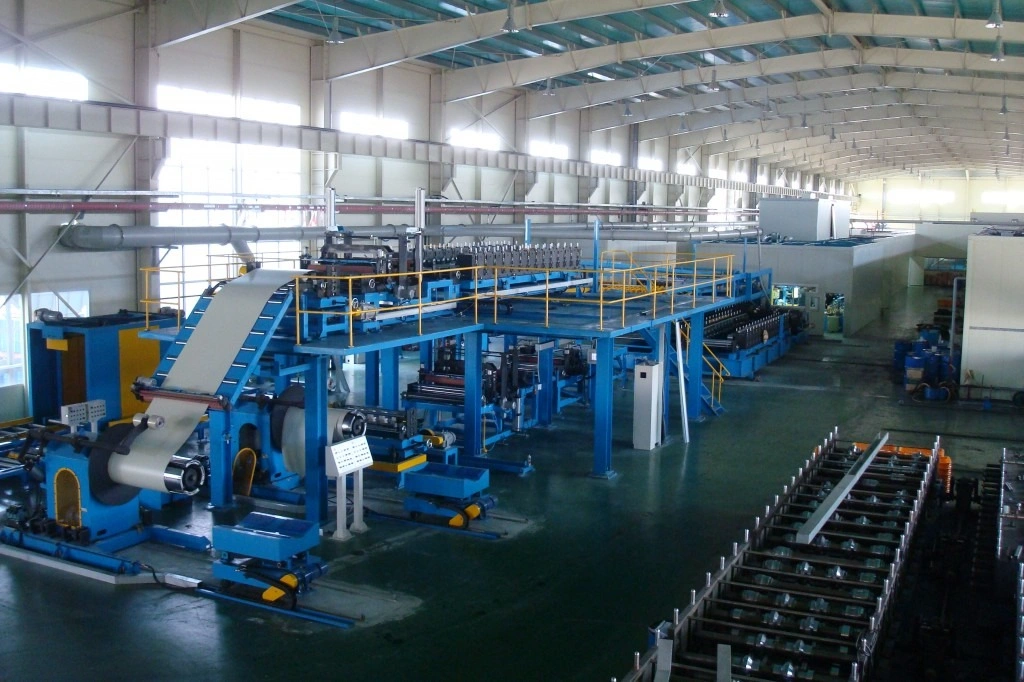
A sandwich panel line quotation can run to dozens of pages, and most buyers compare offers by the headline numbers: speed, annual capacity and price. The figures that decide whether the line will actually produce good panels sit further down, in the description of each component. Two quotations with the same speed can hide very different decoilers, presses or cooling sections.
In this article, we will look at the components that make up a sandwich panel line, the specification that matters for each one, and how to read them side by side in a request for quotation.
 Quotation check
What Makes Up a Sandwich Panel Line
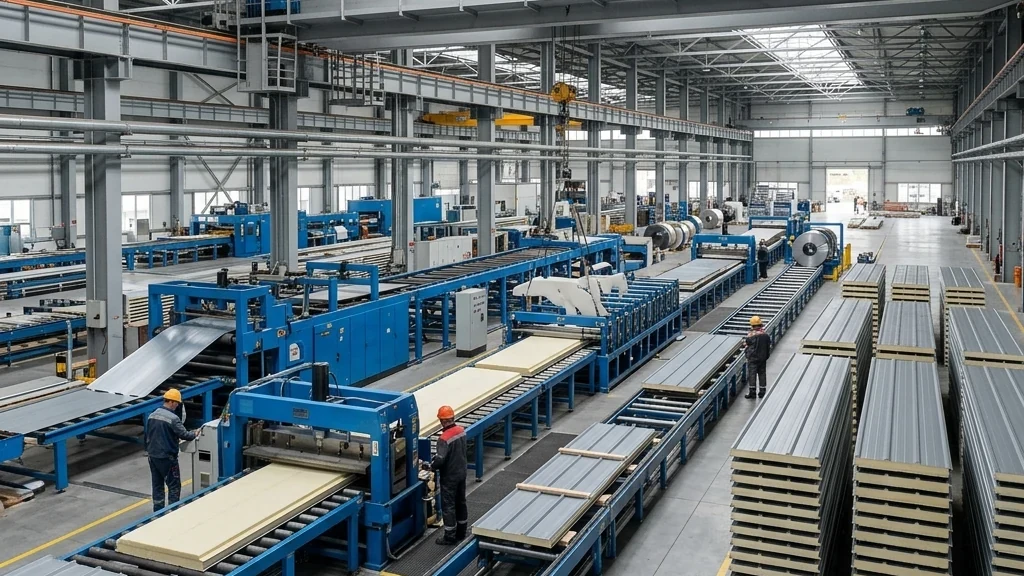
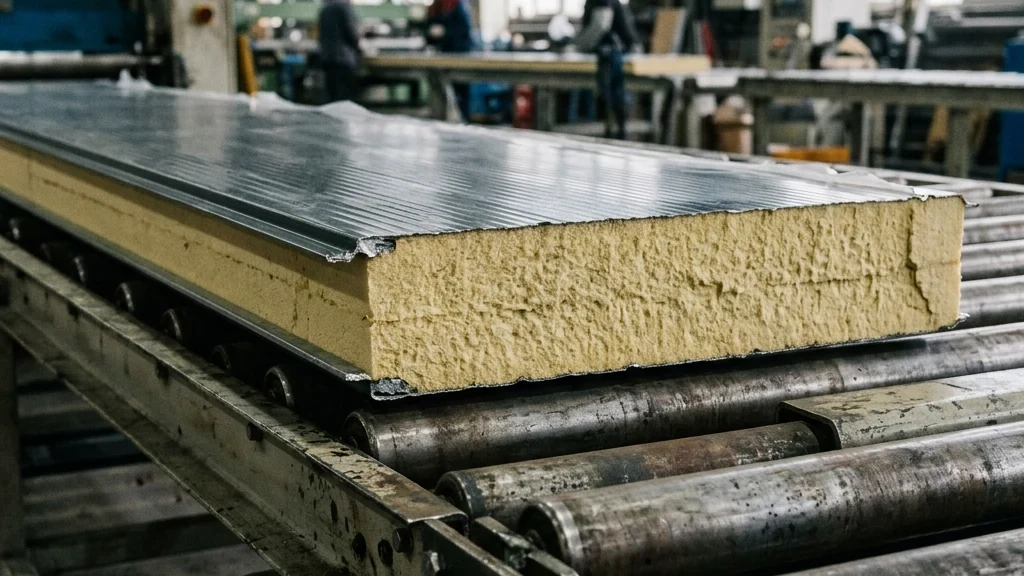
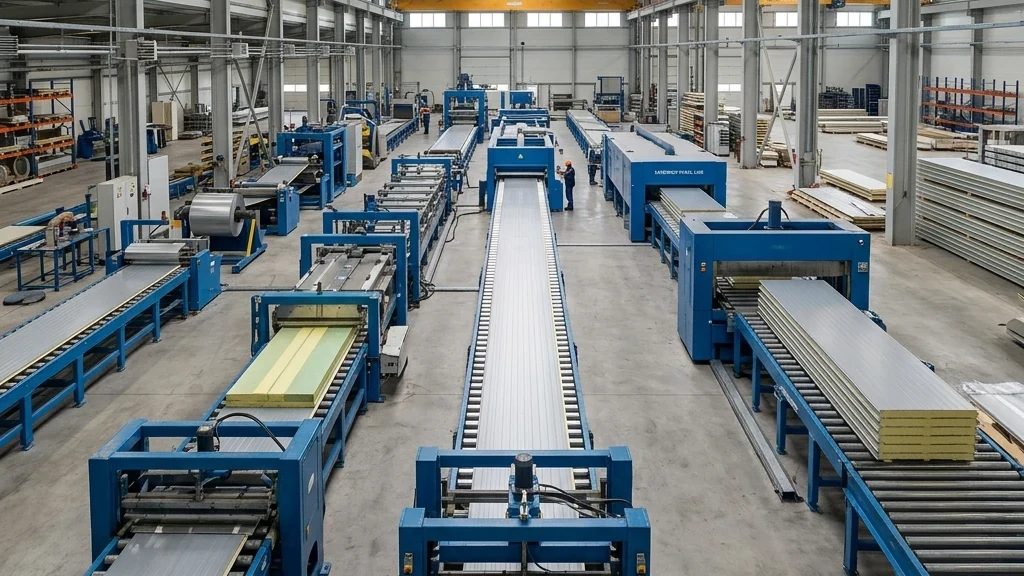
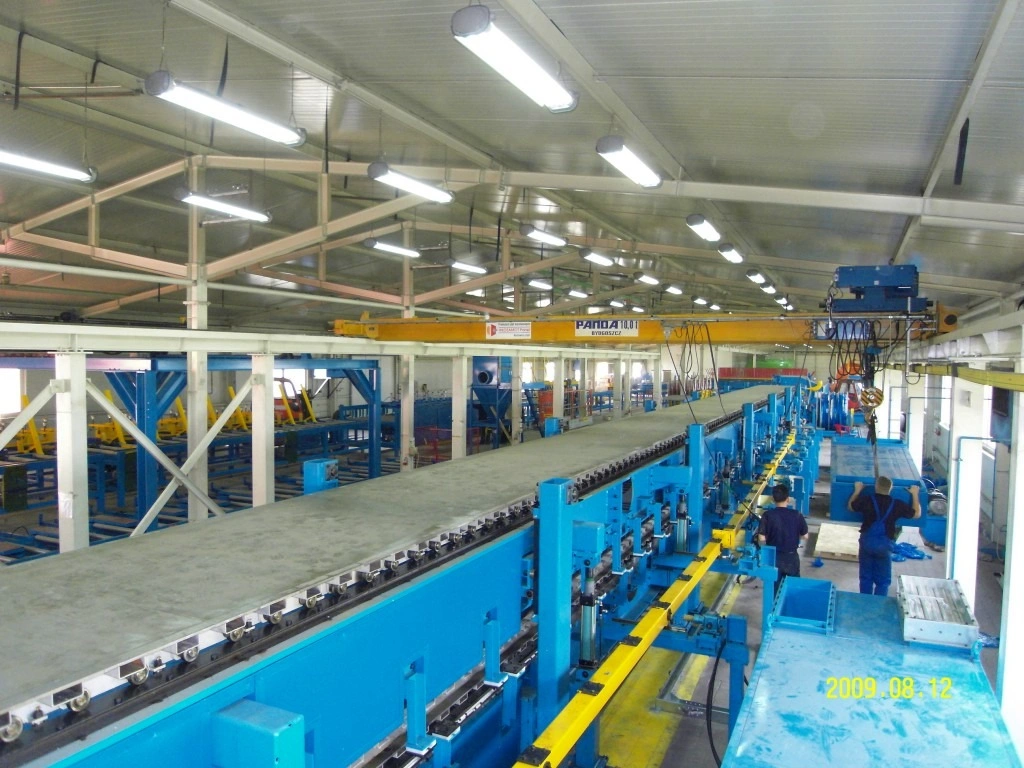
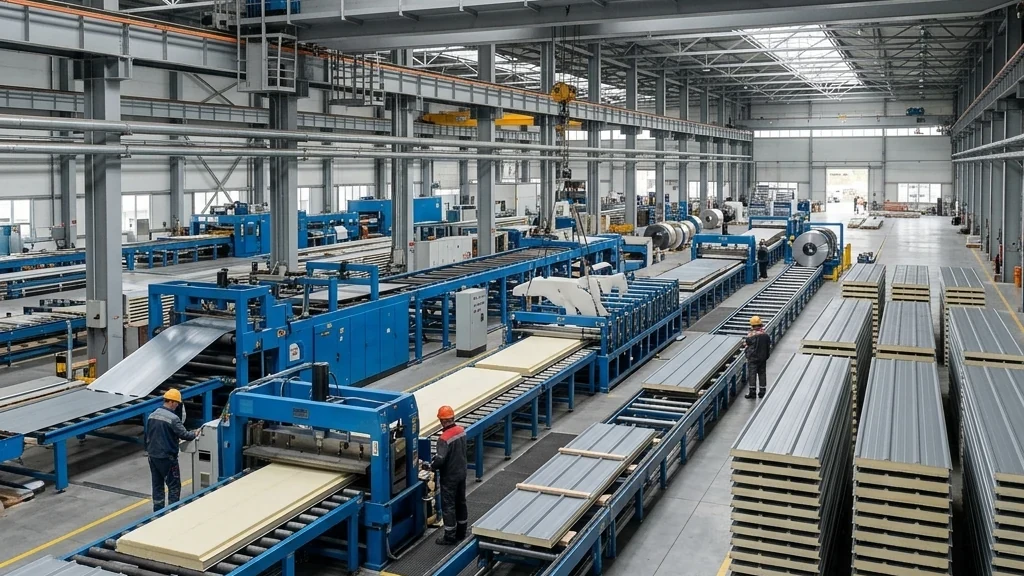
A sandwich panel line is a continuous chain of machines that feeds coated steel coil, forms the outer and inner skins, joins them to an insulation core and delivers cut, stacked and wrapped panels at the end. Every line shares the same front and back sections, and the middle changes with the core material.
The shared sections are coil handling, roll forming, cutting, cooling or handling, stacking and wrapping. The core section is different for each line type: a PU or PIR line foams liquid chemicals between the skins, while mineral wool and EPS lines bond preformed boards or lamellas to the steel with adhesive.
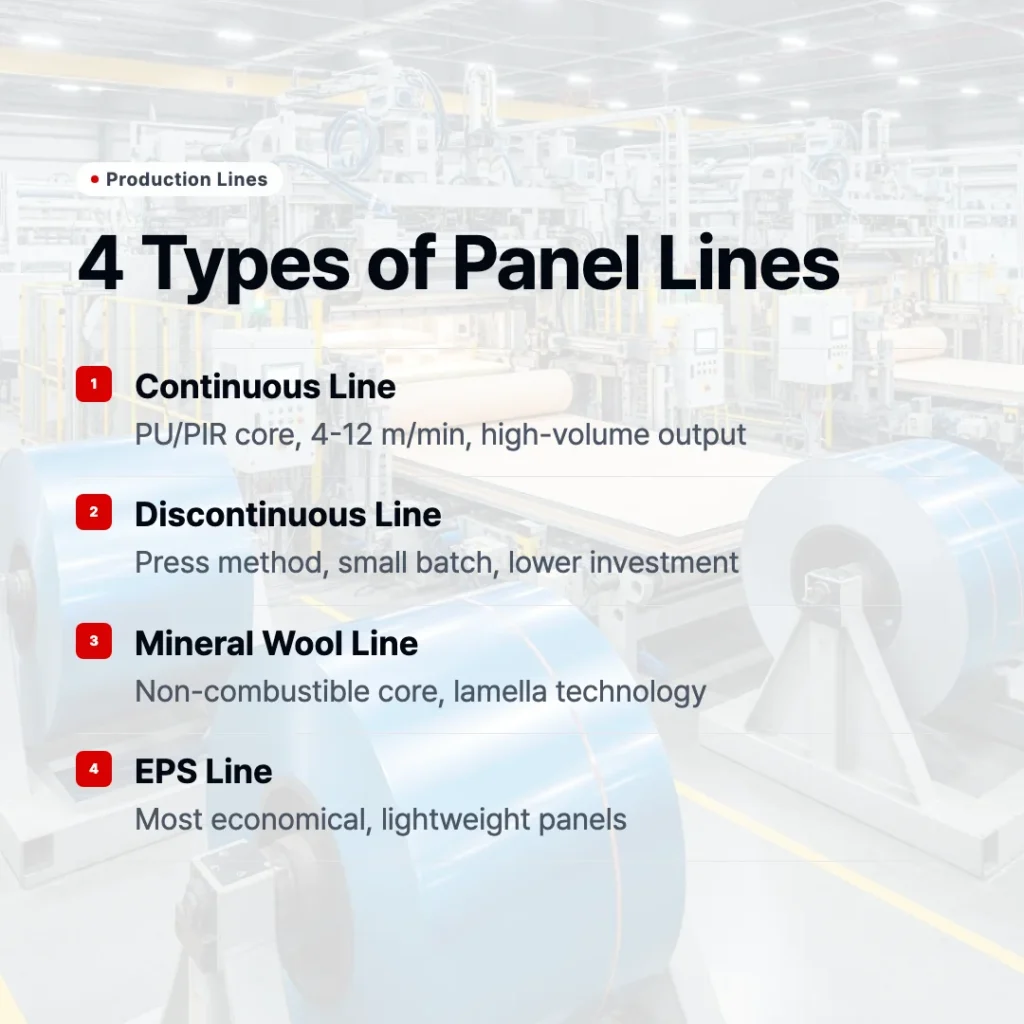
Because the core section defines the line, it is also where quotations differ the most. The overview in Sandwich Panel Production Line: Types, Technology & How to Choose explains how to pick the line type first; this article assumes that choice is made and focuses on the component level.
Coil Handling and Roll Forming
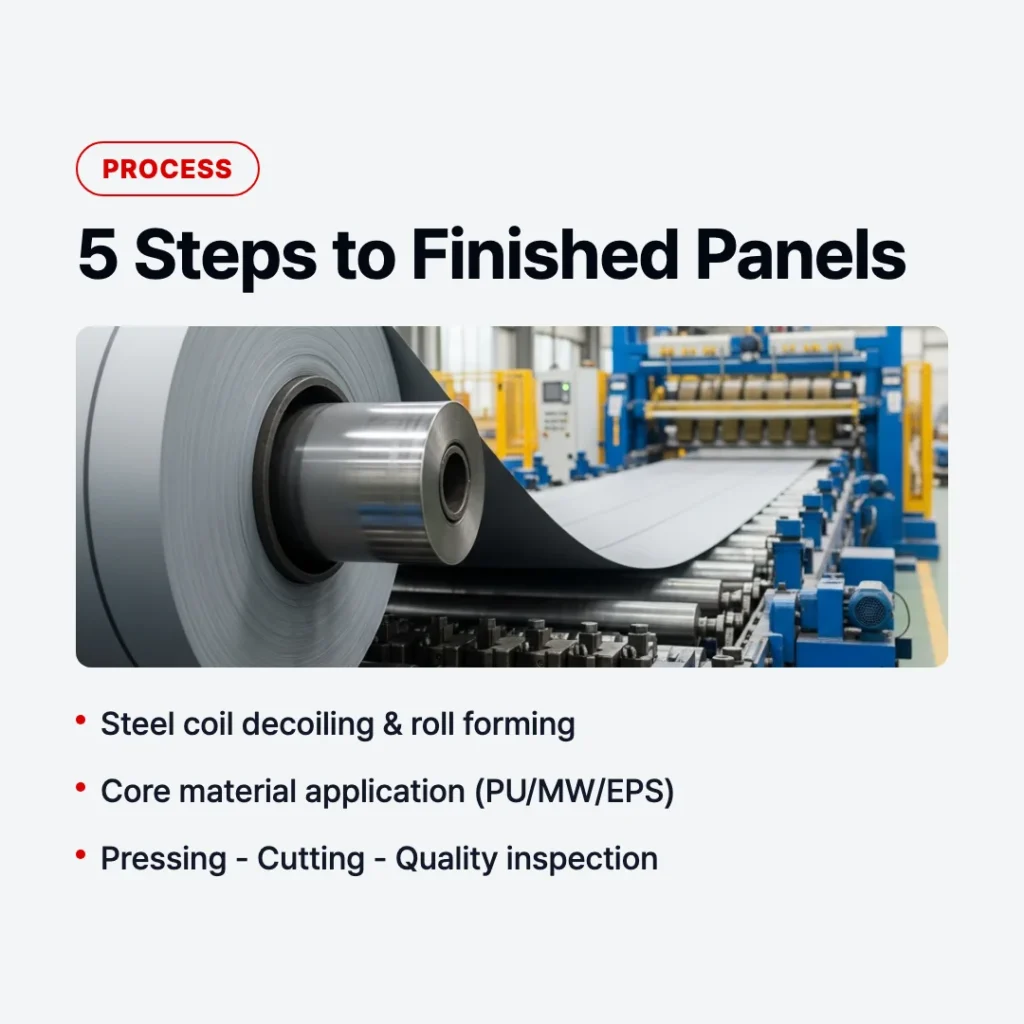
The decoiler feeds pre-painted galvanized steel sheet, known as PPGI, into the line. It can be built as a cone type or an arm type, and an arm type normally needs a coil car to help set the coil. A single line needs at least two decoilers, one for the upper skin and one for the lower skin, and some producers add more to avoid lost time during coil changes. The decoiler capacity should be checked against the coil weight you plan to buy.
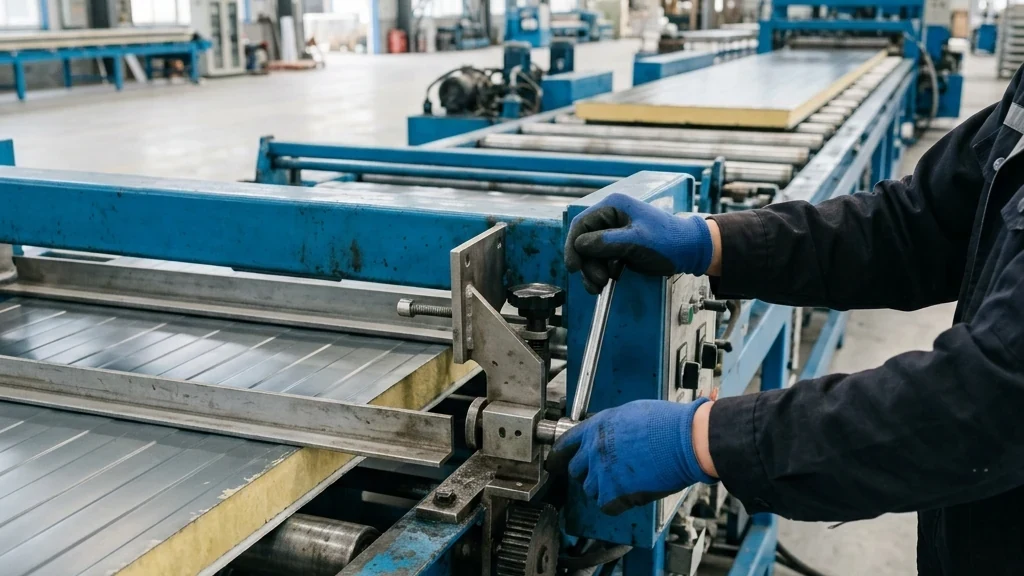
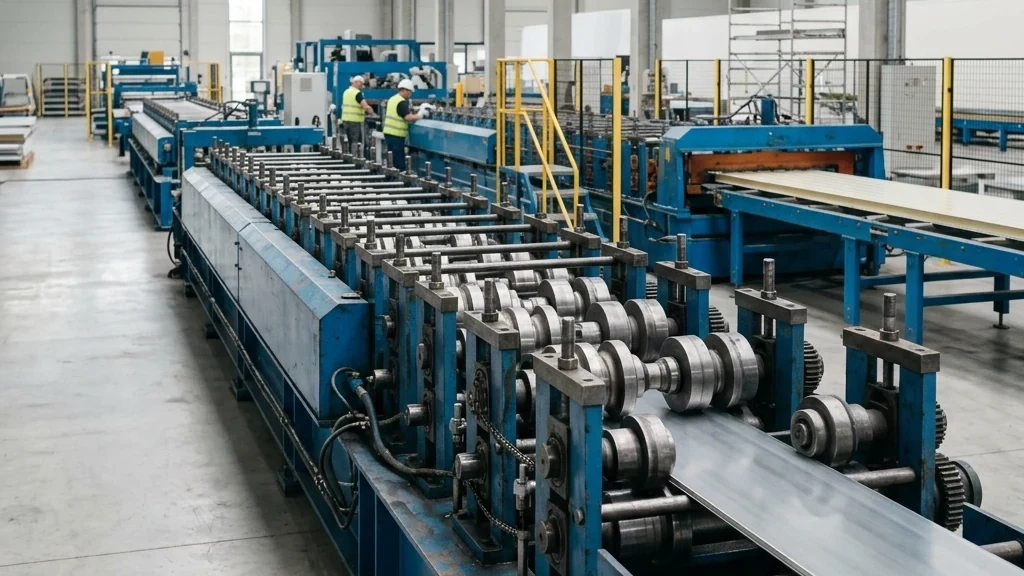
Roll forming shapes the steel into the panel profile. The specifications to compare are the forming width range, which is 500 mm to 1,200 mm on Kindus roll formers, and the way profiles are changed. A fixed type suits a small product range, a rail mounted type lets machines move in and out, and dual or cassette types hold more than one set of rollers so that different profiles can be produced without a second full machine.
How many profiles should the roll forming section support?
As many as your sales plan needs in the first years, plus room for one or two more. Adding a cassette later is far cheaper than adding a new roll former.
Core Feeding, Pressing and Lamination
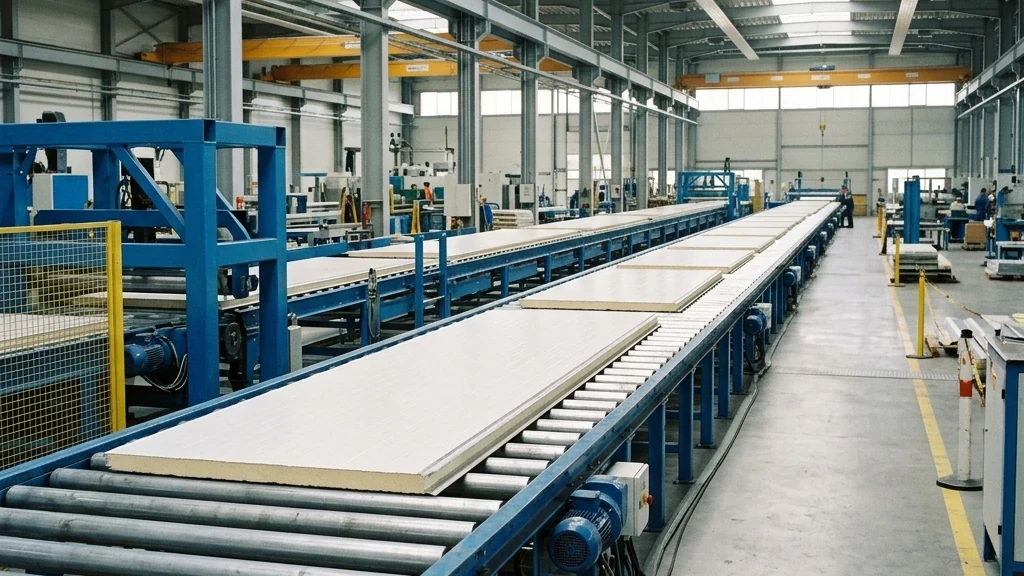
This is the heart of the line, and the specification depends on the core.
On a PU or PIR line, the foaming system meters and mixes the chemicals before laying them between the skins. Points to confirm are the origin of the main components, the blowing agent the machine is designed for, and recipe control. Kindus foaming systems use main parts from Germany and Japan, can run with 141B or pentane, and store recipes on a touch screen; a pentane system also needs its own gas detection. The foam then cures inside a double belt slat conveyor, and the length of the double belt is what sets the maximum production speed of the line. Upper and lower belt synchronization and slat flatness decide panel flatness.
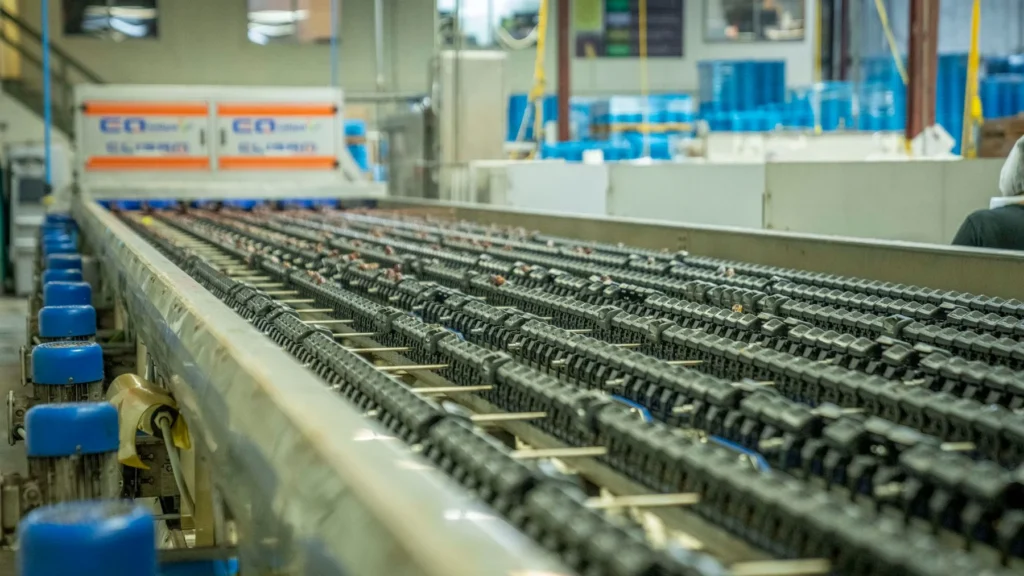
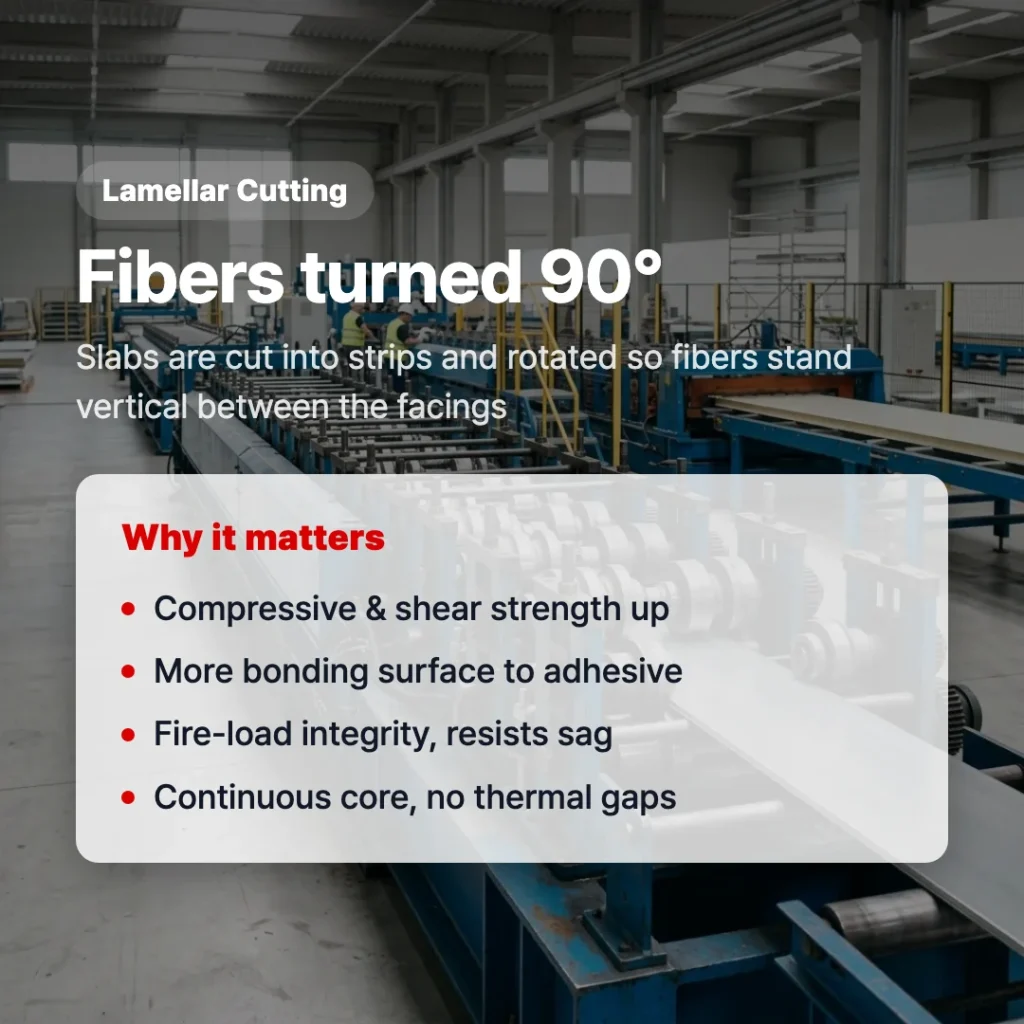
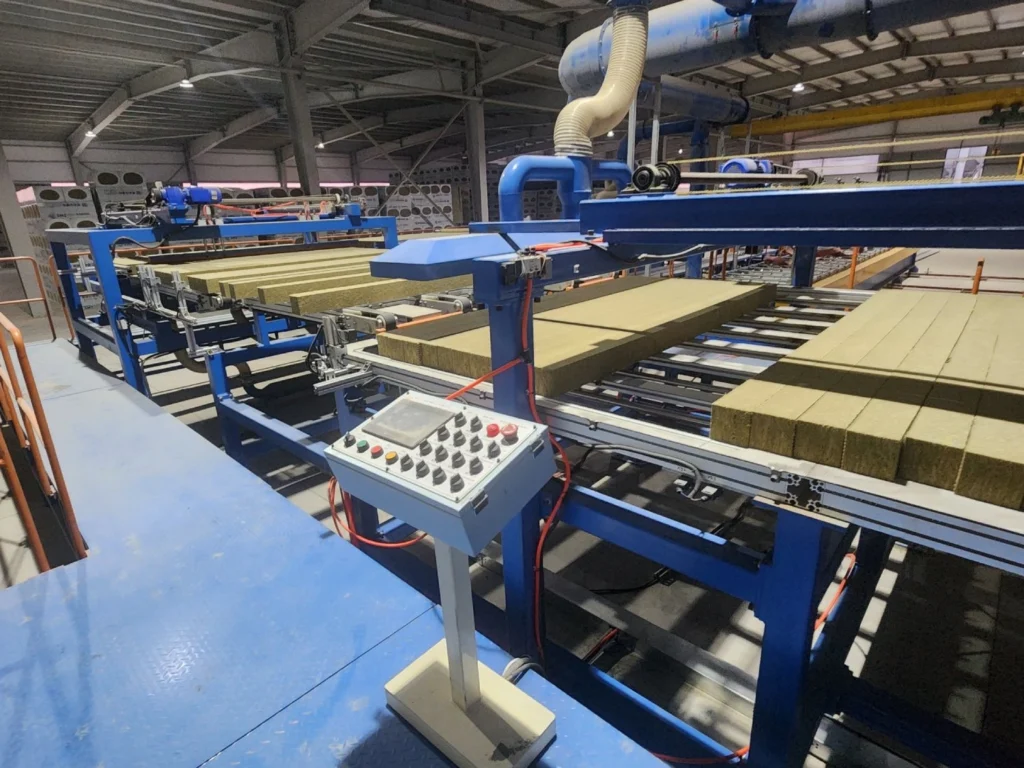
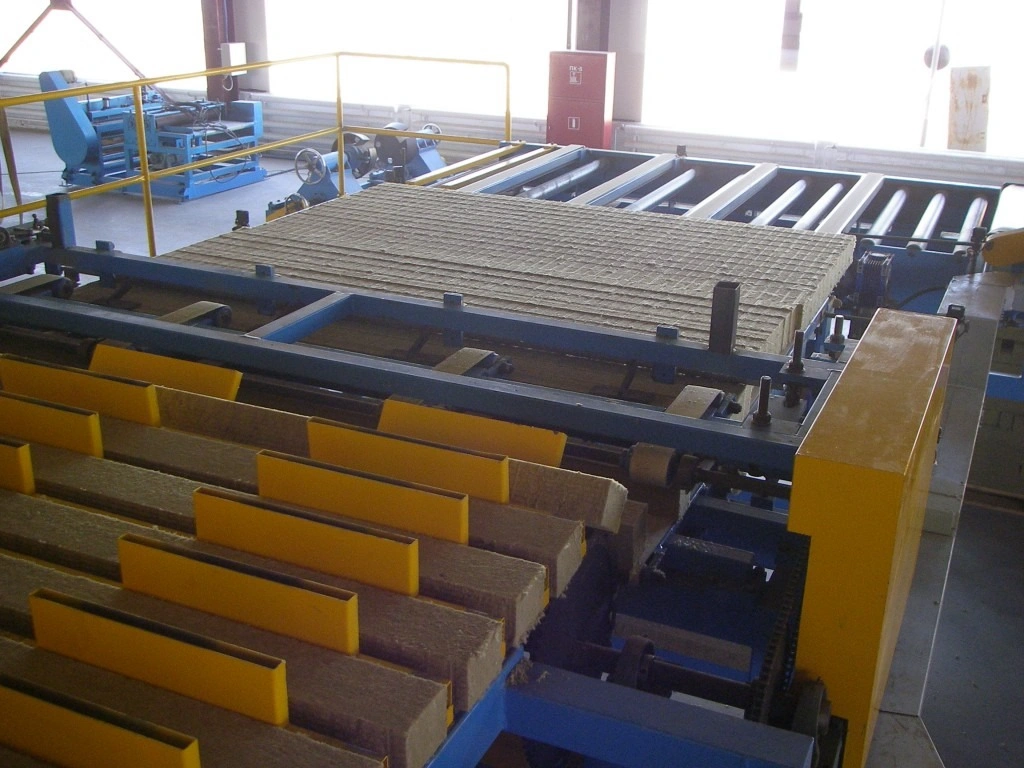
On mineral wool and EPS lines, the core arrives as boards. A board feeding system aligns them, an adhesive system applies glue, and a laminating section presses the skins onto the core. Adhesive can be applied by a wiper type, which is common and durable, or a spray type, which uses less adhesive at a higher equipment cost. A roller laminating section can replace a double belt to reduce investment, and a side PU injection system can be added to reinforce the panel edges.
Cutting, Cooling, Stacking and Wrapping
At the end of the line, panels are cut to the length and quantity set on the touch screen. A band saw gives a very clean cut face, while a circular saw uses two rotating blades and leaves a rougher face, which is still protected by the coating layers of the steel.
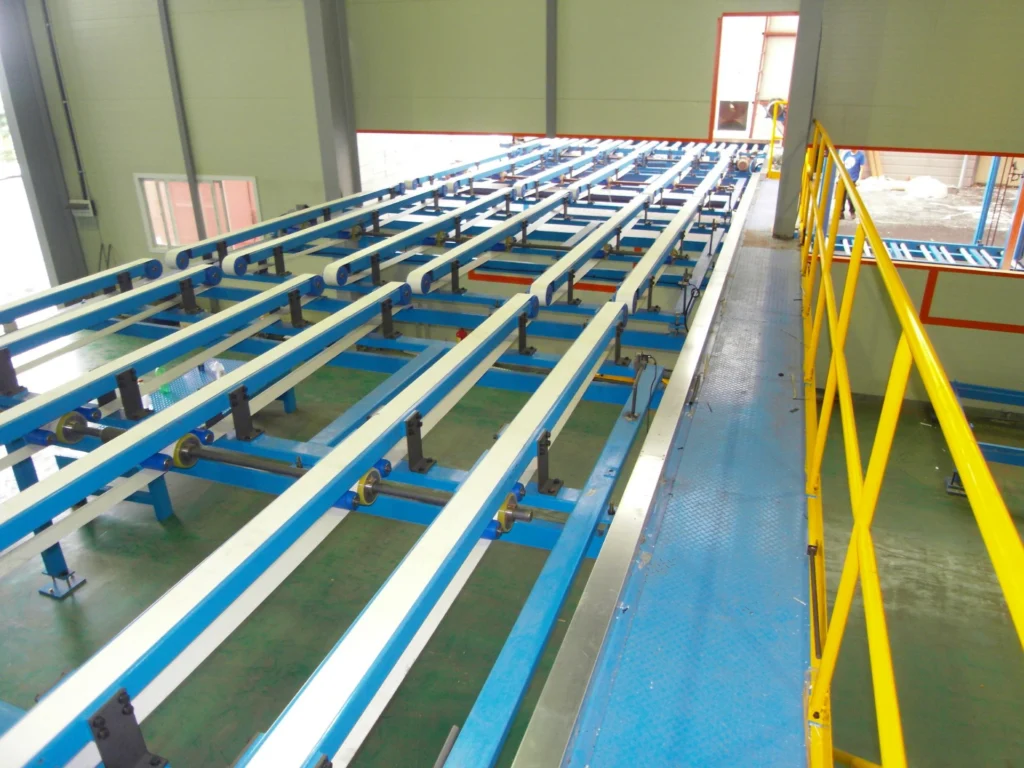
Cooling is easy to underestimate. Freshly produced panels hold heat, and if they are stacked hot, the surface temperature rises and shrinkage and expansion can leave a waved surface. A cooling section that carries panels standing on edge prevents this kind of post-deformation.
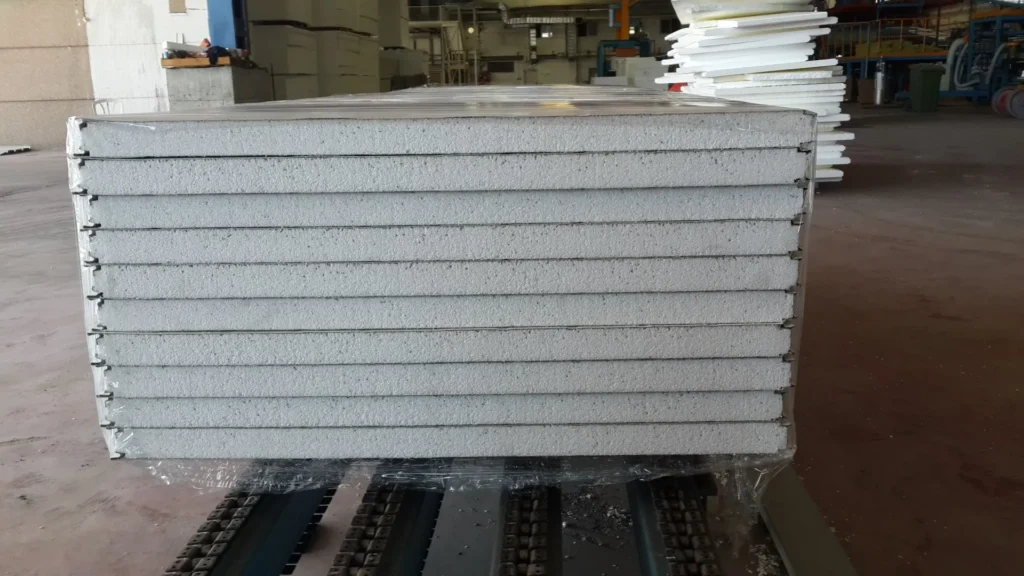
Stacking can be done one panel at a time with vacuum pads or several at a time with a mechanical lifter. Corrugated roof panels need a turnover device so that each panel does not sit on the ribs of the one below. Wrapping then covers each bundle in PE film, either on four sides or completely, sometimes with PP banding, before a forklift takes it to the yard.
Line Speed and Utility Specifications
Headline specifications are still worth comparing, as long as they are read together with the components above. The table below shows the general specifications Kindus publishes for its three automated line types.
| Specification | Continuous PU/PIR line | Mineral wool line | EPS line |
|---|---|---|---|
| Core density | 35K ±5 or 40K ±5 | 40K to 150K | 15K |
| Average speed | 4 to 12 m/min | 4 to 16 m/min | 4 to 18 m/min |
| Annual capacity | About 1,000,000 m² | About 800,000 m² | About 800,000 m² |
| Building size | About W20 x L120 x H7 m | About W15 x L100 x H7 m | About W15 x L80 x H7 m |
| Electric power | About 400 kW | About 200 kW | About 150 kW |
All three need compressed air at a minimum of 6 to 7 bar. The difference between the PU line and the board based lines is that the PU line needs a longer building and more power because foaming and curing take place inside the line, while board based lines bond a finished core.
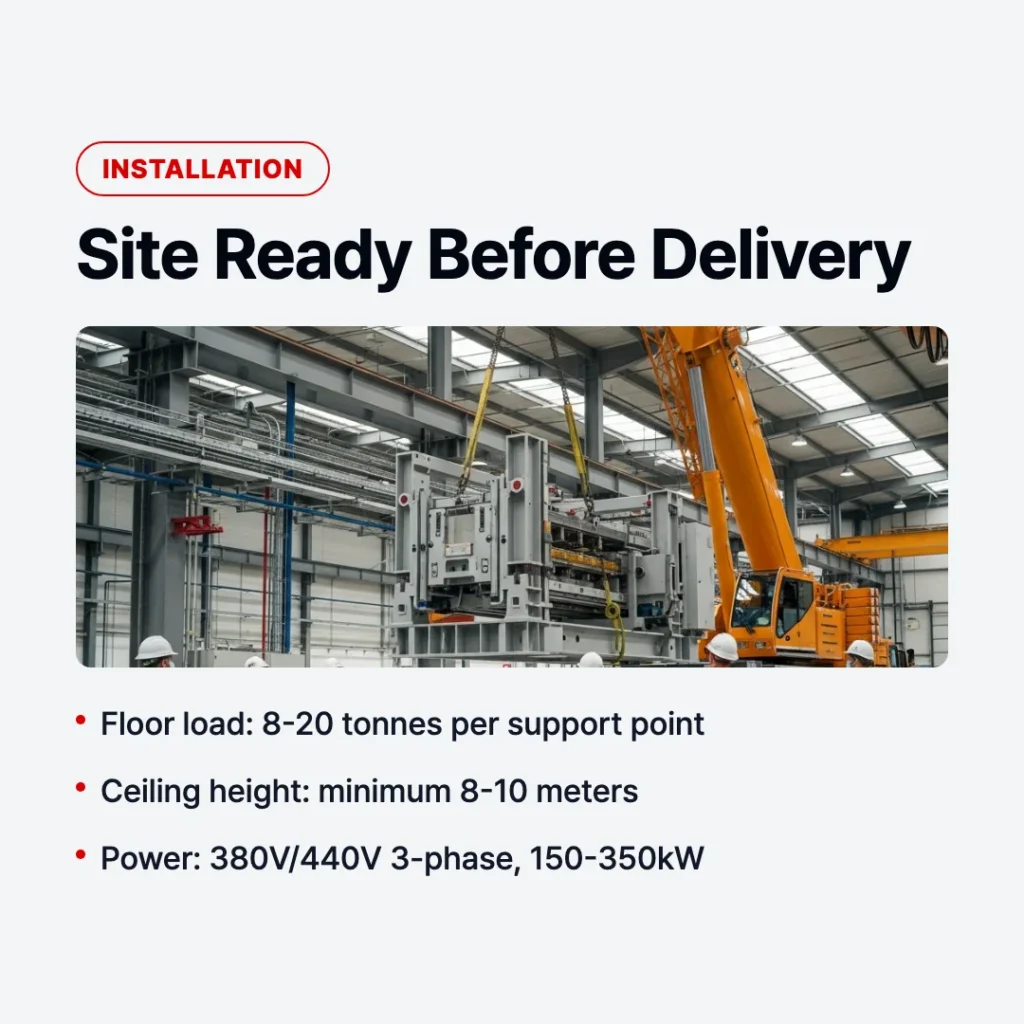
Utility figures belong in the quotation from the start, because building and power supply are usually the buyer’s scope. Site preparation is covered in more detail in Sandwich Panel Line Installation: Site Requirements & Setup Guide.
Specification Checklist for Your RFQ
When requesting quotations, ask every supplier to answer the same component questions so that offers can be compared directly:
- Decoilers: type, number and maximum coil weight
- Roll forming: width range, number of profiles and changeover method
- Core section: foaming component origin and blowing agent, or adhesive type and laminating method
- Double belt or press: length, heating and synchronization
- Cutting: band saw or circular saw
- Cooling, stacking and wrapping: included or optional, and turnover device for roof panels
- Utilities: building size, power and air
Kindus builds the whole line in-house, from decoilers to wrapping, and also runs four continuous panel lines of its own. That daily production experience is why component details such as cooling and stacking are treated as quality items, not accessories.
Frequently Asked Questions
What are the key components of a sandwich panel line?
Decoilers, roll formers, a core section for foaming or board lamination, a double belt or laminating press, cutting, cooling, stacking and wrapping. The core section changes with the insulation material.
Which component limits the production speed?
On a PU or PIR line, the length of the double belt slat conveyor sets the maximum speed, because the foam must cure while the panel is still inside the belt.
Can one line produce both wall and roof panels?
Yes, if the roll forming section supports both profiles. Roof panels also need a turnover device at the stacker to protect the ribs and paint.
To compare component configurations for your planned capacity, send your requirements at Request Technical Specifications.