A sandwich panel line is a long-term investment that runs for years, and the value of that investment depends heavily on what happens after installation. A line that stops for days because a wear part is unavailable, or because no one can diagnose a fault remotely, costs far more in lost production than the part itself. This is why after-sales service is as important as line speed or price when choosing a supplier, yet it is often the least examined part of the decision.
In this article, we will look at why after-sales service matters, what it should include, and how to evaluate a supplier’s support.

Why After-Sales Service Matters for a Sandwich Panel Line
After-sales service is the support a supplier provides once the line is installed and running. It covers spare parts, technical assistance, maintenance guidance, and operator support over the life of the equipment.
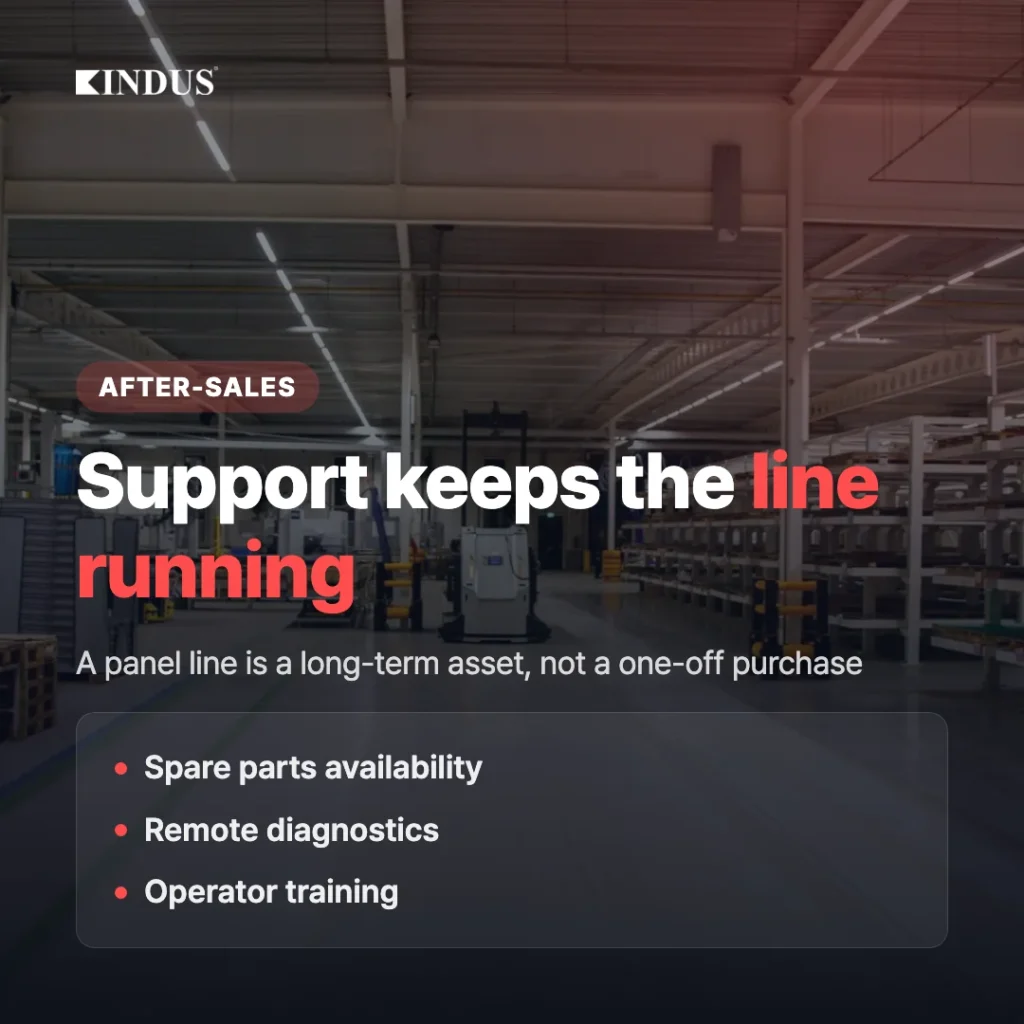
The reason it matters is downtime. A continuous panel line produces value only while it runs, so any stoppage directly reduces output. The difference between a well-supported line and an unsupported one is how quickly production resumes after a problem. A fault that a supported operator resolves in hours can take days without parts or guidance. Good after-sales support is therefore part of the line’s real productivity, not a separate add-on. It should be weighed during supplier evaluation, as discussed in Sandwich Panel Line Supplier Evaluation: A Practical Framework.
Core Elements of After-Sales Support
After-sales service is not a single offering but a set of capabilities that keep the line running. A buyer should look for each of these when comparing suppliers.
The core elements are:
- Spare parts supply, including availability of wear parts and lead times
- Remote technical support for diagnosing faults quickly
- On-site service for problems that cannot be solved remotely
- Operator and maintenance training to prevent avoidable stoppages
Spare parts availability deserves particular attention, because wear parts on a panel line need periodic replacement regardless of how well the line is maintained. Knowing which parts wear and keeping them on hand is the simplest way to prevent long stoppages. Structured approaches such as total productive maintenance reduce the unplanned stoppages that make strong after-sales service so valuable.
Response Time and the Cost of Downtime
- Typical remote response time
- Spare-parts lead time
- How past breakdowns were handled
The value of after-sales service is best understood through the cost of downtime. When a line stops, the loss is not only the idle equipment but the output that was scheduled during that time.
How much does a day of downtime cost?
It depends on the line’s capacity, but for a continuous line producing panels at full speed, even a single day of lost production usually exceeds the cost of the parts or service involved.
This is why response time is a key measure of after-sales quality. A supplier who can diagnose a fault remotely within hours and ship the needed part quickly protects far more value than one whose support is slow or unclear. Buyers should ask about typical response times and parts lead times before purchase, not after a breakdown.
Evaluating a Supplier’s Support
Because after-sales service is hard to see before purchase, buyers should evaluate it through concrete questions rather than general assurances. The goal is to understand how support actually works in practice.
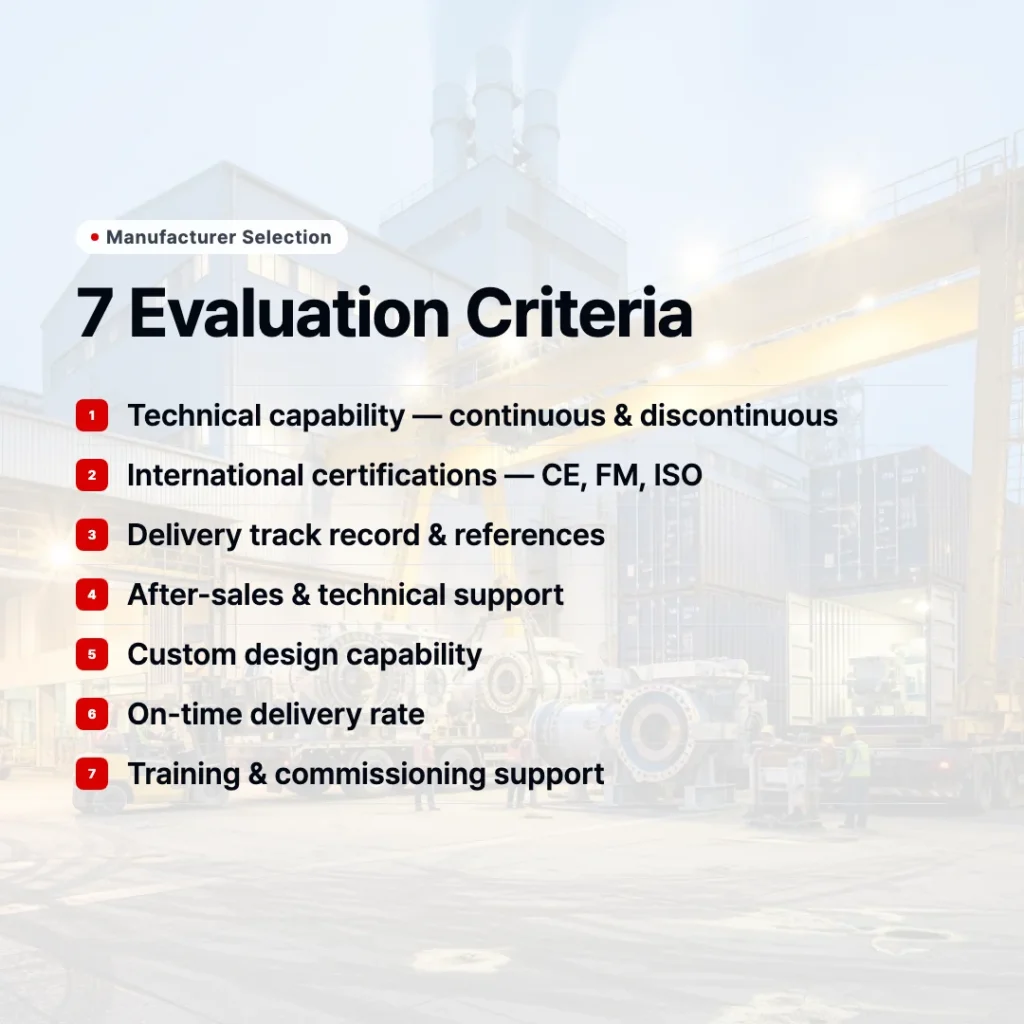
Useful questions include how spare parts are stocked and shipped, what remote support channels exist, whether operator training is provided at commissioning, and how the supplier has handled past breakdowns for other customers. A supplier with delivery experience across many markets will have established processes for parts and support, which is a stronger signal than a promise of good service. Matching this against the manufacturer selection criteria in How to Choose a Sandwich Panel Machine Manufacturer: Expert Guide gives a complete picture.
Kindus provides after-sales support as part of the line delivery, including spare parts supply and remote technical assistance, so that operators are not left without help after commissioning.
Kindus Support
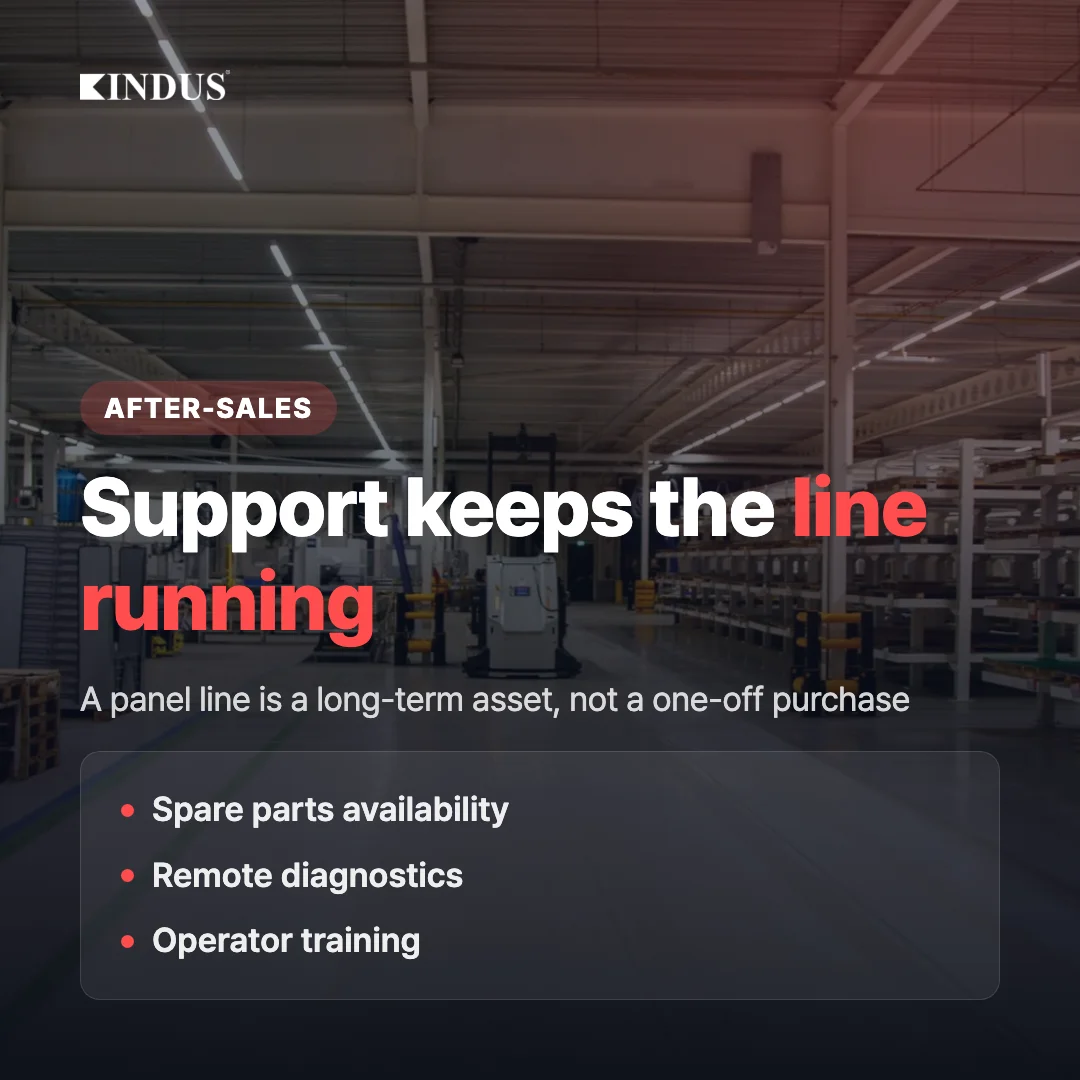
Kindus supports its sandwich panel lines with spare parts supply, remote diagnostics, and operator training, backed by installations running across more than 40 countries. This experience means the parts and support processes are established rather than improvised.
At Kindus, after-sales service is planned as part of the project from the start, so that customers know how parts, remote support, and training will work before the line is even installed. The aim is to keep the line producing with minimal interruption over its full service life.
Frequently Asked Questions
Why is spare parts availability so important?
Wear parts on a panel line need periodic replacement regardless of maintenance quality. If these parts are not readily available, a routine replacement can turn into a multi-day stoppage.
What makes remote support valuable?
Many faults can be diagnosed and resolved without an on-site visit. Remote support that responds within hours restores production far faster than waiting for a technician to travel to the site.
How can I evaluate after-sales service before buying?
Ask concrete questions about parts stocking and lead times, remote support channels, training at commissioning, and how the supplier handled past breakdowns. Established processes are a stronger signal than general promises.
After-sales service is part of a line’s real productivity, not an optional extra. To understand how support and spare parts are handled for a Kindus line, get in touch.