A sandwich panel is only as good as the foam core hidden between its facings, and the single property that governs whether that core performs is its density. When density drifts even a few kilograms per cubic metre off target, insulation value, compressive strength, and dimensional stability all move with it, often without any visible sign until a panel fails on site or in a certification test. The difficulty is that density is set by a chemical reaction happening in seconds inside a moving laminate, where it cannot be seen and can only be inferred.
In this article, we’ll look at how core density is targeted, metered, sampled, and corrected across a PU sandwich panel line.


Why core density drives panel performance
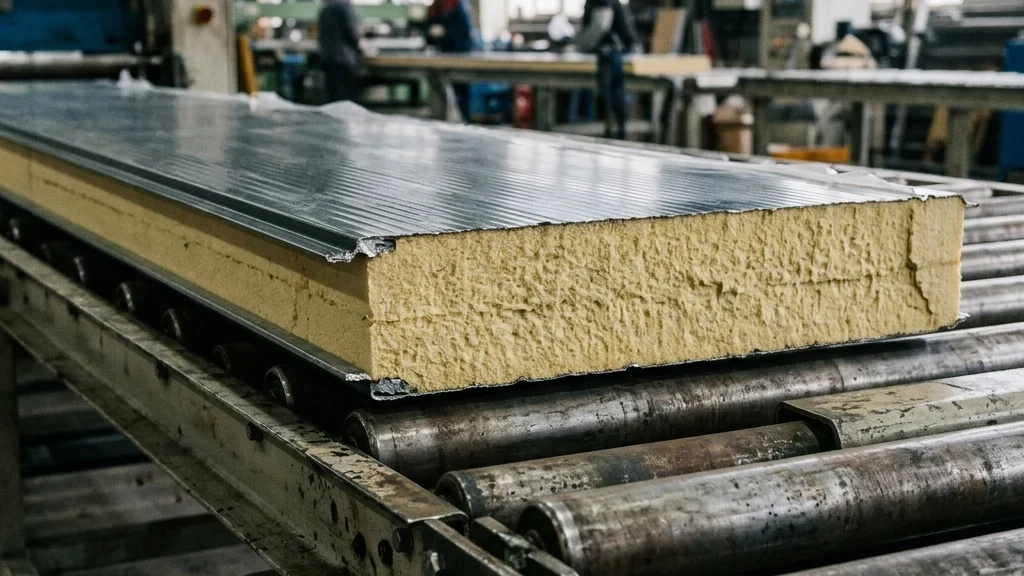
Core density is the mass of cured foam per unit volume, and it is the master variable that sets a panel’s thermal, structural, and dimensional behaviour at once. A foam blown to a lower density thins the cell walls that carry compressive load, so the panel becomes softer and more prone to facing delamination under fastening or wind load. Push density higher and the panel gains strength but loses insulation efficiency per kilogram and costs more in raw chemical. Compared with facing thickness or adhesive choice, which affect one property each, density moves every performance figure simultaneously, which is exactly why it cannot be left to settle on its own.
Target density ranges by application
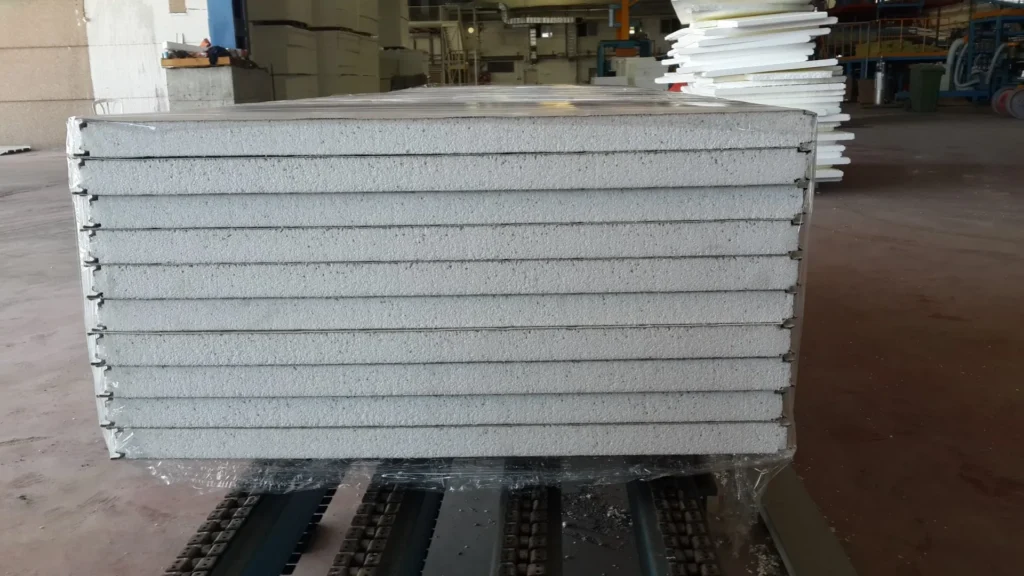
Target density is the design core density a producer sets for a given product before the line ever runs, chosen from the application’s structural and thermal demands. For continuous PU sandwich panels, cored densities typically sit in the 38 to 45 kg/m³ band, with the lower end suited to lightweight wall panels where insulation per weight matters most and the upper end reserved for roof and load-bearing panels that must resist walking loads and point fastening. At KINDUS, product recipes fix a target density together with the line speed and panel thickness it applies to, because a density figure quoted without its companion parameters tells a buyer almost nothing.
Before committing a target for a new product, confirm these points:
- The structural duty the panel must meet, whether wall, roof, or cold-store
- The thermal conductivity the specification demands at the chosen thickness
- The fire classification, if any, and the density consistency it requires
- The raw-material cost band the density implies at production volume
- Whether the target sits inside the line’s proven density envelope
Metering and mixing accuracy
Metering accuracy is the precision with which the isocyanate and polyol components are dosed to the mixing head, and it is the first place density is either won or lost. The two components must arrive at the head in exact ratio, because the reaction that generates the foam’s cell structure is stoichiometric, and even a small excess of one side shifts the blow, the cure, and therefore the final density. On a well-controlled PU line, metering accuracy is held within plus or minus 0.5 percent, and mixing-head impingement pressure typically runs in the 120 to 180 bar range so the streams mix completely before deposition. Compared with adjusting oven temperature or belt speed downstream, which can only compensate after the fact, dosing precision prevents the density fault from ever forming.
Real-time QC and density sampling

Density QC is the routine of verifying, during production, that finished core density matches target rather than assuming the recipe delivered it. The direct method is gravimetric: cut a known-volume specimen from a sampled panel, weigh it, and divide, then log the result against the batch. Because that check is destructive and lags the line, producers pair it with continuous indirect signals such as component flow rates, tank temperatures, and rise-profile monitoring that flag a drift the moment it starts. A common question here is how often to sample. There is no universal interval, but density should be checked at every product changeover, at the start of each shift, and after any raw-material batch change, since those transitions are when drift appears.
Diagnosing density drift: causes and correction
Density drift is a gradual departure of measured core density from target over a run, and diagnosing it means tracing the reaction back to the input that moved. The usual culprits are temperature-related: feed temperature outside its window changes viscosity and the metered mass, while ambient or substrate temperature shifts the rise and cure. A worn mixing head degrades blend quality, and a ratio error from a drifting pump or blocked line is the other frequent cause. Compared with a sudden fault that stops the line outright, drift is more dangerous precisely because it stays inside visual tolerance while quietly moving the numbers. Correction follows the diagnosis: restore feed temperatures to spec, recalibrate the metering pumps against a fresh gravimetric check, service the mixing head, and only then resume full-speed output.
KINDUS density control
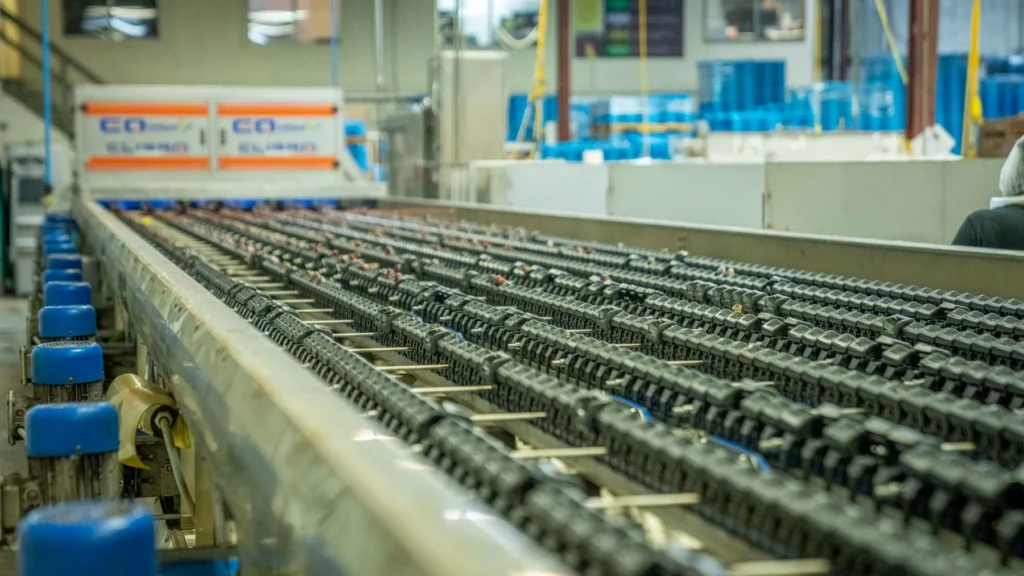
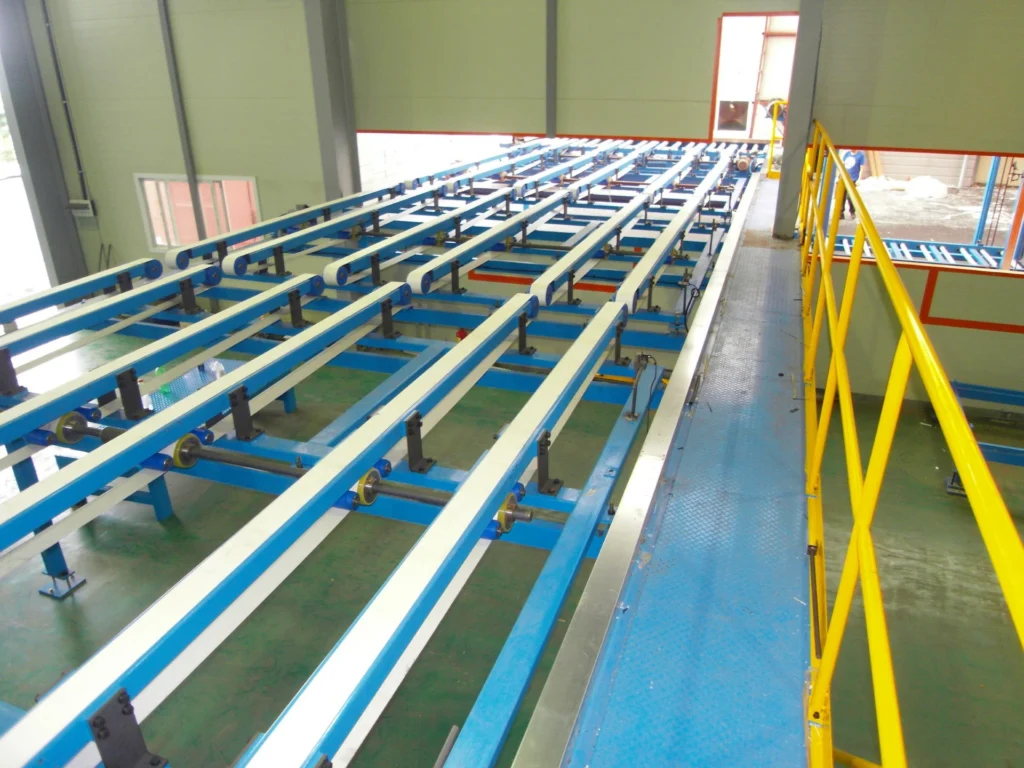
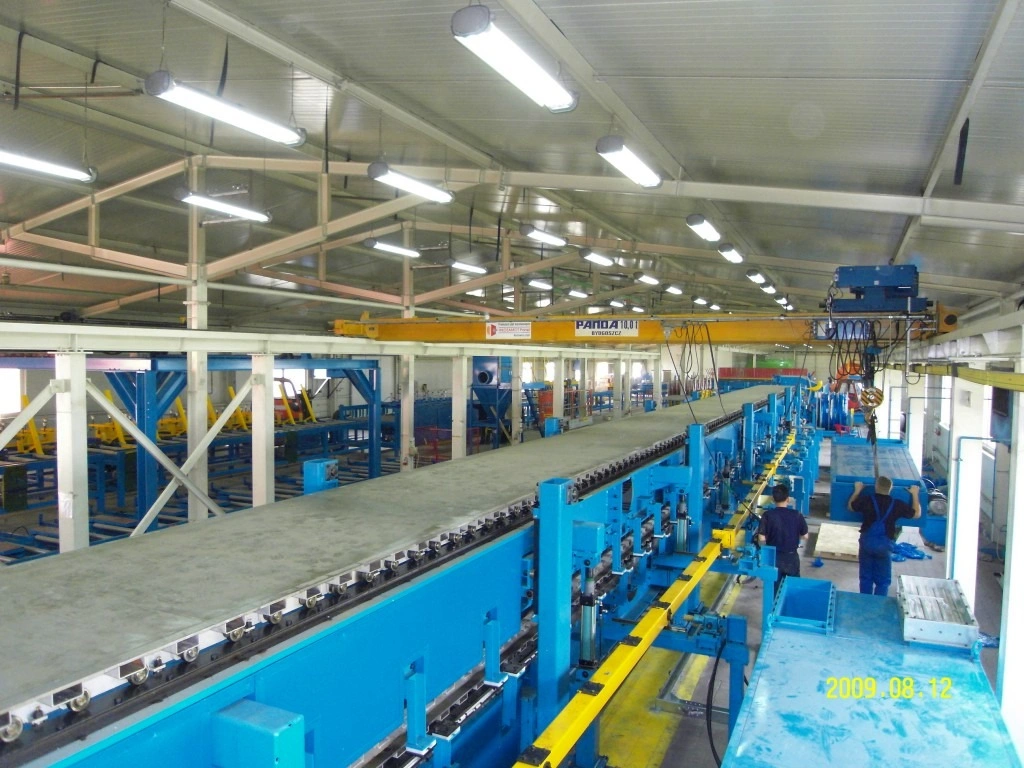
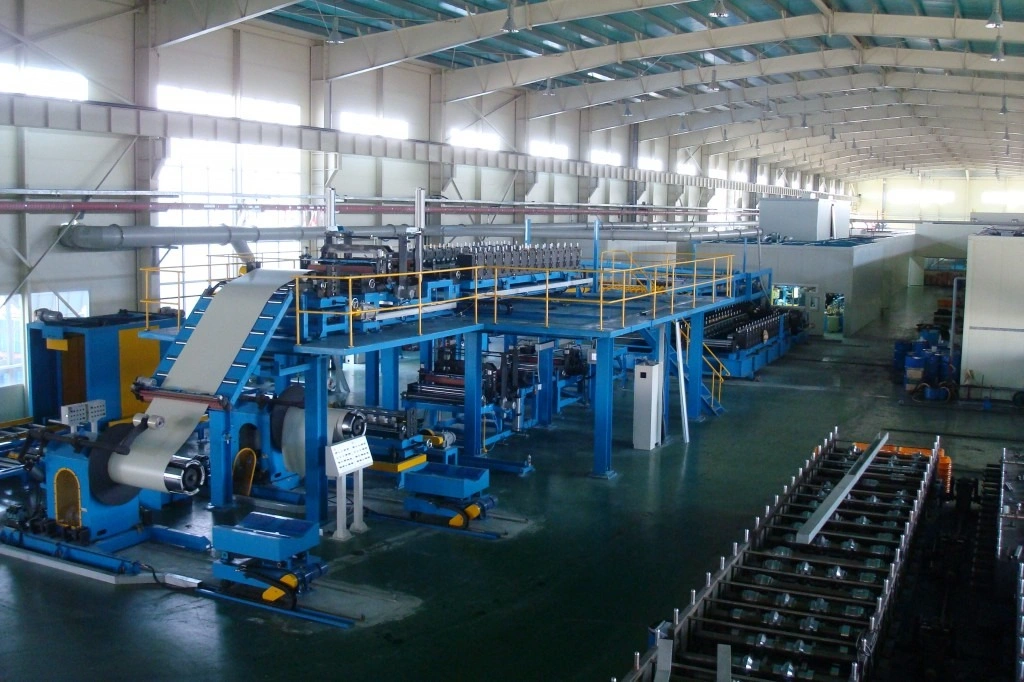
At KINDUS, continuous PU and PIR sandwich panel lines are built with metering, mixing, and curing systems specified to hold core density across the full production run rather than at a nominal set point. The dosing units are engineered to the plus or minus 0.5 percent accuracy that density stability depends on, and each line ties its density envelope to stated speed and thickness so a buyer knows what the machine actually sustains. For the engineering context behind these systems, the PU/PIR Sandwich Panel Machine: Complete Technical Overview sets out how the metering, mixing head, and curing stations combine, while the Continuous PU Sandwich Panel Line: Configuration, Specs & Throughput shows how density trades against line speed in a real configuration. To see where density control sits within the wider sequence, the Sandwich Panel Manufacturing Process: Step-by-Step Technical Overview walks the full line station by station. See line specifications at Continuous PU/PIR Sandwich Panel Line.
What is the correct core density range for a PU sandwich panel?
For continuous PU panels the core density typically sits between 38 and 45 kg/m³. Lightweight wall panels favour the lower end for insulation per weight, while roof and load-bearing panels use the upper end for compressive strength. It is always set per product rather than as a single number.
What causes core density to drift during production?
Drift usually traces to feed temperature moving out of range, which changes component viscosity and the metered mass, or to a ratio error from a drifting pump or blocked line. A worn or contaminated mixing head also degrades blend quality. Because these move density gradually while the panel still looks normal, they are found by monitoring flow rates and gravimetric samples rather than by eye.
How is foam core density actually measured?
The direct method is gravimetric: a specimen of known volume is cut from a sampled panel, weighed, and its mass divided by its volume to give density in kg/m³. Because this check is destructive and lags the line, it is paired with continuous monitoring of flow rates, tank temperatures, and the foam rise profile so drift is flagged in real time.