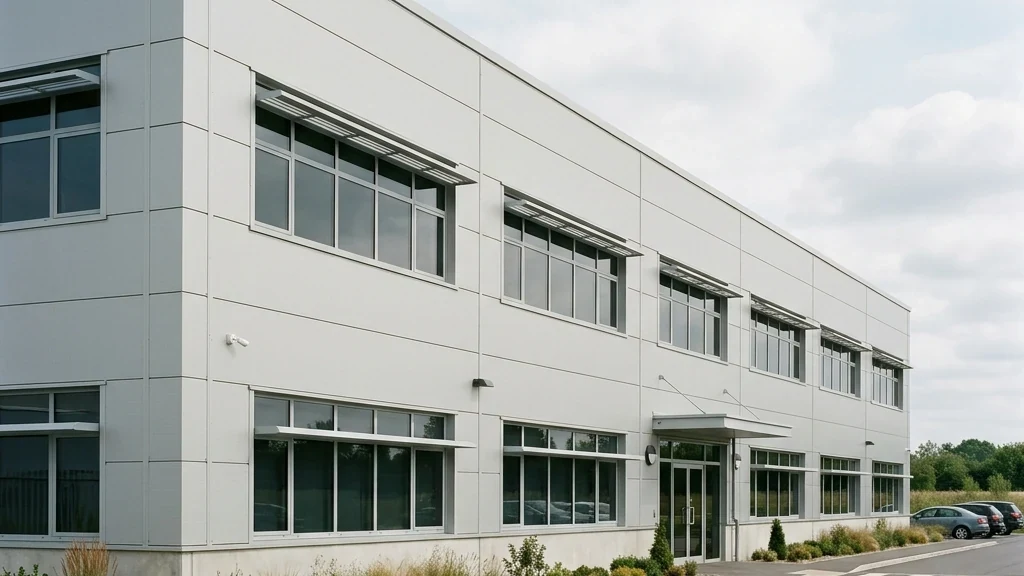
A continuous sandwich panel line built around a double belt press is the standard choice for manufacturers who need high, consistent output. The double belt press is the heart of the line, because it is where the foam cures under controlled pressure and temperature while the panel moves without stopping. Understanding how this press works, how the line is configured around it, and what governs throughput helps buyers evaluate whether a continuous line fits their production goals.
In this article, we will look at the double belt press system, the configuration of a continuous line, and the factors that determine throughput.

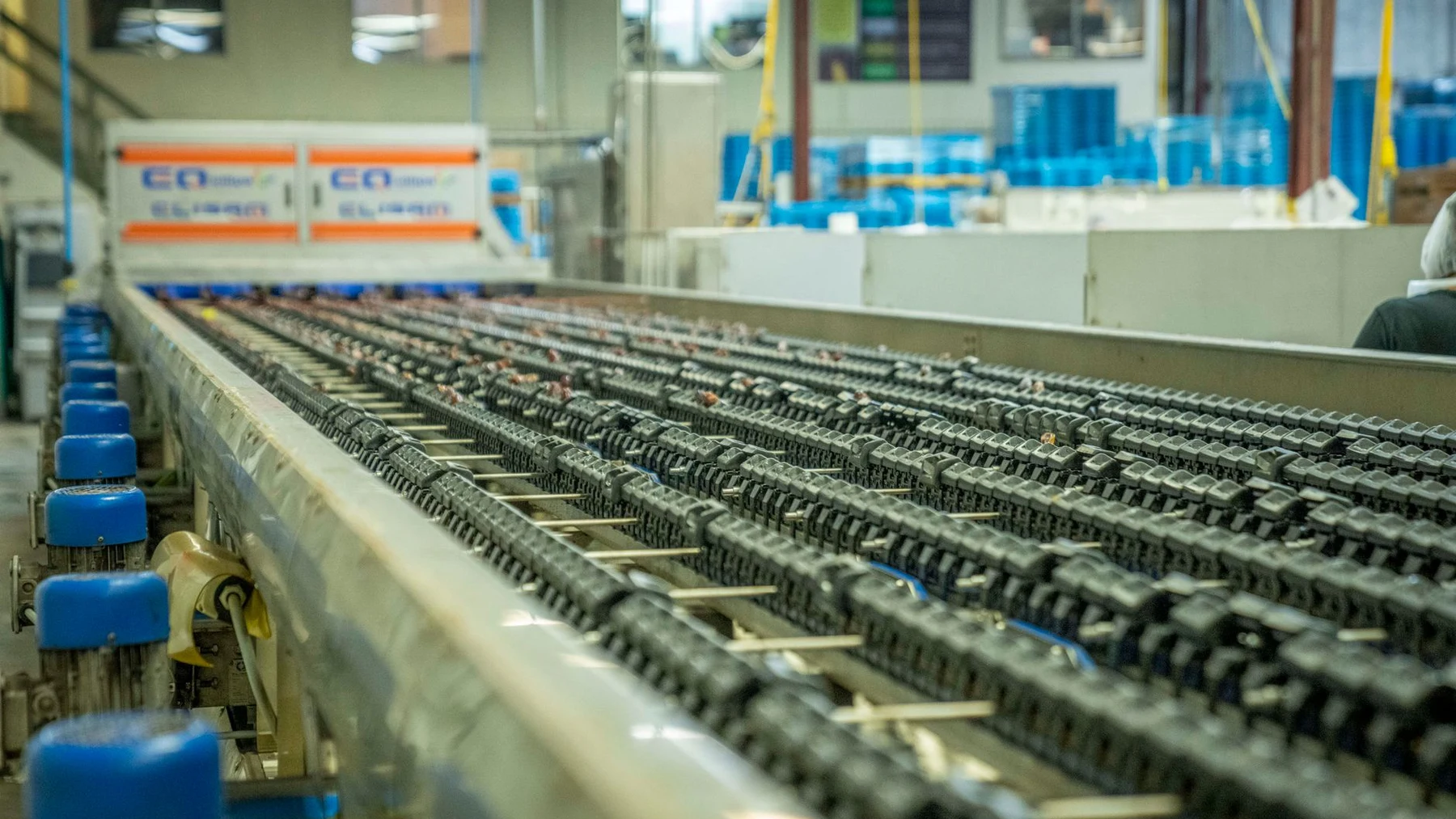
What a Double Belt Press Does
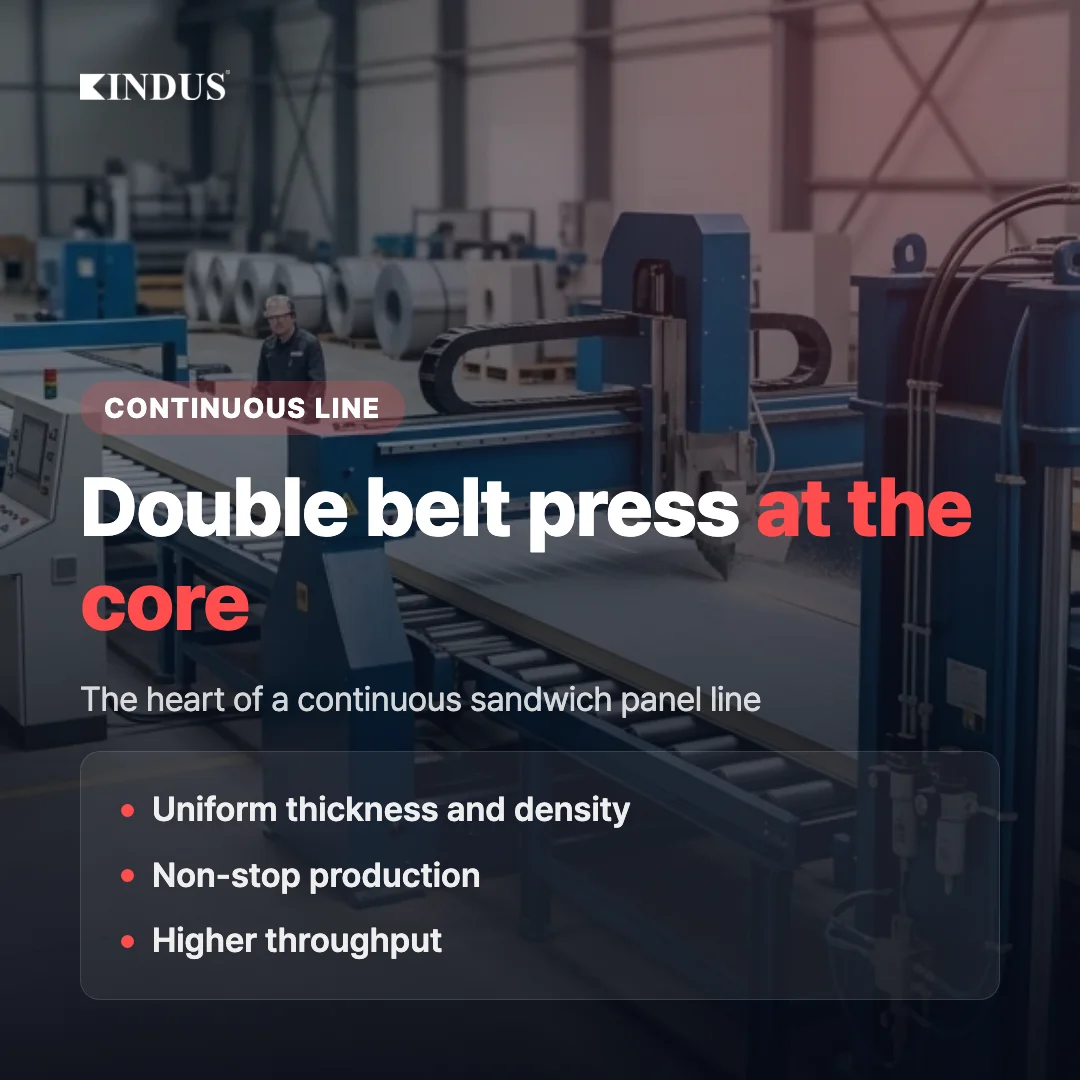
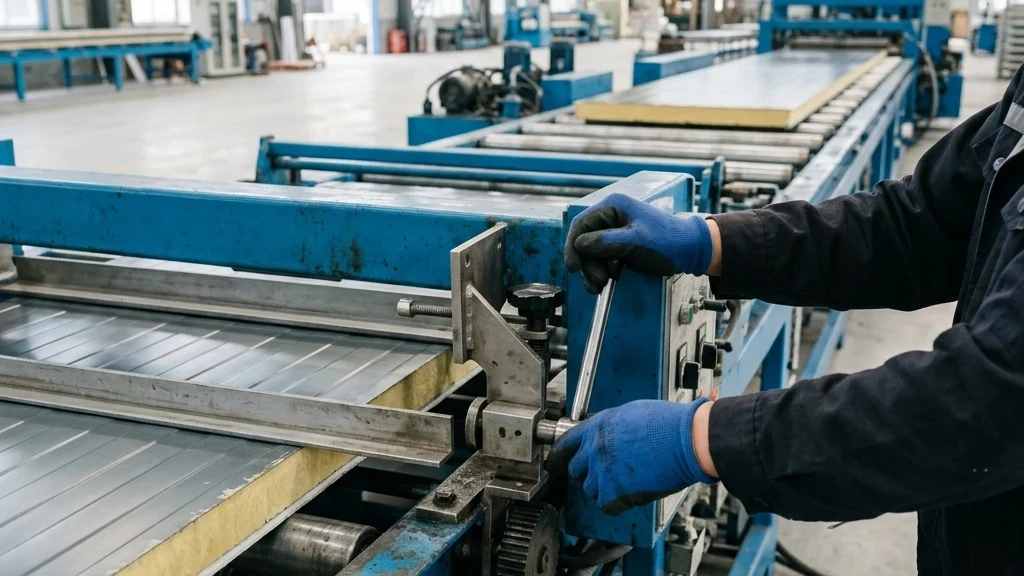
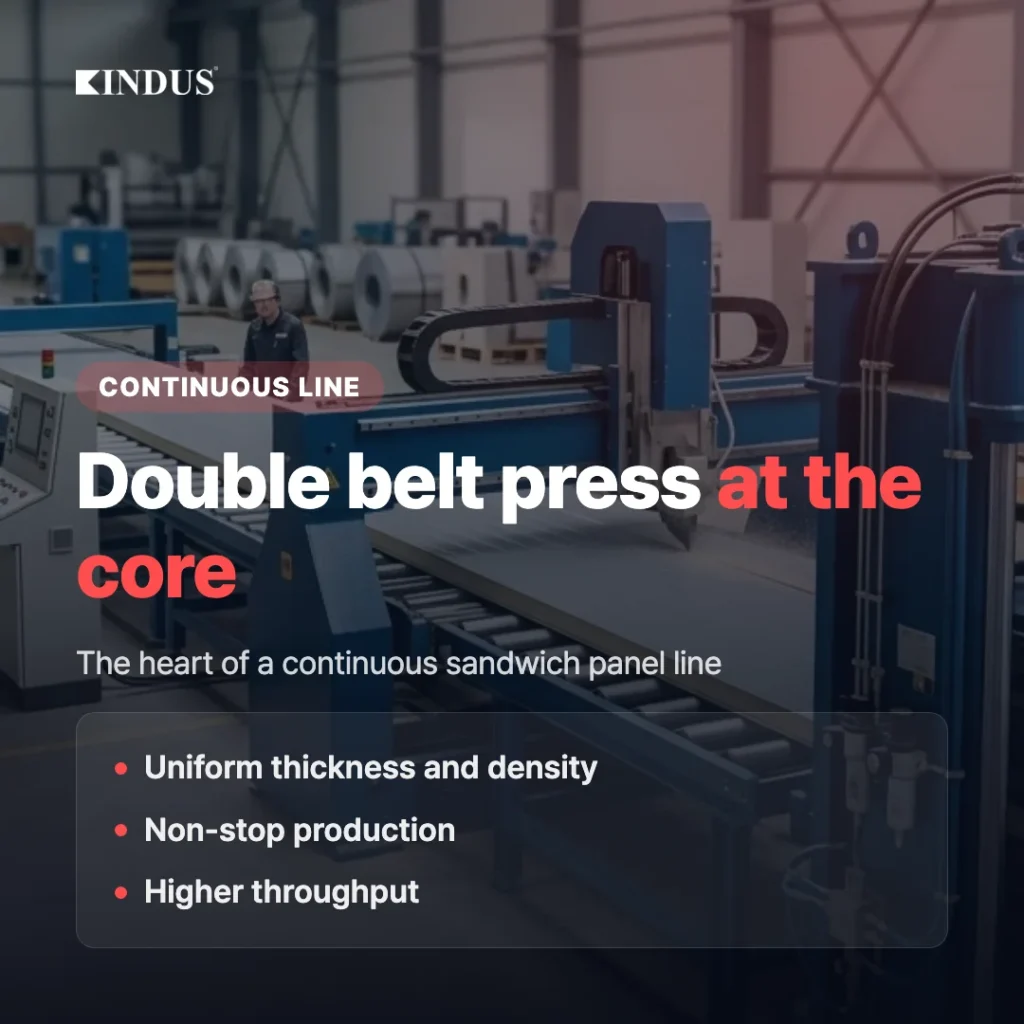
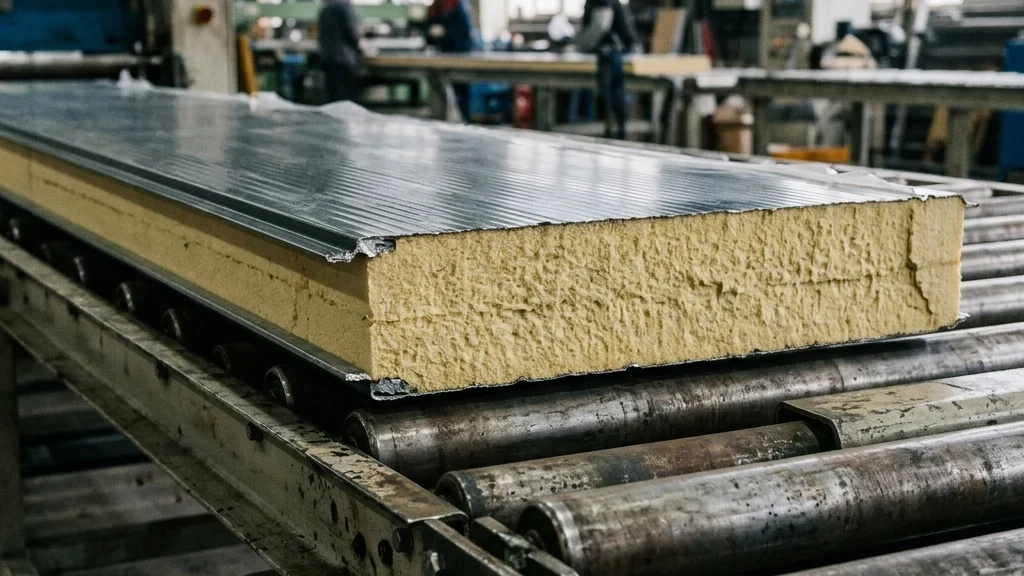
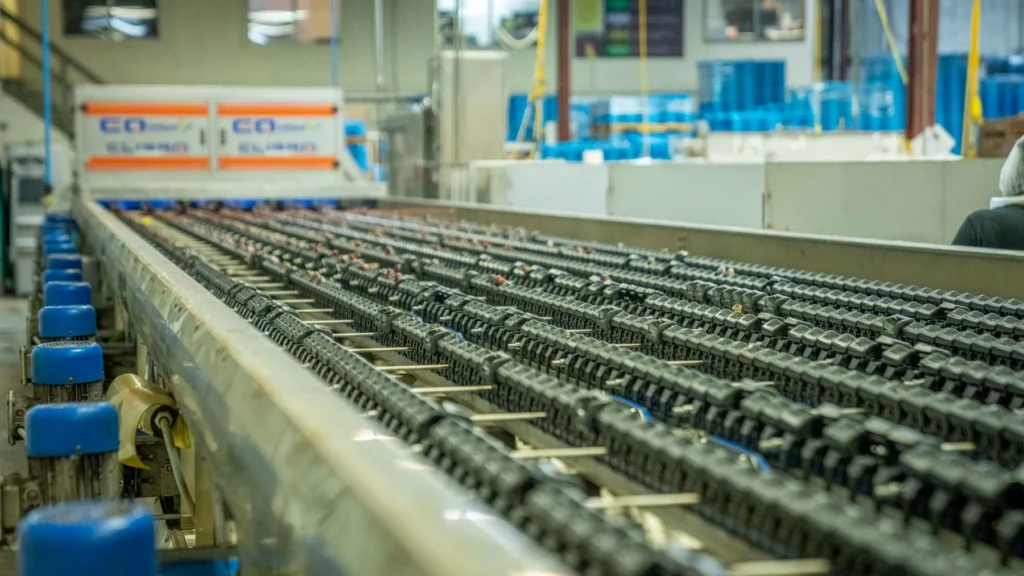
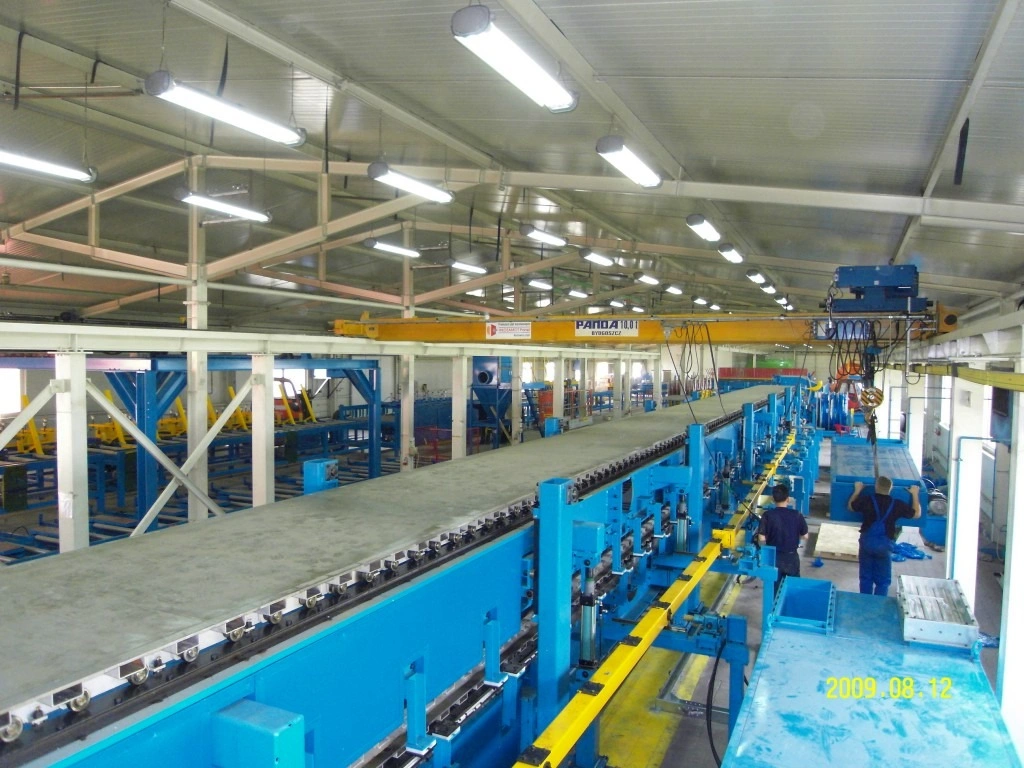
A double belt press is the section of a continuous line where the sandwich panel is formed and cured between two moving belts. The panel is held between an upper and lower belt that apply even pressure across the full width while heat cures the foam core.
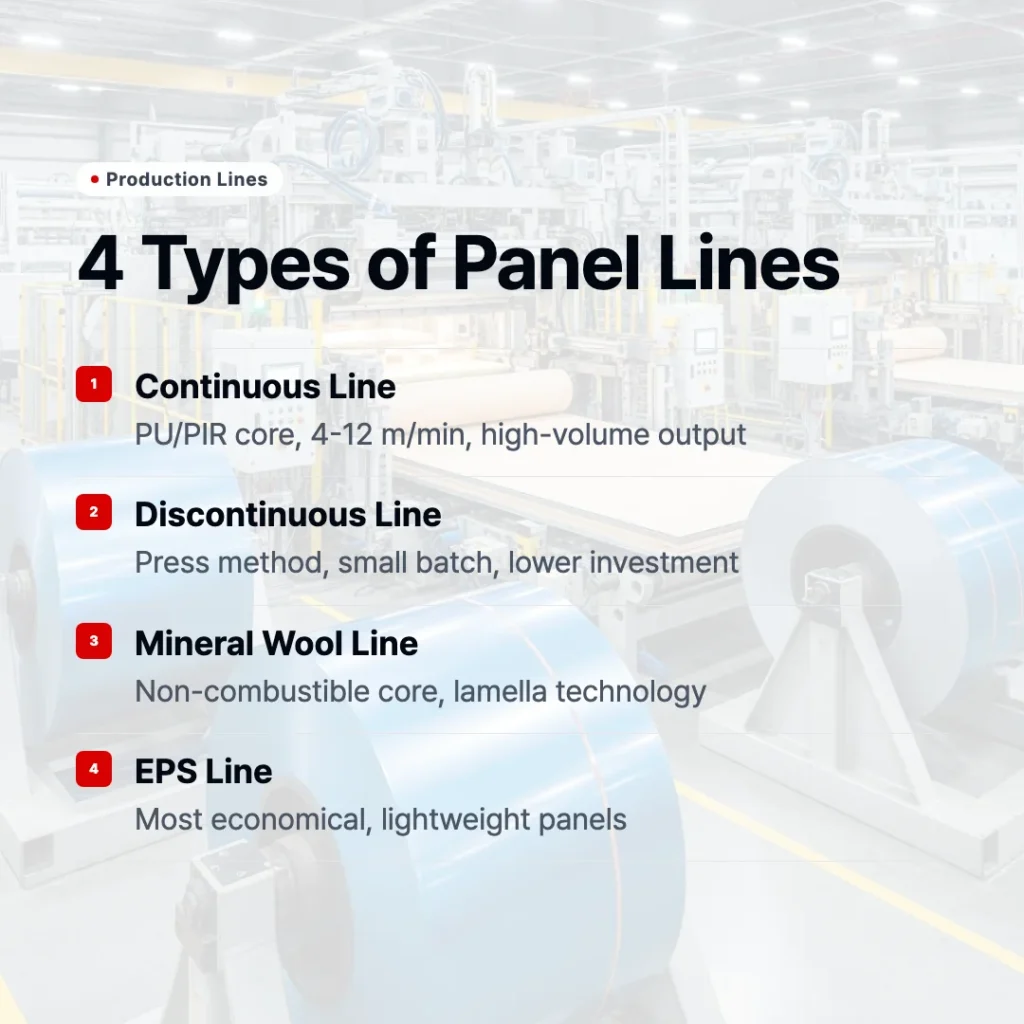
The key advantage of this design is continuity. Because the belts move with the panel, production does not stop between panels, and thickness and density stay uniform along the entire length. This differs from a discontinuous press, where each panel is pressed individually in a fixed platen. The difference between continuous and discontinuous production is throughput and consistency, which is why high-volume plants favor the double belt approach. For a broader view of continuous line advantages, see Continuous Sandwich Panel Line: Technology, Benefits & Applications.
How a Continuous Line Is Configured
- 1Decoiling & roll formingSteel coils unwound and profiled into facings
- 2FoamingCore chemistry metered onto the moving facing
- 3Double belt pressPanel cures under pressure and heat
- 4Cutting & stackingPanels cut to length and packaged
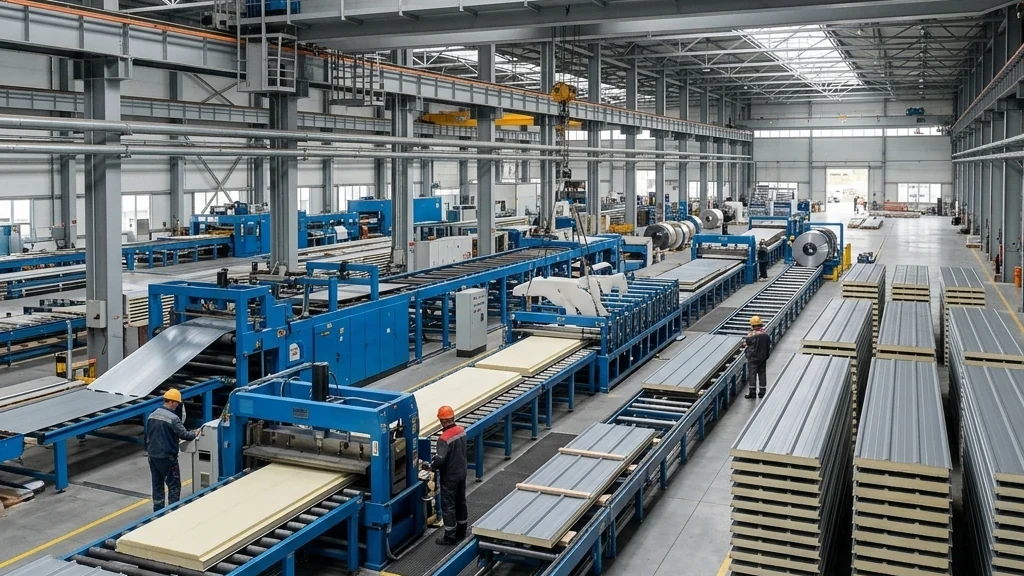
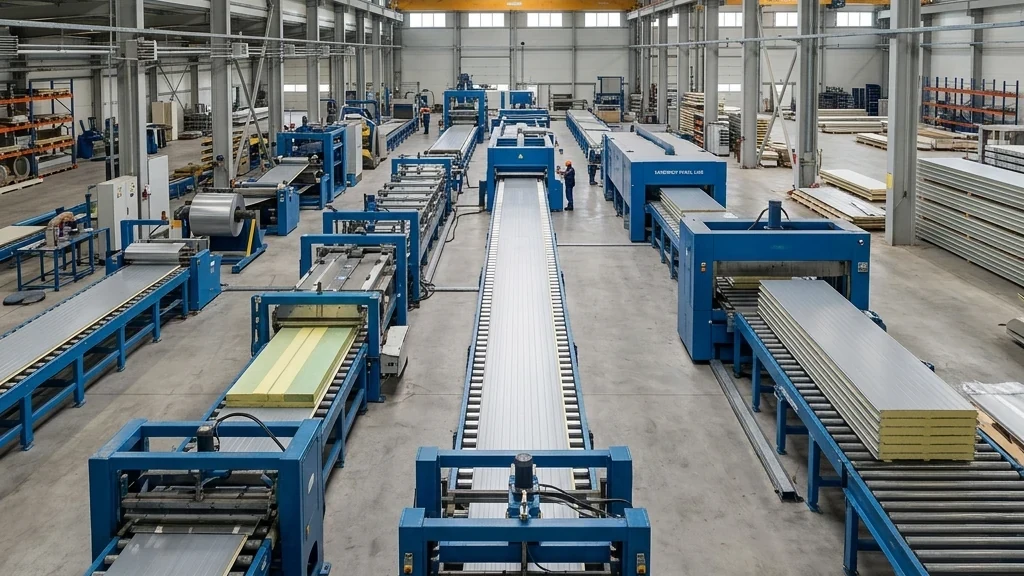
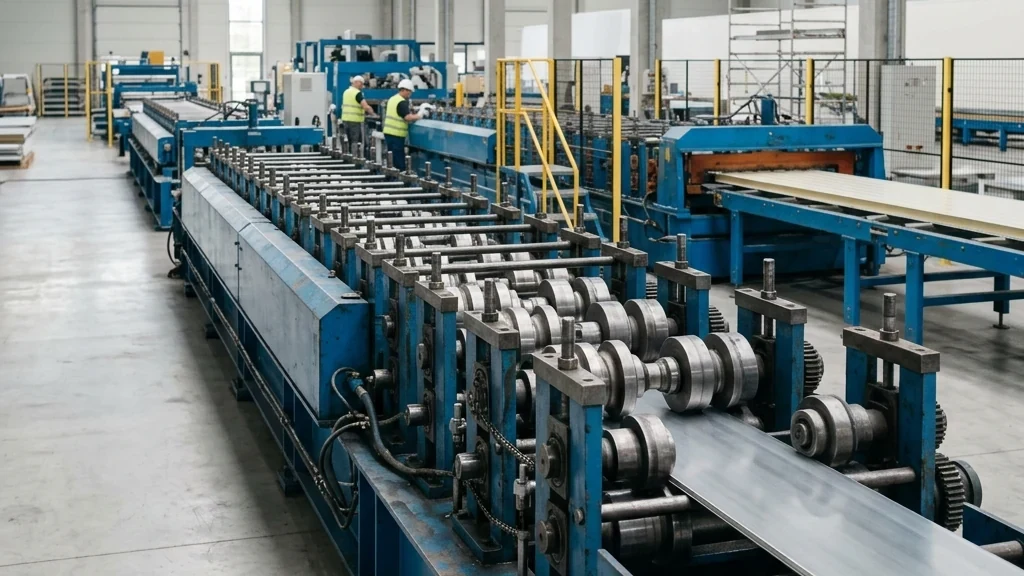
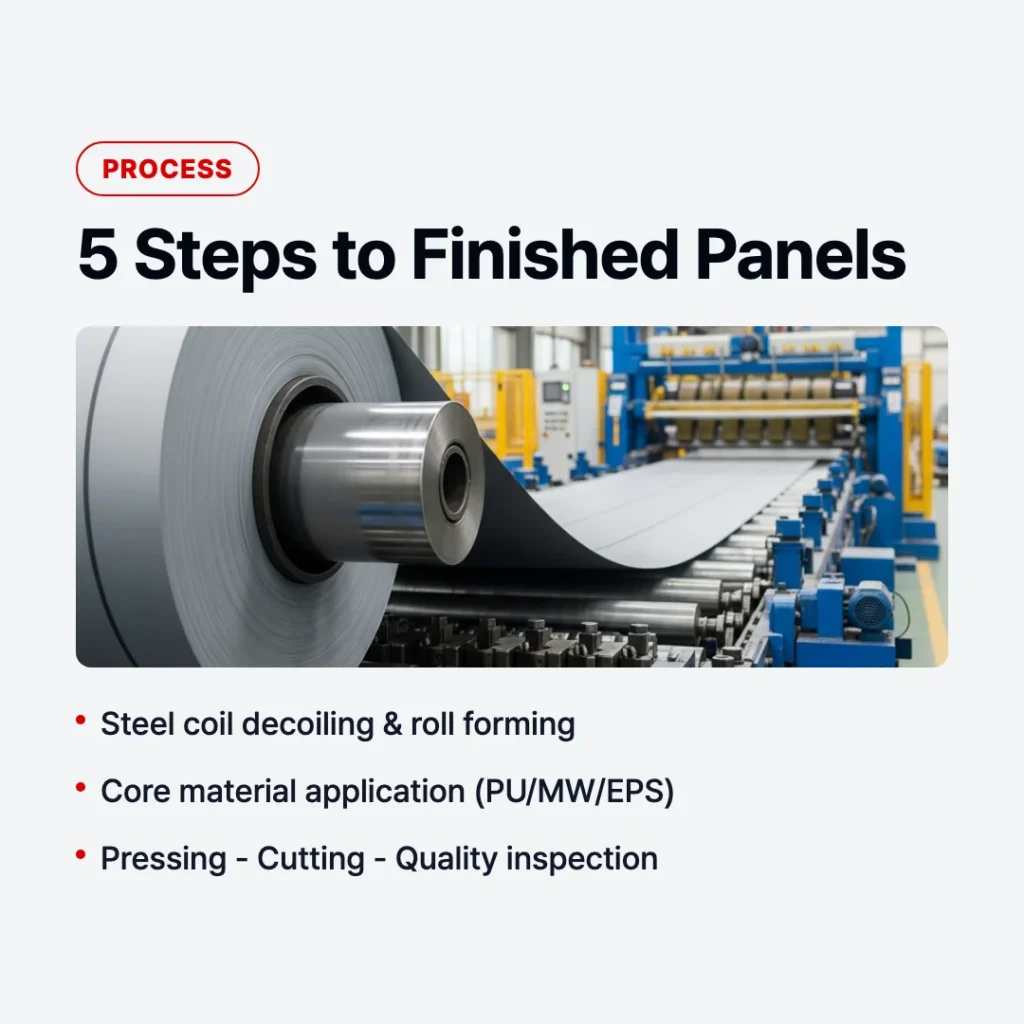
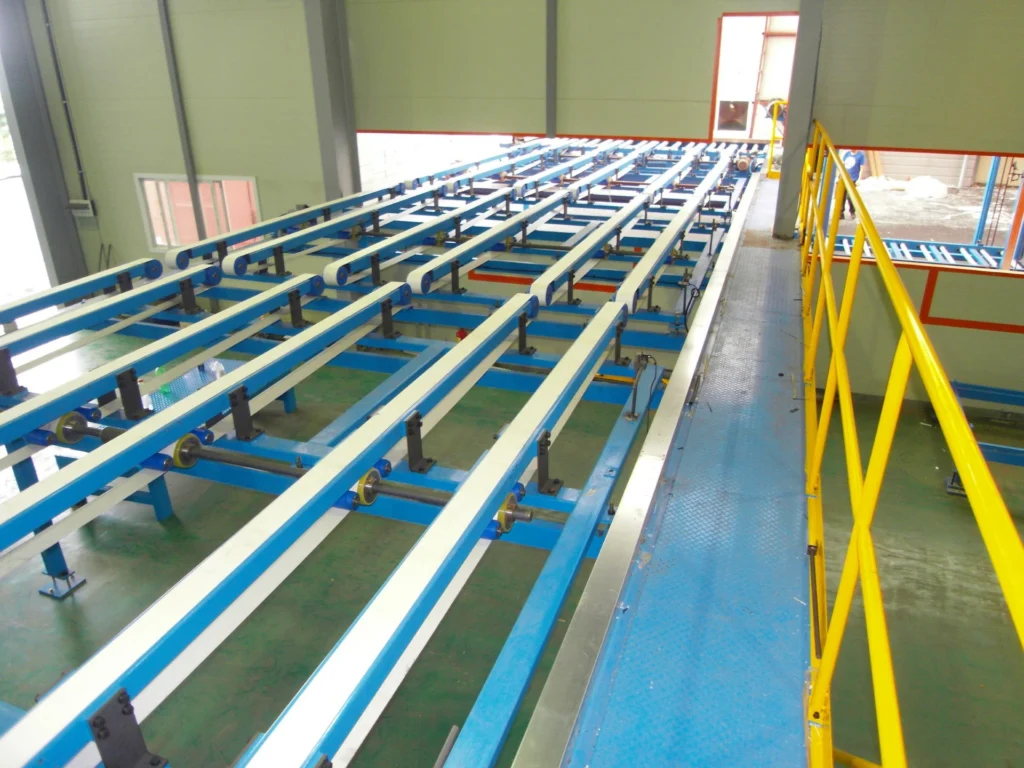
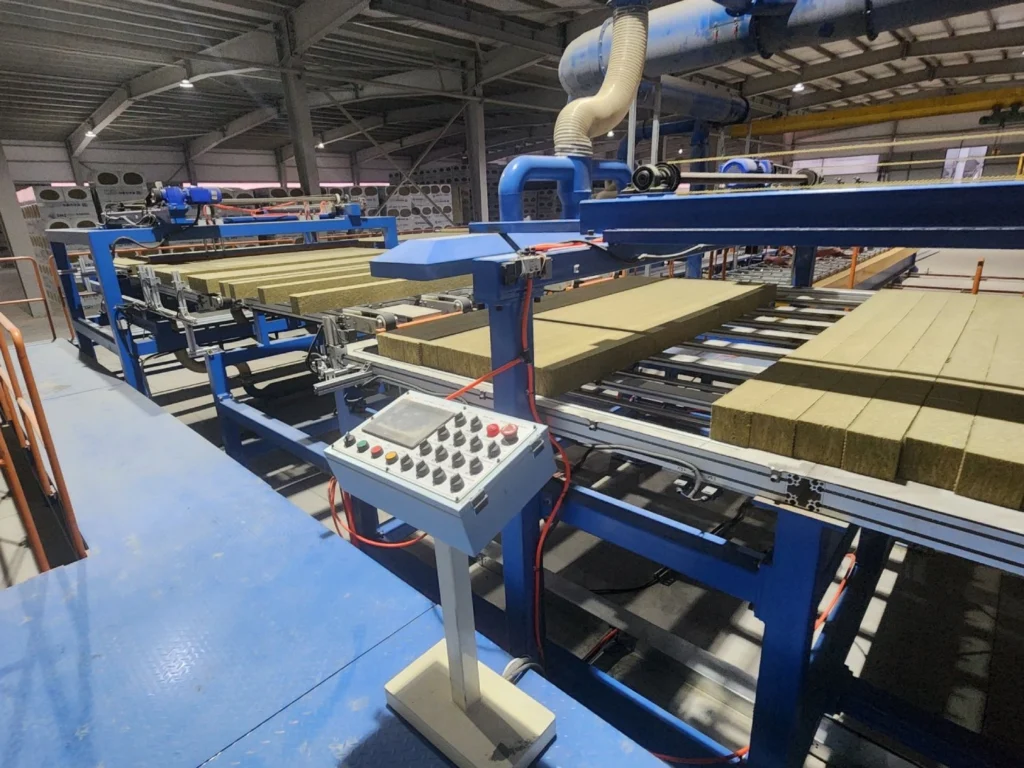
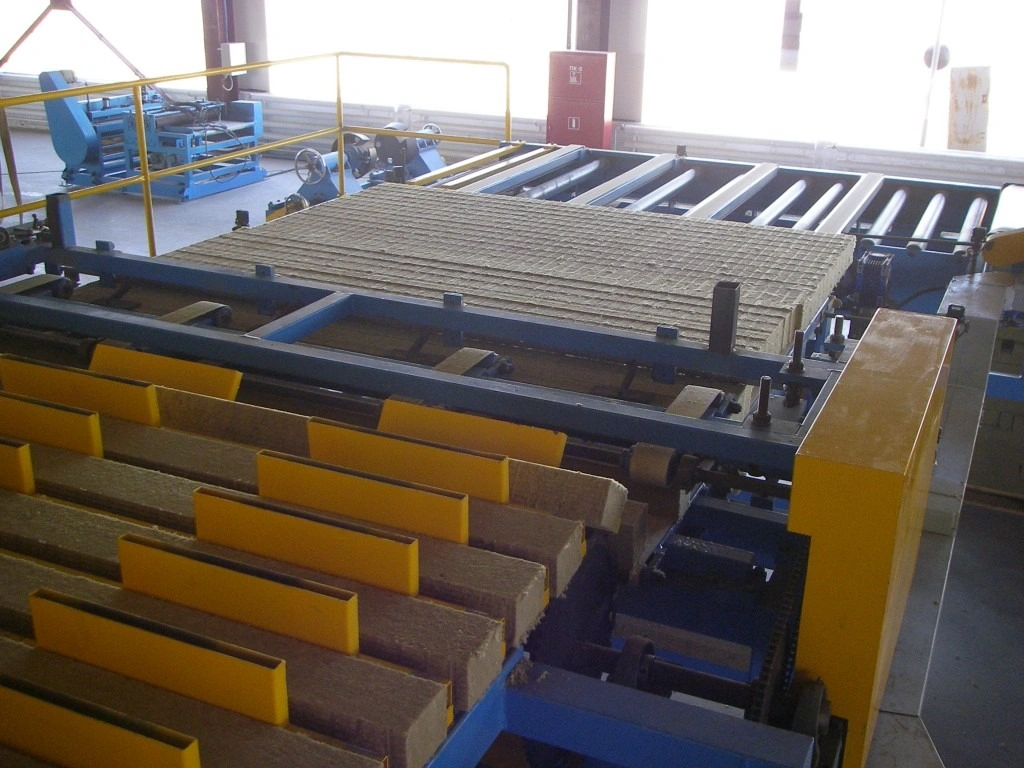
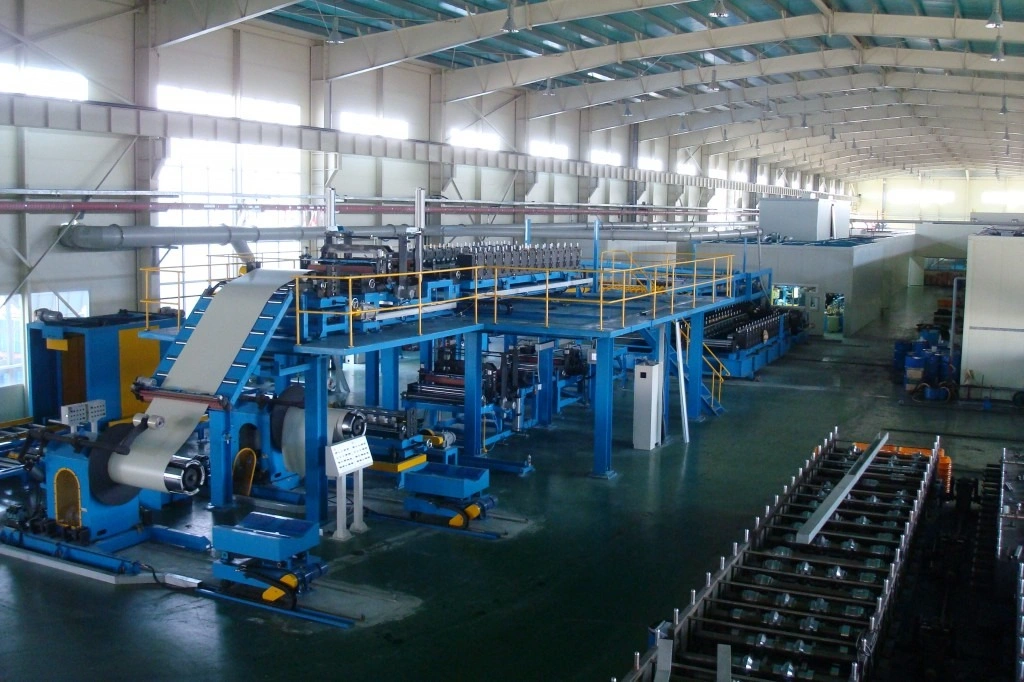
A double belt line is a sequence of stations arranged so that steel coils enter at one end and finished panels exit at the other. Each station handles one part of the process, and the double belt press sits at the center.
The main sections of a continuous line are:
- Decoiling and roll forming, where steel coils are unwound and profiled into facings
- Foaming, where the core chemistry is metered and distributed onto the moving facing
- The double belt press, where the panel cures under pressure and heat
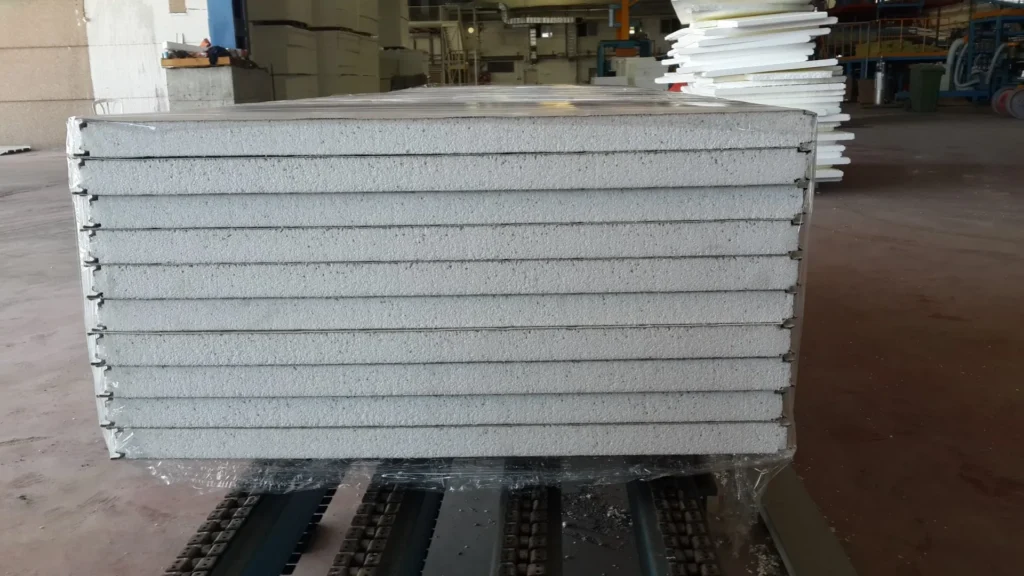
- Cutting and stacking, where panels are cut to length and packaged
Each section must be matched to the others so that speed and capacity are balanced across the line. A mismatch at any station becomes the bottleneck for the whole line. The configuration and throughput of a continuous PU line are covered in more detail in Continuous PU Sandwich Panel Line: Configuration, Specs & Throughput.
Factors That Govern Throughput
Throughput on a double belt line is measured by line speed, usually in meters per minute. Several factors determine how fast the line can run while keeping quality within specification.
The main factors are the curing behavior of the core chemistry, the length and temperature control of the press, and the panel thickness. Thicker panels and slower curing formulations require more press time, which lowers line speed. The press length matters because a longer press gives the foam more time to cure at a given speed, allowing higher throughput.
Does a faster line always mean higher output?
Not always. Running faster than the foam can cure leads to poor bonding and dimensional defects, so real throughput is the highest speed that still meets quality targets.
Balancing speed against curing quality is the core engineering challenge of a continuous line.
PU and PIR on Continuous Lines
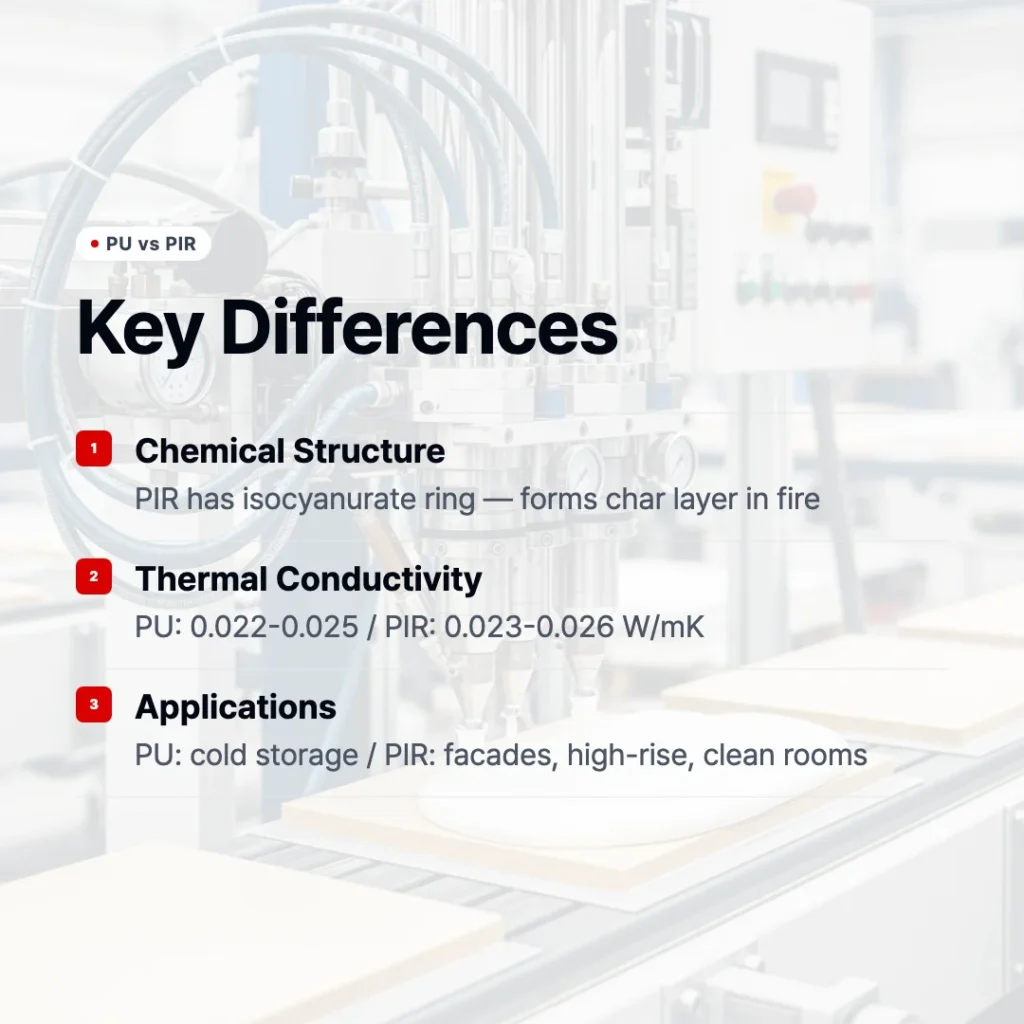
Continuous double belt lines run both polyurethane and polyisocyanurate cores, and the choice affects process settings. The difference between PU and PIR on a continuous line is the chemistry and the fire performance, which changes curing behavior and press temperature. The core chemistry itself, whether polyurethane or polyisocyanurate, sets how fast the double belt press can run.
PIR cores generally require tighter control of the reaction index and temperature to achieve their improved fire performance. A well-designed double belt line allows the operator to adjust metering, temperature, and speed to switch between PU and PIR production. This flexibility is valuable for manufacturers who serve markets with different fire rating requirements.
Kindus configures continuous lines so that core chemistry, press temperature, and line speed can be tuned together, allowing stable production across both PU and PIR panels.
The Kindus Continuous Line
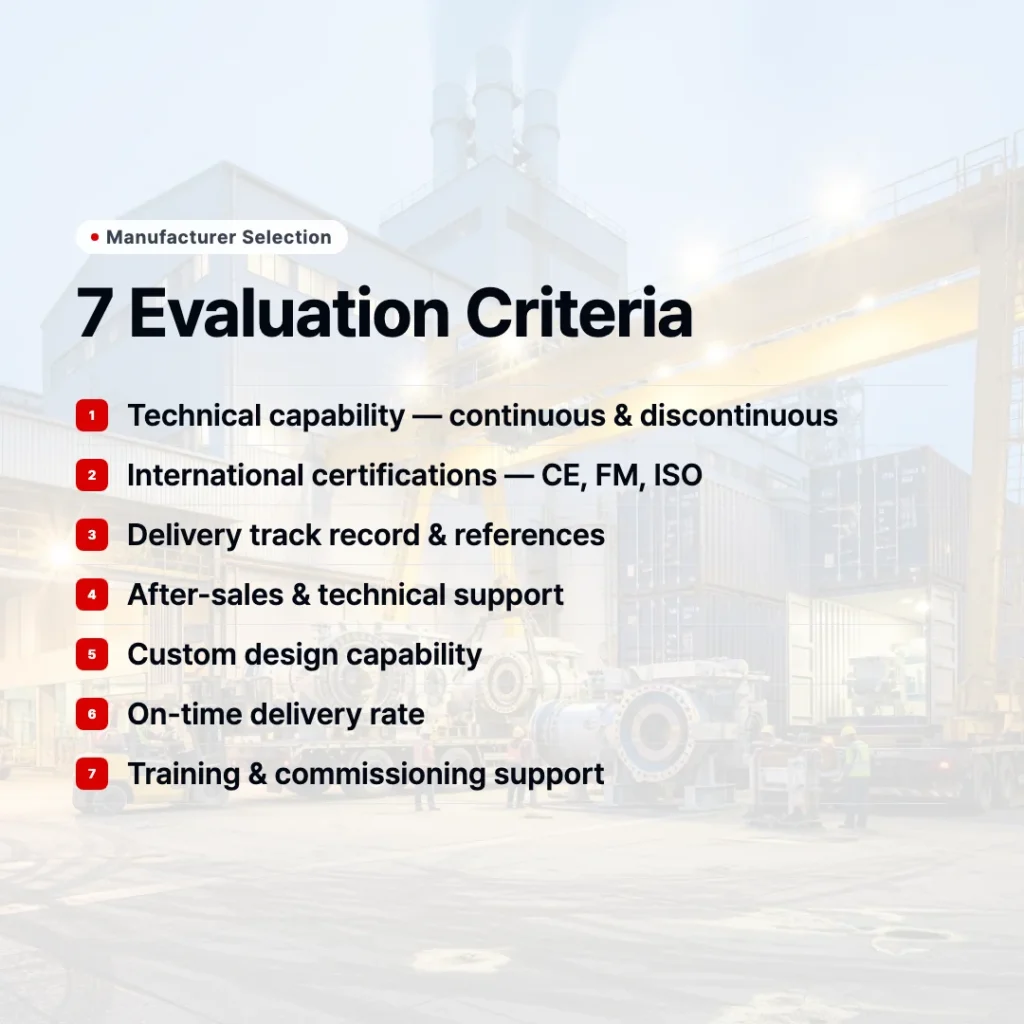
Kindus builds continuous sandwich panel lines around a double belt press, with each station matched to the target throughput and panel range. With panel lines already installed for manufacturers in over 40 countries, Kindus configures each line to the customer’s product mix, panel thickness range, and output goals.
At Kindus, the line is designed so that roll forming, foaming, pressing, and cutting are balanced, which prevents any single station from limiting the whole line. The result is consistent panel quality at the intended line speed.
Frequently Asked Questions
What is the main advantage of a double belt press?
It cures the panel continuously between two moving belts, which keeps thickness and density uniform along the full length and allows high, uninterrupted output compared to discontinuous pressing.
What limits line speed on a continuous line?
The curing time of the core chemistry and the press length are the main limits. Thicker panels and slower formulations require more press time, which reduces the maximum speed that still meets quality.
Can one continuous line produce both PU and PIR panels?
Yes. A well-designed double belt line allows metering, temperature, and speed to be adjusted so the same line can switch between PU and PIR cores.
Choosing a continuous line means matching the press, configuration, and throughput to your product goals. To review how a continuous line can be configured for your production, get in touch.