Industrial buyers evaluating a continuous PU sandwich panel line often struggle to separate general continuous line capability from the configuration and throughput demands specific to polyurethane cores. A line that handles mineral wool or PIR is not automatically optimized for PU foaming chemistry, and the difference shows up in cure control, line speed, and finished panel quality. Misjudging this distinction leads to over-specified equipment, unstable foaming, or output that falls short of production targets.
In this guide, we break down how a continuous PU sandwich panel line is configured, what specifications matter, and how throughput is achieved.

What Defines a Continuous PU Line — The Double-Belt Principle
A continuous PU sandwich panel line is a production system that bonds two metal facings to a polyurethane core in an uninterrupted flow, using a double-belt conveyor to cure the panel under controlled temperature and pressure. The defining feature is continuity: coils feed in at one end and finished, cut-to-length panels exit at the other without the line ever stopping for each panel.
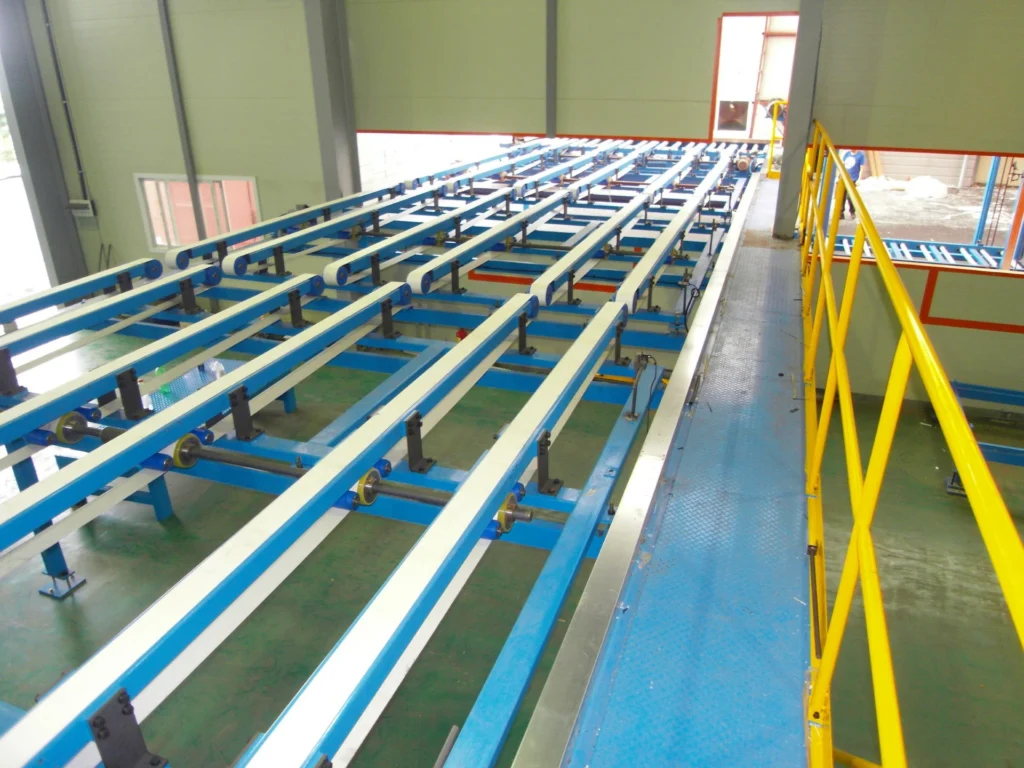
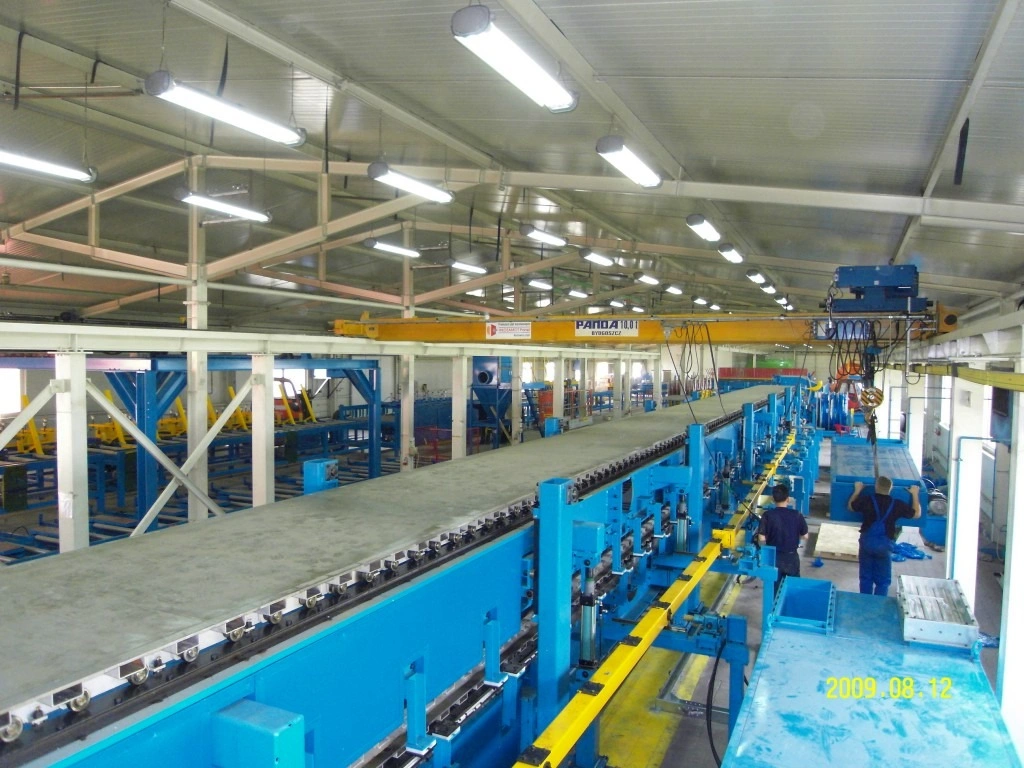
The core distinction lies in how the panel is pressed and cured. On a continuous double-belt line, the foaming and curing happen while the panel moves through a heated belt zone, producing consistent panel geometry along an effectively unlimited length. This contrasts with a discontinuous or flatbed press, where panels are foamed and cured one platen-load at a time, limiting both length flexibility and sustained output. For high-volume PU production, the double-belt approach delivers the throughput and dimensional consistency that batch pressing cannot match. Buyers weighing these approaches can review how a continuous line differs from batch systems for a fuller treatment of the trade-offs.
KINDUS, with 170+ projects across 40 countries, has built its continuous line platform around this double-belt principle, tuning the belt zone specifically for polyurethane cure behavior rather than treating PU as an afterthought.
Line Configuration and Key Stations
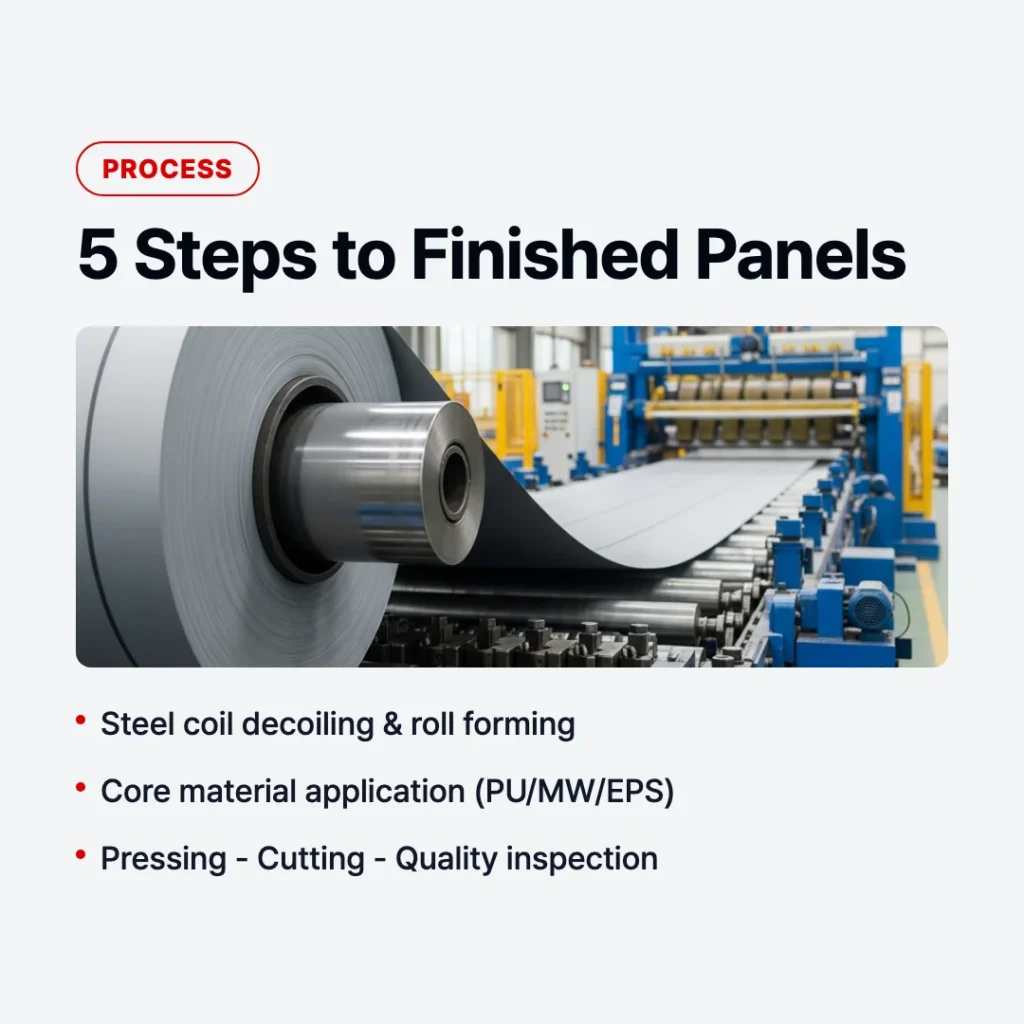
- 1DecoilerUnwind top and bottom steel coils, apply protective film
- 2Roll-formingProfile the sheet edges and any surface ribbing
- 3Foaming headMeter polyol and isocyanate onto the lower facing
- 4Double beltFoam bonds and cures to precise thickness under heat
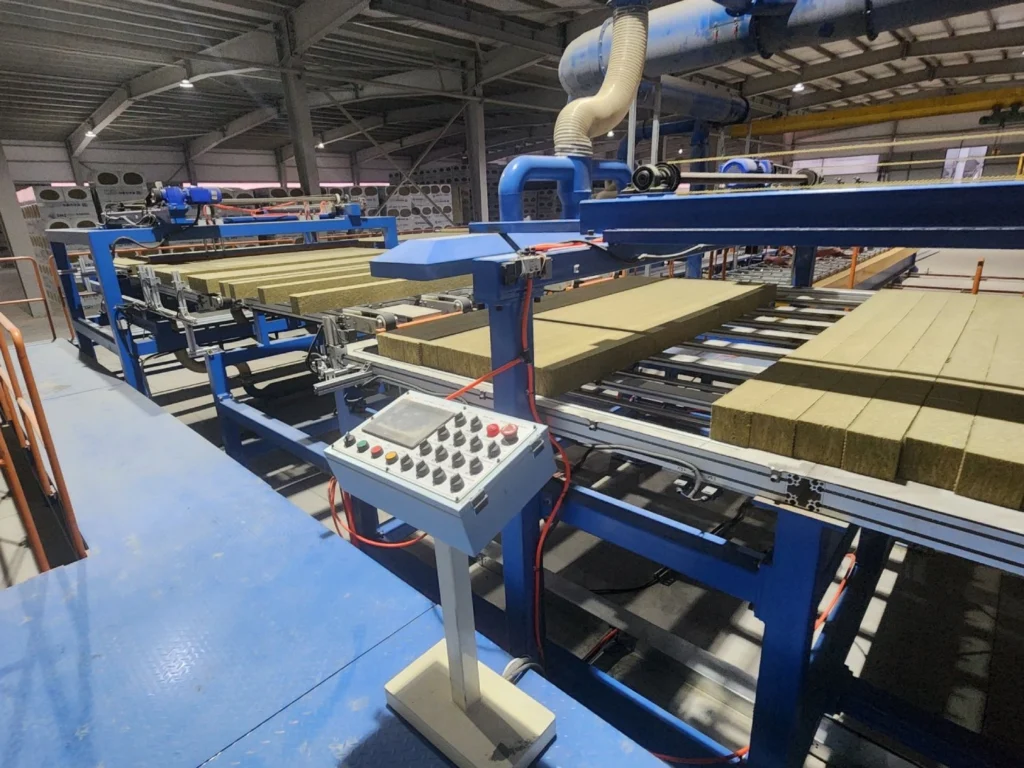
- 5Saw + stackCut to length on the move, then cool and palletize
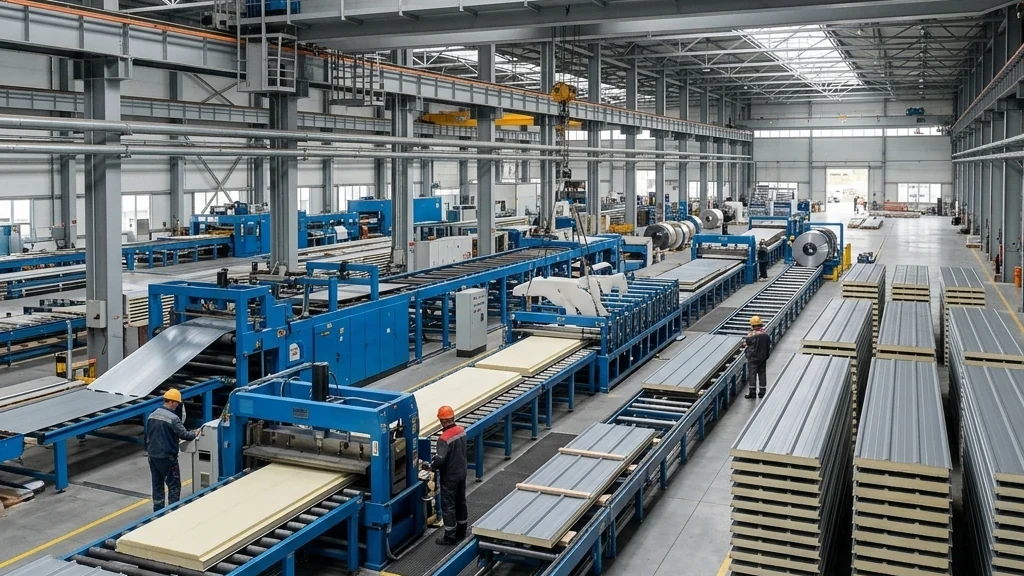
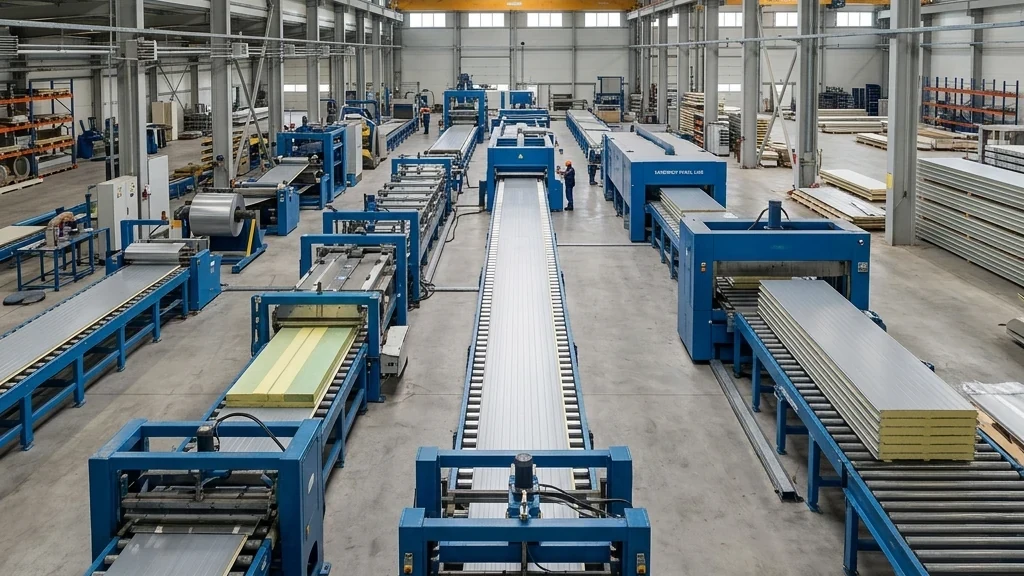
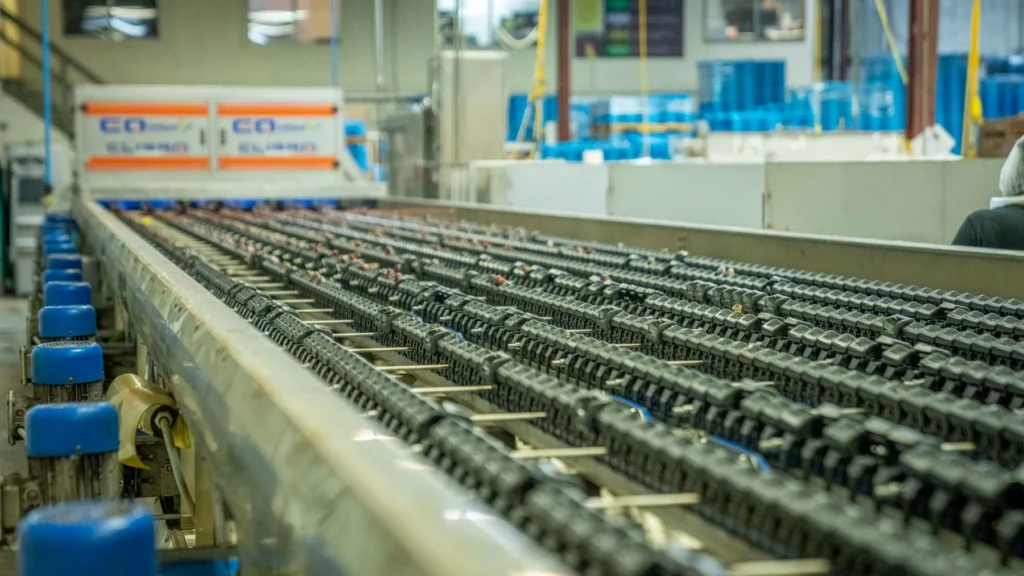
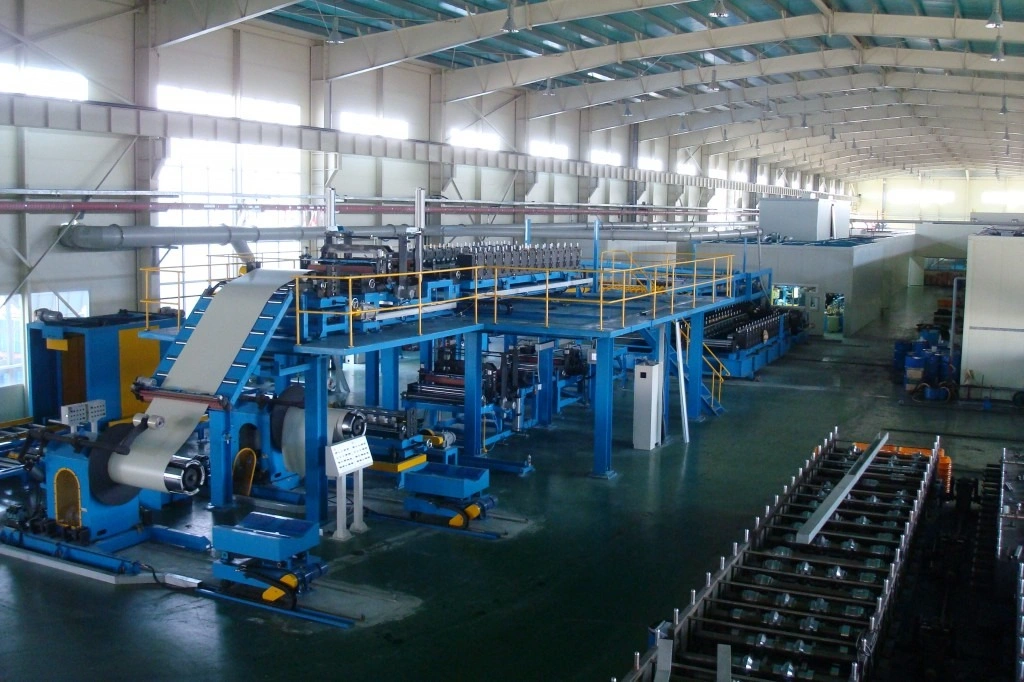
A continuous PU line is configured as a sequence of synchronized stations, each handling one stage of the transformation from steel coil to finished insulated panel. The flow moves from decoiler through forming, foaming, the double-belt cure zone, cutting, and finally stacking, with every station speed-matched to the others so the panel never accumulates or stretches.
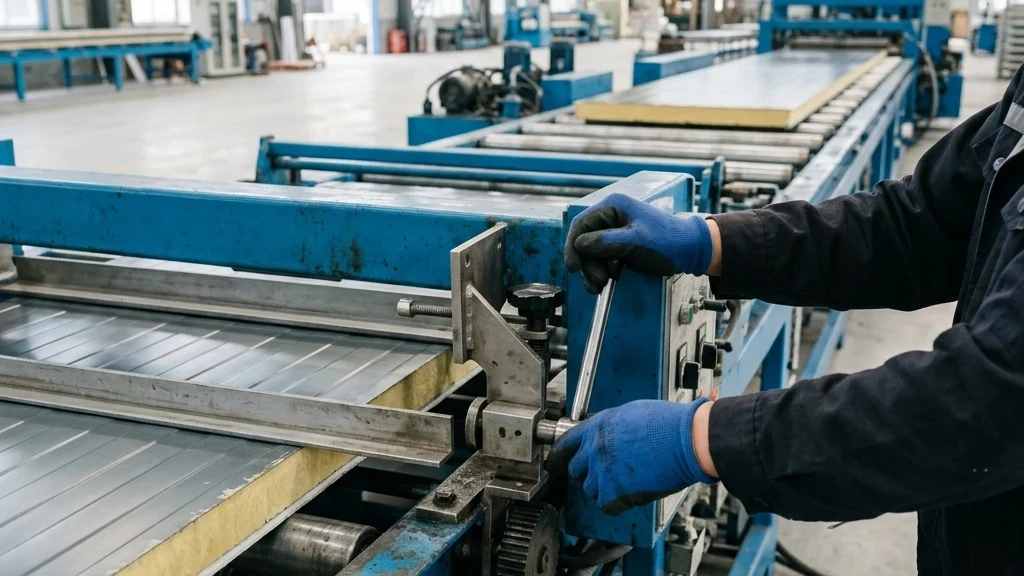
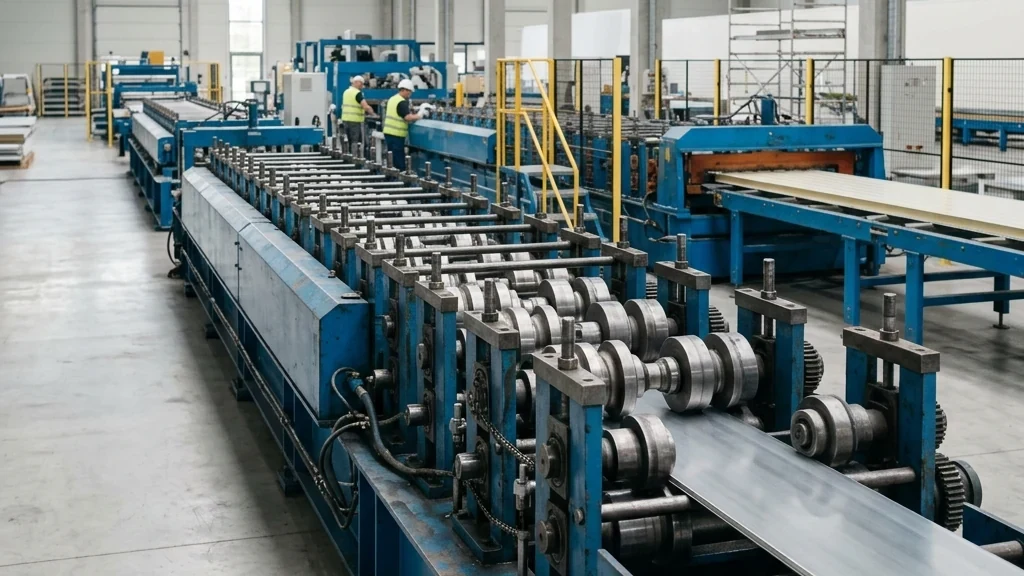
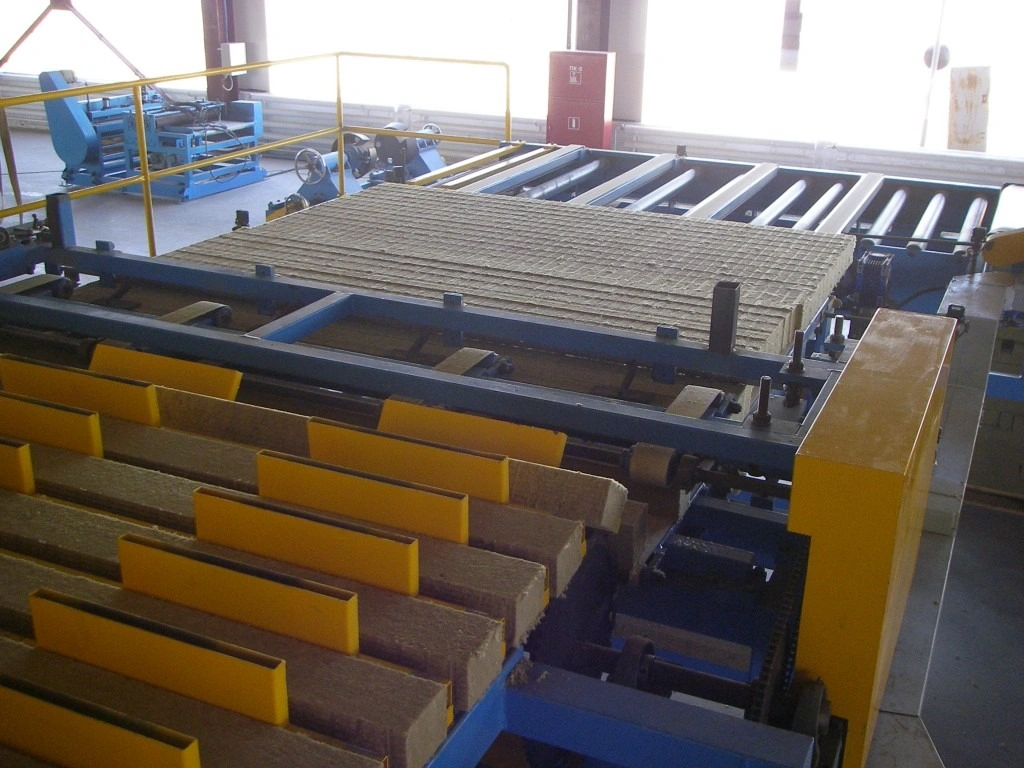
The upstream section prepares the facings. The decoiler unwinds top and bottom steel coils, film protection is applied, and the roll-forming stations profile the sheet edges and any surface ribbing. The foaming station is where PU chemistry enters: a mixing head meters and combines polyol and isocyanate, distributing the reacting mixture across the lower facing just before it enters the belt. From there the double-belt conveyor holds the panel to precise thickness while the foam rises, bonds, and cures under regulated heat and pressure.
The downstream section finishes and handles the product. The traveling saw cuts panels to programmed lengths on the move, and the stacking unit collects, cools, and palletizes them for packing. A buyer specifying this equipment should confirm that each station is matched to PU rather than adapted from another core type, since foaming placement and belt heating differ meaningfully by chemistry. For a deeper station-by-station view of the core equipment, PU and PIR core equipment in depth covers the foaming and belt sections in detail.
Specification Ranges — Line Speed, Panel Thickness, Width, and Output
The specification set of a continuous PU line describes the operating envelope of the equipment: the range of line speeds, panel thicknesses, widths, and resulting output it can sustain. These figures are interdependent, since running a thicker panel or a slower-curing formulation generally reduces the achievable line speed.
Line speed on KINDUS lines typically ranges from 4 to 16 m/min, varying with the core type and the panel thickness being produced. Thinner wall panels run toward the faster end of the range, while thick roof or cold-storage panels run slower to allow full cure within the belt zone. Panel thickness across the industry commonly spans roughly 30 to 200 mm, covering everything from light cladding to heavy insulated cold-room panels. Panel width and profile depend on the forming set and the customer’s product mix.
Output should be understood as a function of speed, thickness, and width together rather than a single headline number, so buyers are better served by evaluating the sustained speed at their target thickness than by comparing a peak figure in isolation. A practical checklist of specifications to verify before purchase:
- Line speed range at your specific panel thickness, not just the maximum
- Minimum and maximum panel thickness the belt zone can handle
- Panel width and the profiles available from the forming stations
- Facing material and coil thickness compatibility
- Cutting accuracy and stacking automation for your throughput
Because these parameters shift with core chemistry and product mix, comparing line types side by side is often more useful than reading specs in isolation; how this line compares to other line types sets the PU continuous line against alternative configurations.
Controlling PU Foaming on a Continuous Line
Controlling PU foaming on a continuous line means regulating how the polyurethane mixture is metered, distributed, and cured so that the core rises evenly and bonds fully to both facings at line speed. Because the reaction proceeds while the panel is moving, timing and temperature control are decisive for panel quality.
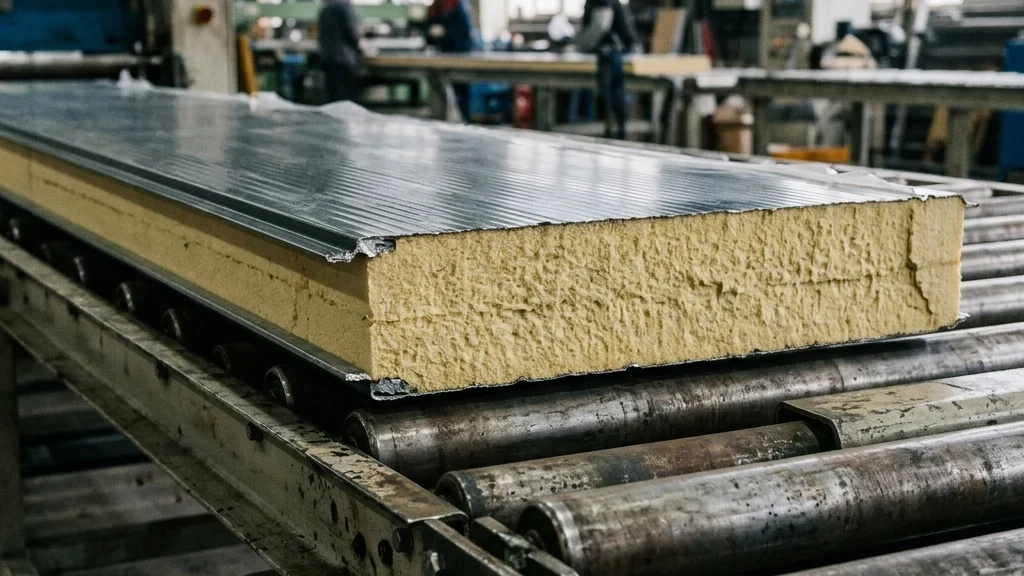
The mixing head governs the ratio and flow of polyol and isocyanate, and consistent metering is what keeps core density uniform across the panel width. Distribution across the lower facing must be even, because uneven pour translates directly into density variation and potential voids. Within the double-belt zone, controlled temperature and pressure let the foam expand to fill the cavity and cure to a stable, dimensionally accurate panel. Unlike batch foaming, where each panel cures in a static press, continuous foaming must hold these conditions steady over a moving line, which is why belt heating and pressure regulation are engineered specifically around the cure profile of the chosen PU system rather than borrowed from another core type.
KINDUS Continuous PU Line — Domestically Developed, Globally Proven
The KINDUS continuous PU line is a double-belt production system engineered in-house for polyurethane cores, backed by the company’s record as the first to domestically develop a continuous sandwich panel line in Korea. This origin matters because it means the foaming, belt cure, and downstream handling were designed together rather than assembled from third-party subsystems.
Founded in 1995 and holding CE certification, KINDUS has delivered continuous line technology to manufacturers in demanding markets worldwide, with the field record of 40 countries reflecting equipment that performs across varied climates, facing materials, and production scales. That breadth of deployment gives buyers confidence that the line speed, thickness, and cure control specifications hold up under real production conditions rather than only on paper. For manufacturers planning capacity around PU panels, the value is a line whose specifications and throughput were validated in the field, not extrapolated from a single reference installation.
Frequently Asked Questions
What line speed can a continuous PU sandwich panel line achieve?
Line speed typically ranges from 4 to 16 m/min, depending on the core type and panel thickness. Thinner panels run faster, while thicker panels run slower to allow the foam to cure fully within the double-belt zone.
What panel thicknesses can a continuous PU line produce?
Continuous PU lines commonly produce panels across a range of roughly 30 to 200 mm, covering light wall cladding through to thick cold-storage and roof panels. The exact range depends on the belt zone capacity and the forming configuration.
How is a continuous PU line different from a discontinuous press?
A continuous double-belt line foams and cures panels in an uninterrupted flow, allowing flexible lengths and high sustained output, whereas a discontinuous press cures one platen-load at a time. The continuous approach delivers greater throughput and more consistent panel geometry for high-volume PU production.
Ready to match specifications to your production targets? Compare how each continuous line is built and specified before you commit.