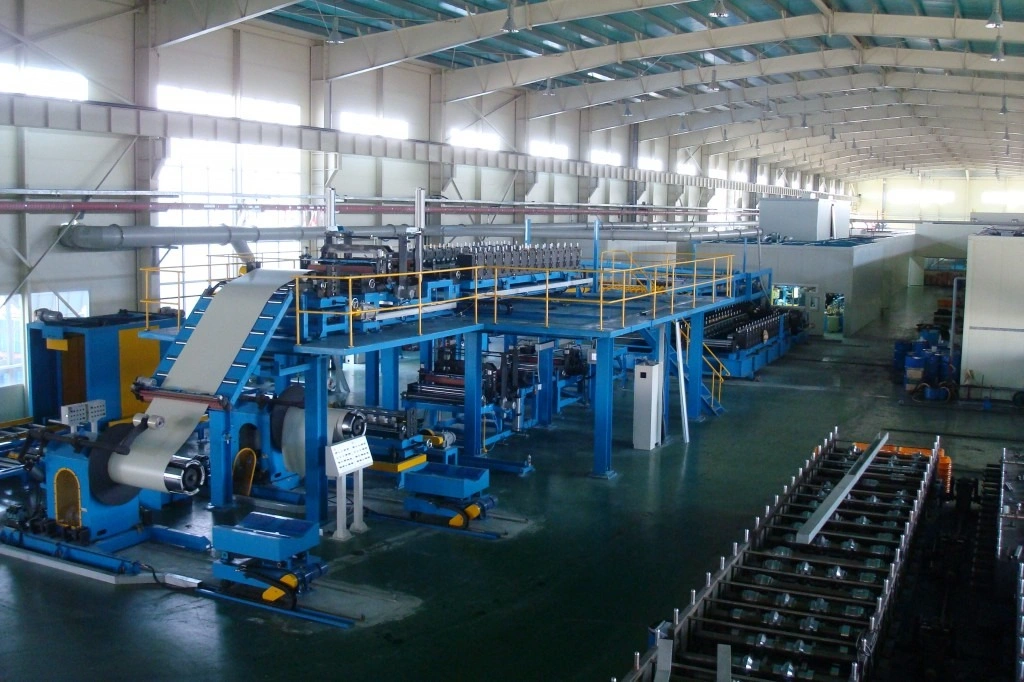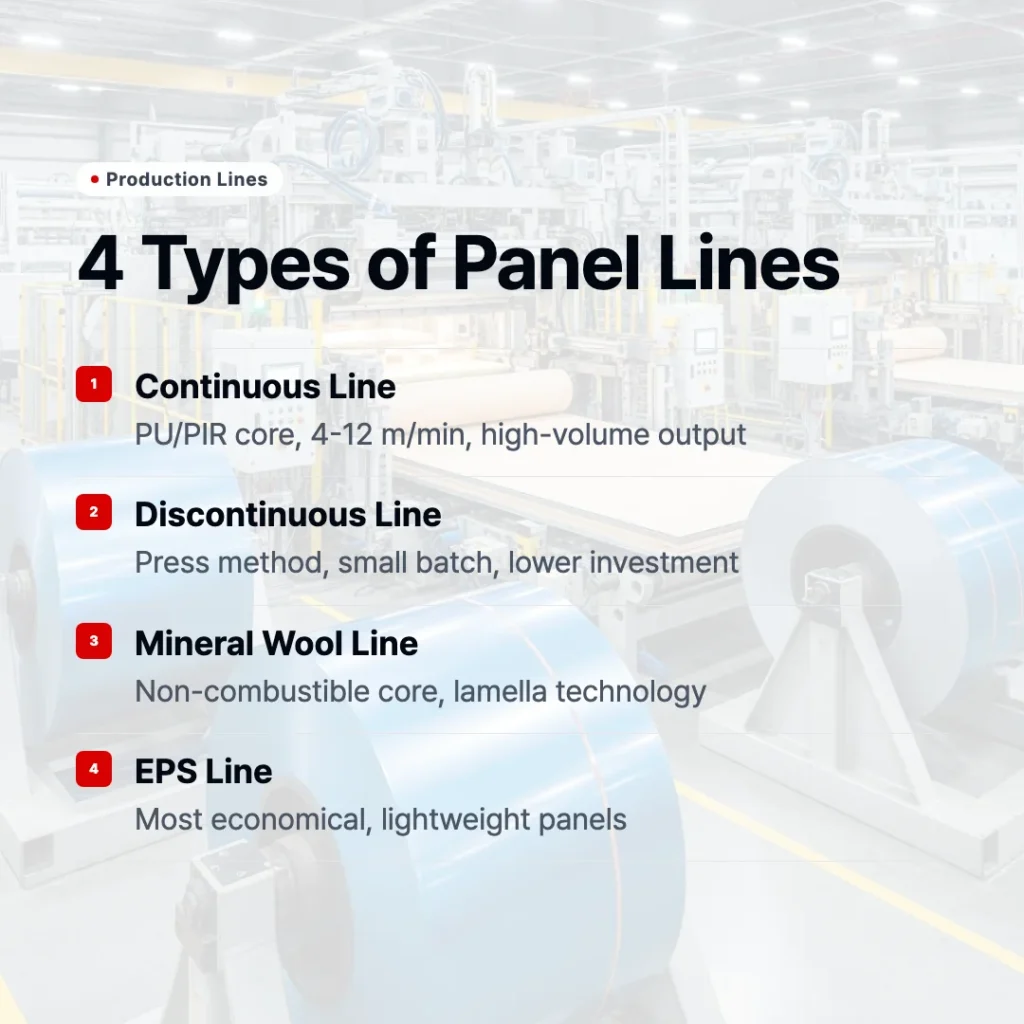
Buyers who commit to fire resistant sandwich panel production quickly learn an uncomfortable truth: fire performance is not something added to a panel after it leaves the line. It is designed into the panel at the moment the core is foamed or bonded, the facing is coiled, the adhesive is cured, and the joint profile is rolled. A panel either meets its reaction-to-fire and fire-resistance targets because the production line was configured to deliver them, or it does not, and no downstream treatment reliably corrects a core, bond, or joint that was never engineered for fire. For manufacturers entering fire-rated markets, this shifts the entire question from what panel they want to sell to what line they need to build.
In this guide, we examine what makes a sandwich panel fire resistant, how PIR and mineral wool production routes differ, and what certification requires.

What Makes a Sandwich Panel Fire Resistant — Core, Facing, Adhesive, Joint
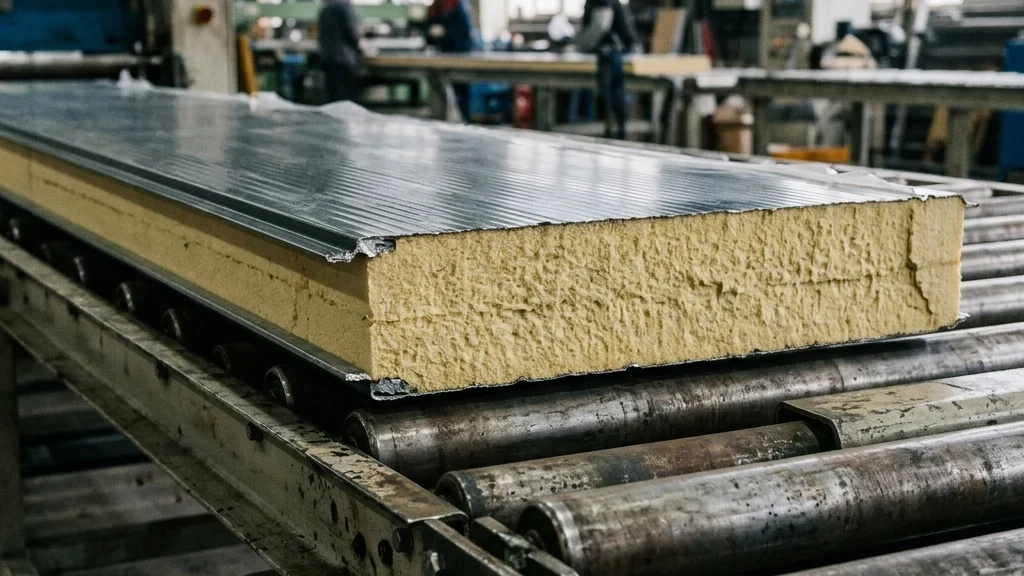
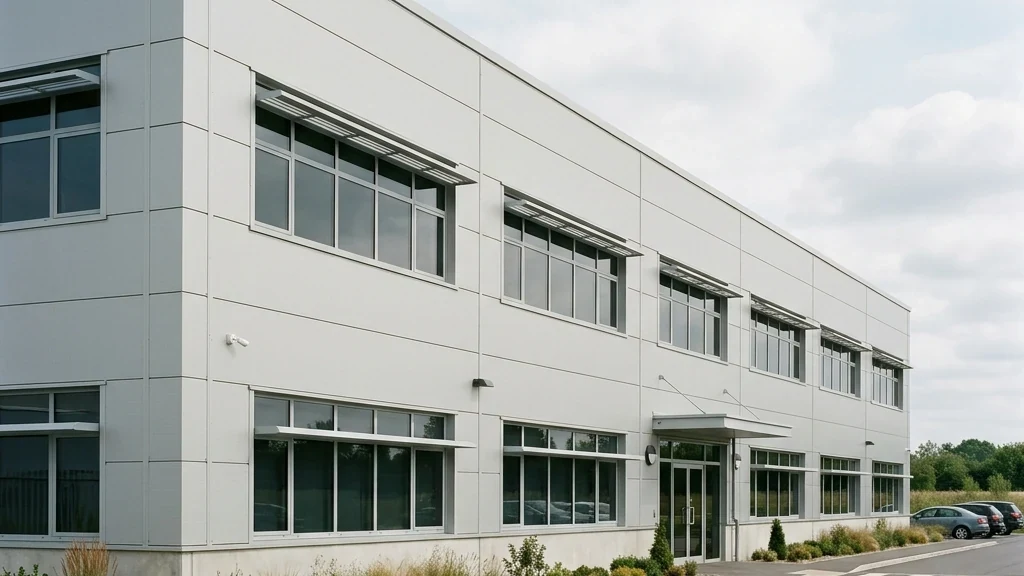
A fire resistant sandwich panel is one whose complete build — core material, metal facing, bonding adhesive, and edge joint — is engineered so that the finished element limits both its own contribution to a fire and the passage of flame and heat across it. Fire behaviour is a property of the whole assembly, not the core in isolation, and each layer contributes a distinct function.
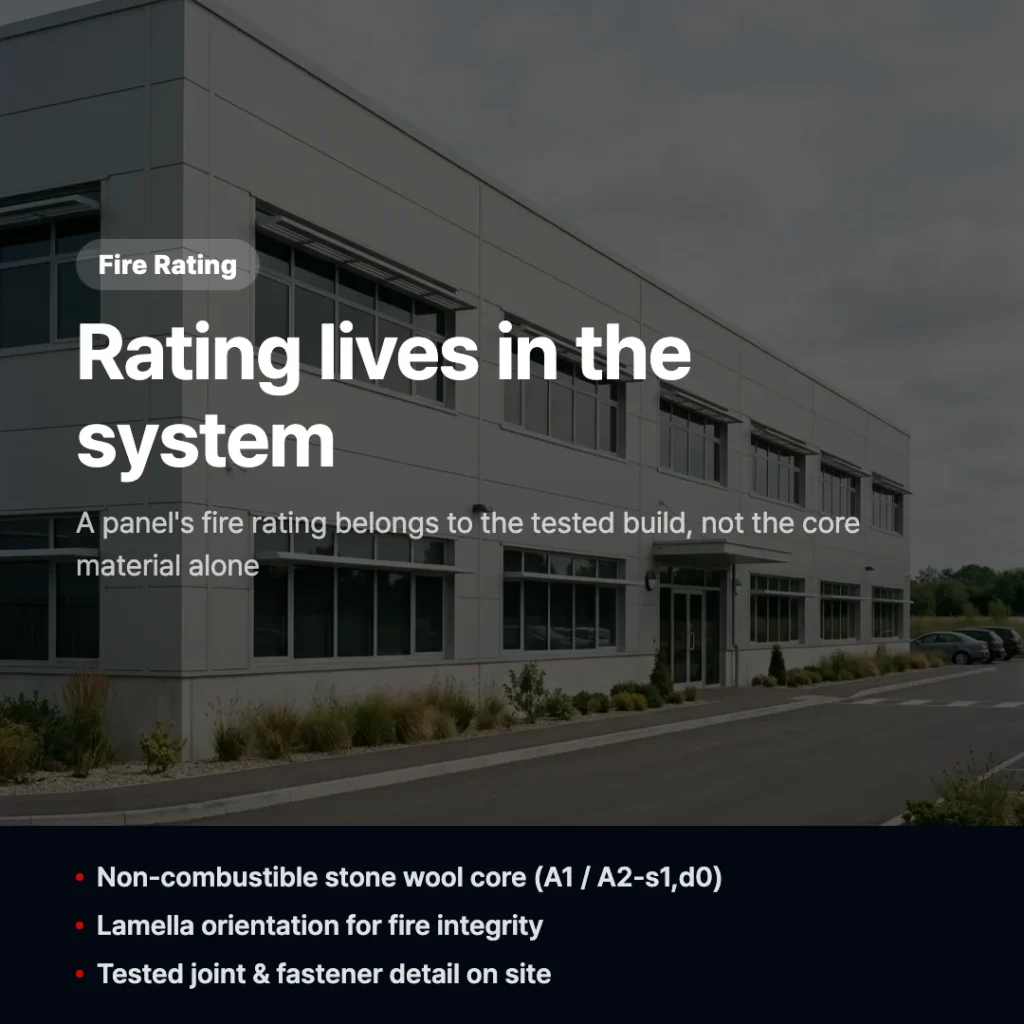
The core sets the ceiling on reaction-to-fire performance. Non-combustible mineral wool and combustible organic foams behave in fundamentally different ways once exposed to flame, which is why core selection is the first decision that constrains every certification outcome downstream. The metal facing, typically coated steel, governs surface spread and mechanical integrity under heat, so coil quality and coating specification feed directly into the classification the finished panel can reach. The adhesive matters more than many new producers expect: a bond line that softens, delaminates, or fuels combustion undermines an otherwise sound core, which is why fire-rated lines demand tight control over adhesive chemistry and cure. The joint and fastener detail determine whether the installed wall holds back fire as a barrier, since integrity and insulation are lost at the seams long before the core fails, so the tongue-and-groove or lap profile rolled into the panel edge is a fire-safety feature, not merely a weathering one. This assembly-level view is where KINDUS focuses its line engineering, because a production route that optimises one layer while neglecting another cannot deliver a defensible classification.
PIR vs Mineral Wool Production Routes for Fire Performance
| Route | PIR | Mineral Wool |
|---|---|---|
| Core | Combustible foam | Non-combustible fibre |
| Reaction class | B-s1,d0 | A1 / A2-s1,d0 |
| Wins on | Thermal, weight, cost | Non-combustibility |
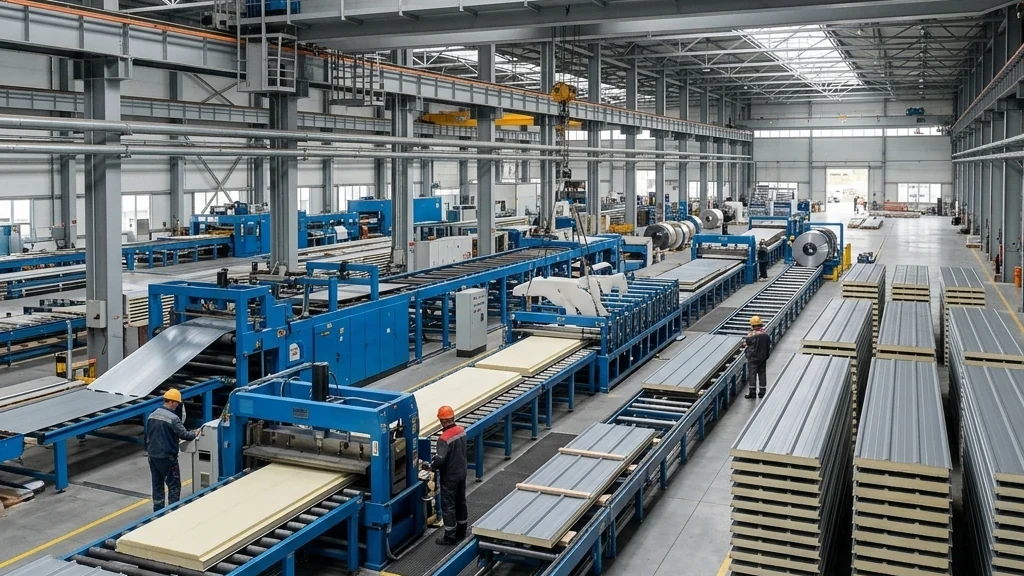
A production route is the specific combination of core-forming technology, lamination method, and curing regime that a line uses to build a given panel type, and the two dominant fire-oriented routes — PIR and mineral wool — diverge at almost every station.
Producers scoping a non-combustible route specifically will want the full technology and specification breakdown before finalising a line, which our guide to Mineral Wool Sandwich Panel Production Line: Technology & Specifications lays out station by station.
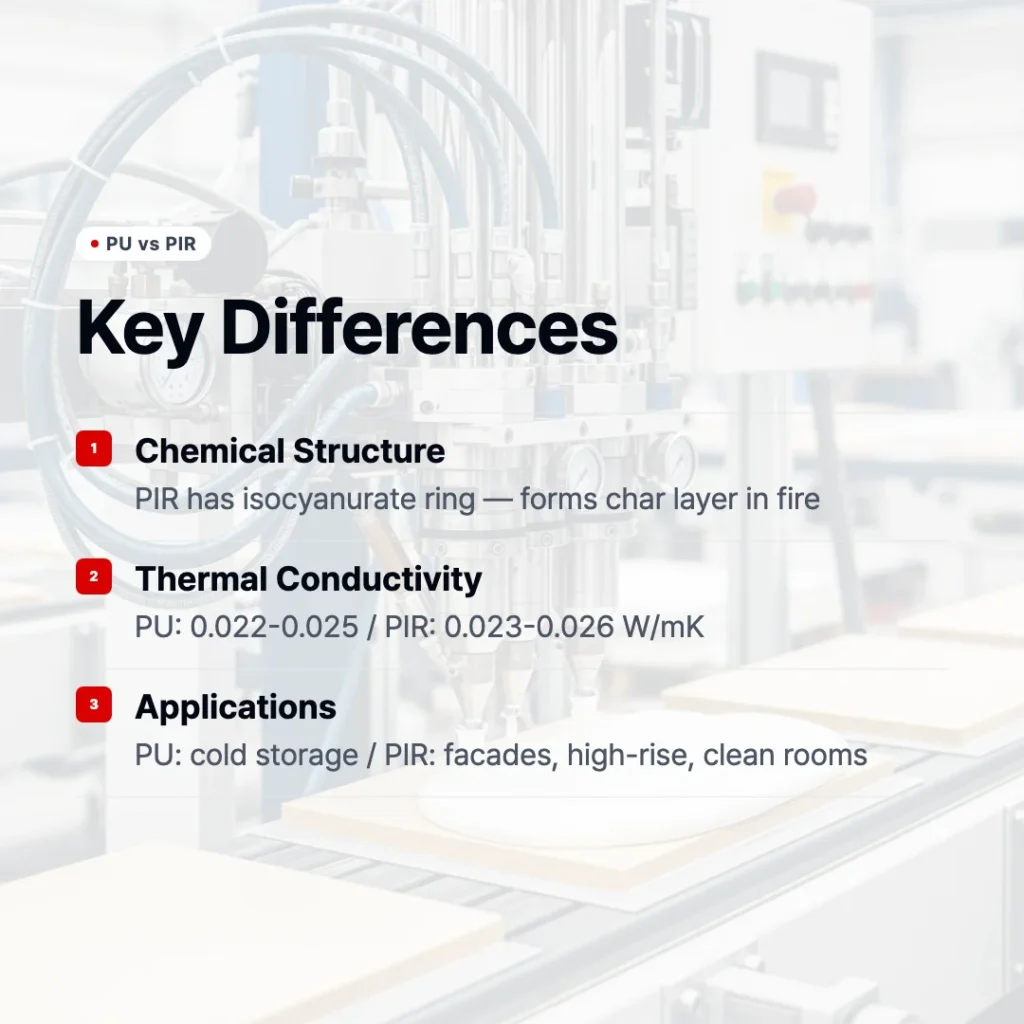
The clearest way to frame the difference is by outcome: mineral wool panels are produced from a non-combustible fibre core and typically achieve Euroclass A1 or A2-s1,d0 reaction-to-fire classes, whereas PIR panels are built from a combustible rigid foam and typically achieve B-s1,d0 or B-s2,d0, a strong result for an organic core but categorically below the non-combustible A classes. This single distinction explains why the two routes exist in parallel rather than one displacing the other. Mineral wool wins where non-combustibility is mandated; PIR wins where thermal efficiency, lighter weight, and lower cost carry the specification and a B-class reaction is acceptable.
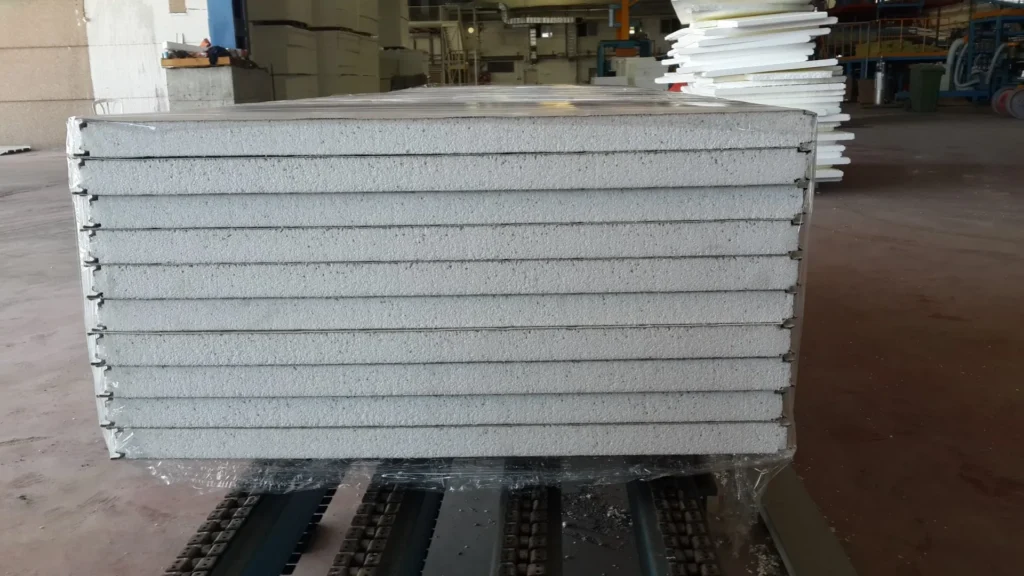
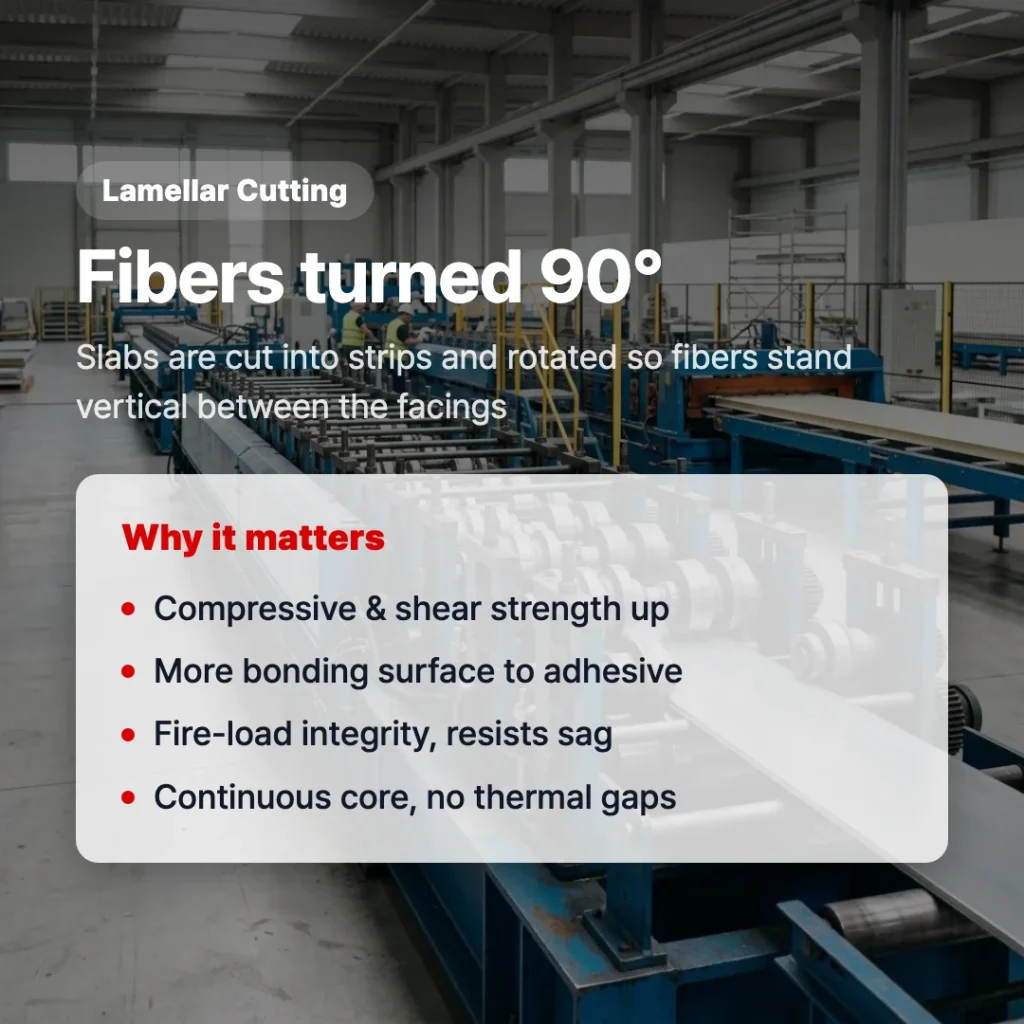
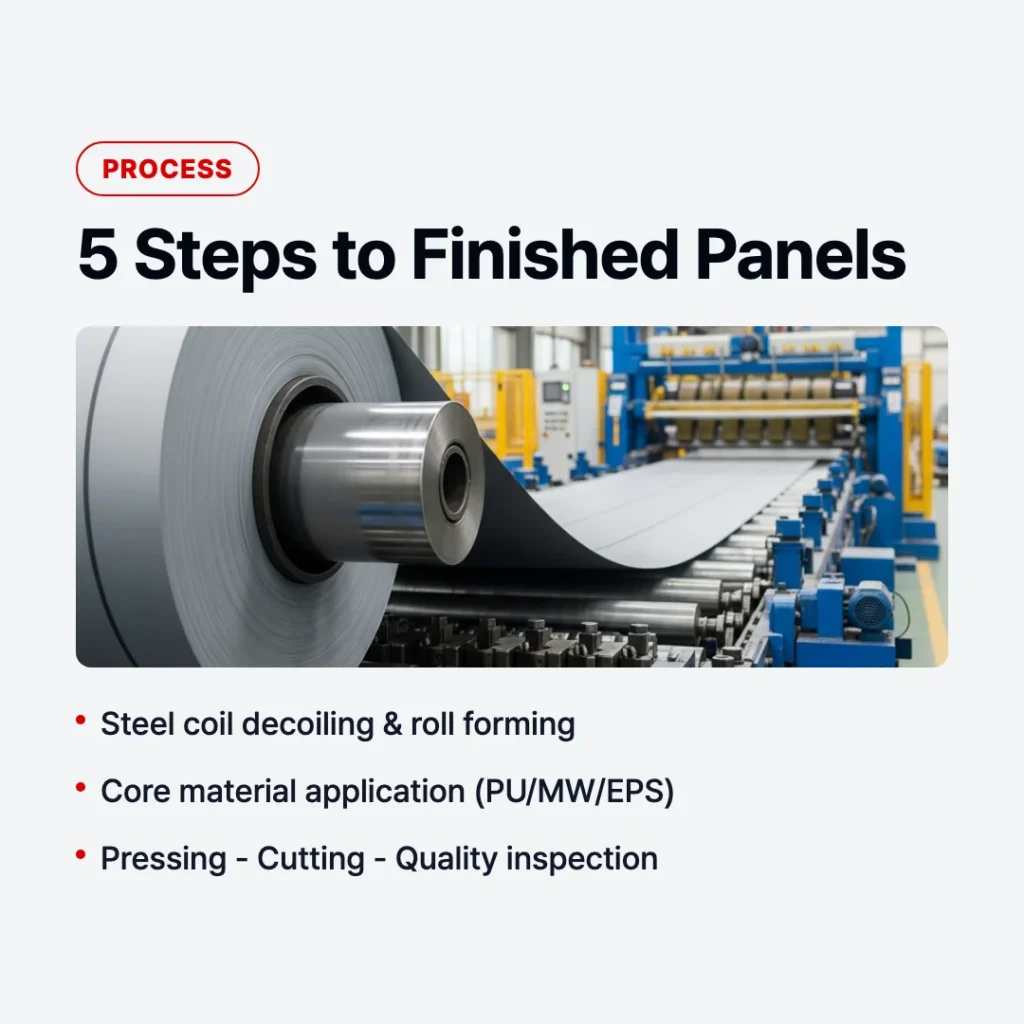
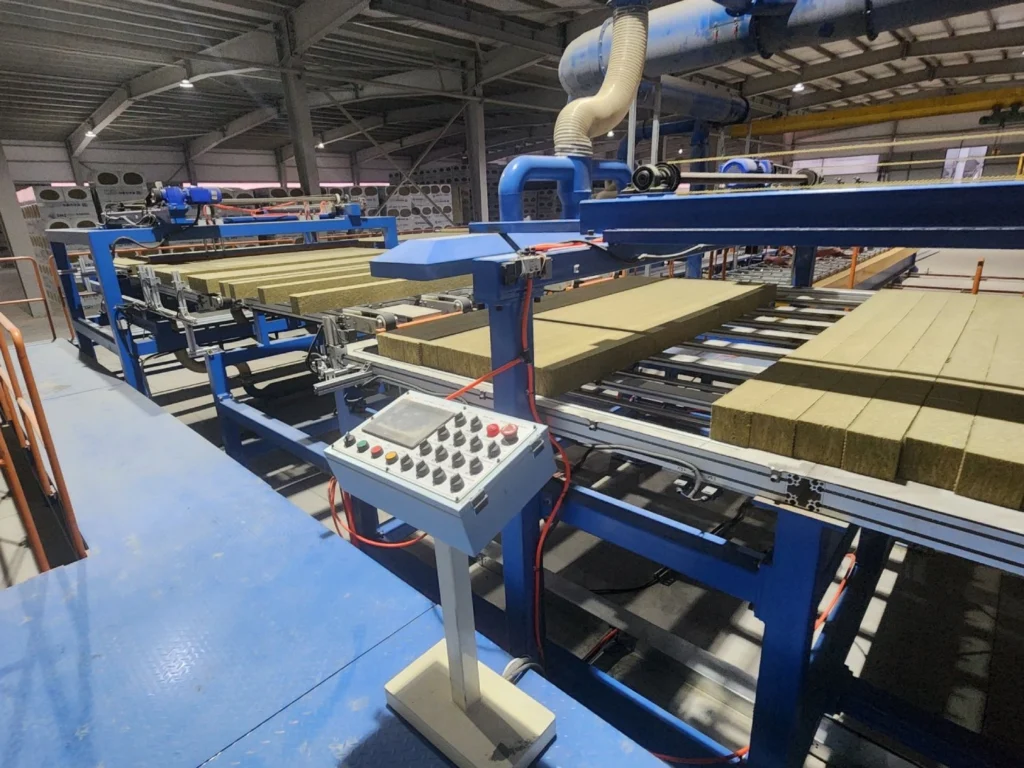
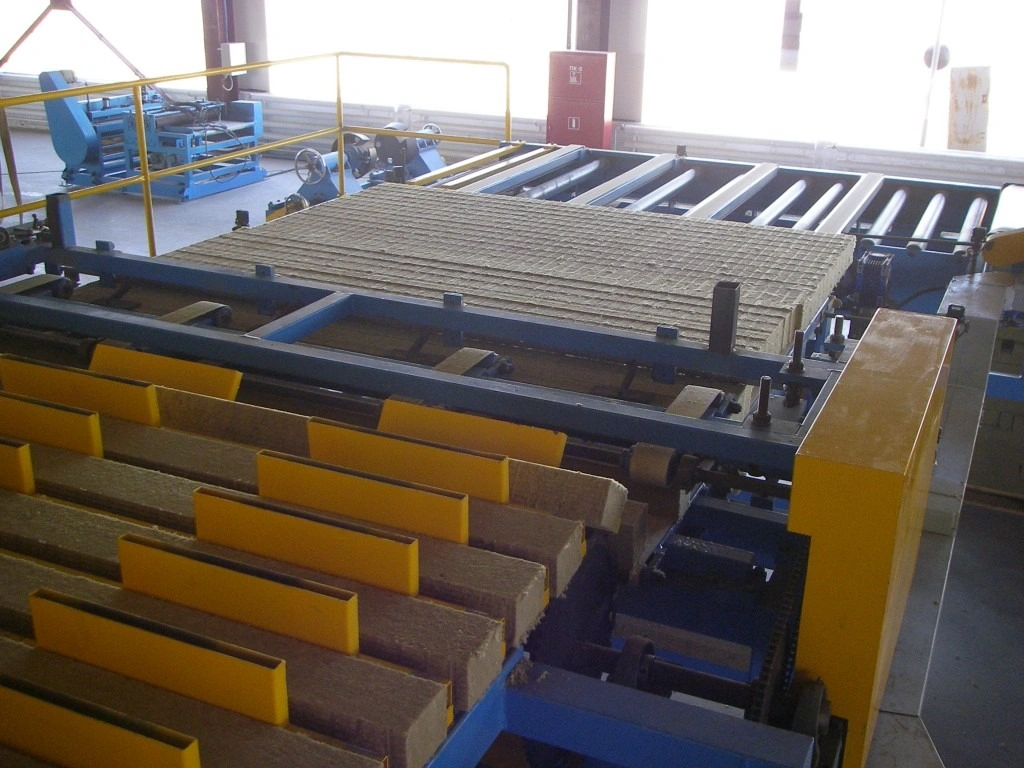
The routes differ mechanically as well. PIR production centres on continuous foaming, where liquid components are metered, mixed, and expanded between the facings, then cured under precise temperature and line-speed control, and the PIR core equipment and its bearing on fire performance are covered in depth in our overview of PIR core equipment and fire performance. Mineral wool production instead cuts, rotates into lamellas, and bonds pre-formed fibre slabs to the facings with adhesive, demanding entirely different handling, dust management, and bonding stations. For producers weighing which route, or both, to install, the fuller station-by-station picture is set out in our comparison of how mineral wool and PU production compare.
Production-Line Requirements for Fire-Rated Output
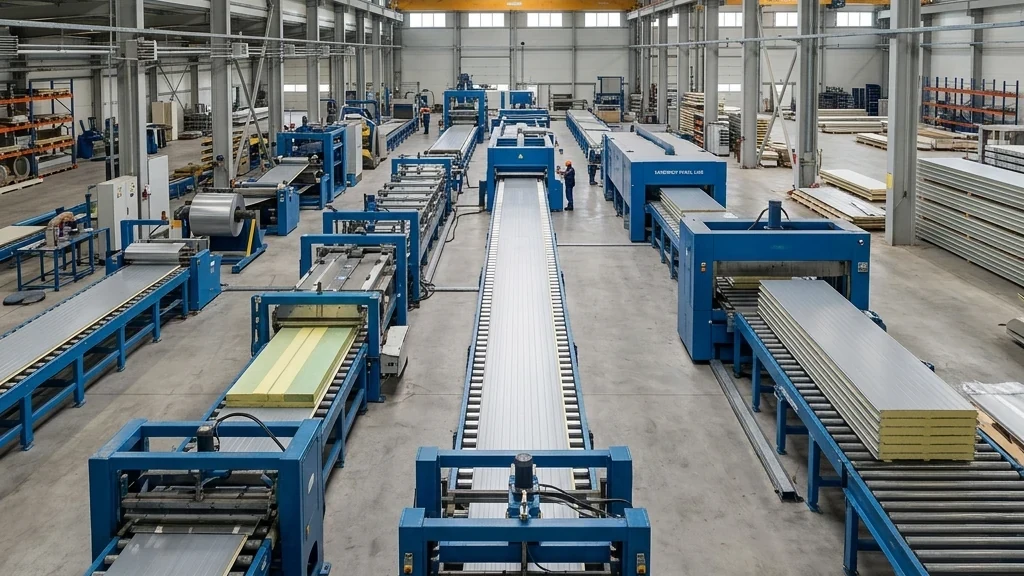
A fire-rated production line is one whose material feed, bonding, curing, and quality-control systems are specified to hold the tolerances that certified fire performance depends on. Fire classification is far less forgiving of process drift than standard insulation output, because a marginal bond or an inconsistent core density that would pass a thermal spec can invalidate a reaction-to-fire or fire-resistance result.
Producers moving into fire-rated output should hold their line against a practical checklist before committing to certification testing:
- Core consistency: uniform density and full cure across the panel width, since local weak zones become the failure origin under fire test conditions
- Bond integrity: adhesive chemistry, coverage, and cure verified to resist delamination and softening at elevated temperature, not only under ambient shear
- Facing and coating control: coil specification and coating held to the values assumed in the tested build, as surface behaviour feeds directly into the reaction class
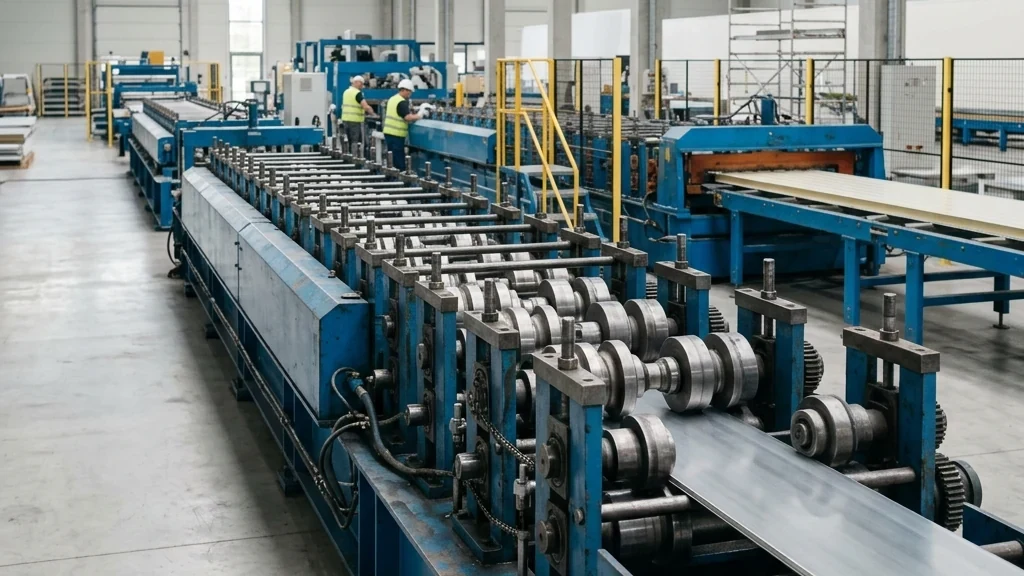
- Joint precision: tongue-and-groove or lap profiles rolled to tight tolerance so installed seams preserve integrity and insulation, which are governed by joint and fastener detail rather than the core alone
Equally important is traceability. Certification bodies expect that the panel tested in the laboratory is representative of routine production, so a fire-rated line must document core batch, adhesive lot, facing coil, and line parameters in a way that ties finished stock back to the certified build. A line that can produce a compliant panel occasionally but cannot prove consistency will struggle to hold certification.
Euroclass and the Certification Landscape
- Targets Euroclass explicitly
- EN 13501-1 reaction class in the core
- EN 13501-2 EI 30–120 from joint detail
- Traceable to the certified build
- Same classification batch after batch
The certification landscape is the set of standardised classifications and test regimes by which a panel’s fire behaviour is graded, declared, and accepted into a given market. In Europe, two complementary axes govern this: reaction to fire and resistance to fire.
Reaction to fire, classified under EN 13501-1 as the Euroclass system, describes how much a panel contributes to a fire. Mineral wool cores typically reach the non-combustible A1 or A2-s1,d0 classes, PIR cores typically reach B-s1,d0 or B-s2,d0, and expanded polystyrene cores typically fall to class E, a spread that maps directly onto core chemistry and, in turn, onto the production route chosen. Resistance to fire is a separate question, classified under EN 13501-2 through EI ratings that measure how long an assembly maintains integrity and insulation as a barrier. This resistance is a property of the installed system — joint design, fastener pattern, and fixing detail — not of the core in isolation, which is why two panels with identical cores can post different EI outcomes depending on how their seams are engineered.
Because the underlying test procedures are extensive, this guide keeps to the production implications, and the detailed classification mechanics for a non-combustible build, including the EN 13501 test path, are set out in our dedicated piece on the mineral wool fire-rated production process and EN 13501 detail. For international buyers it is enough to recognise that a credible line targets these classifications explicitly, and that certification is earned on tested, traceable production rather than declared on datasheets alone.
KINDUS Fire-Rated Panel Production
Fire-rated panel production, from an equipment standpoint, is the discipline of building lines that reliably deliver certified reaction-to-fire and fire-resistance performance batch after batch. Founded in 1995, KINDUS has delivered more than 170 projects across 40 countries, supplying CE-certified sandwich panel production lines engineered for exactly this class of output.
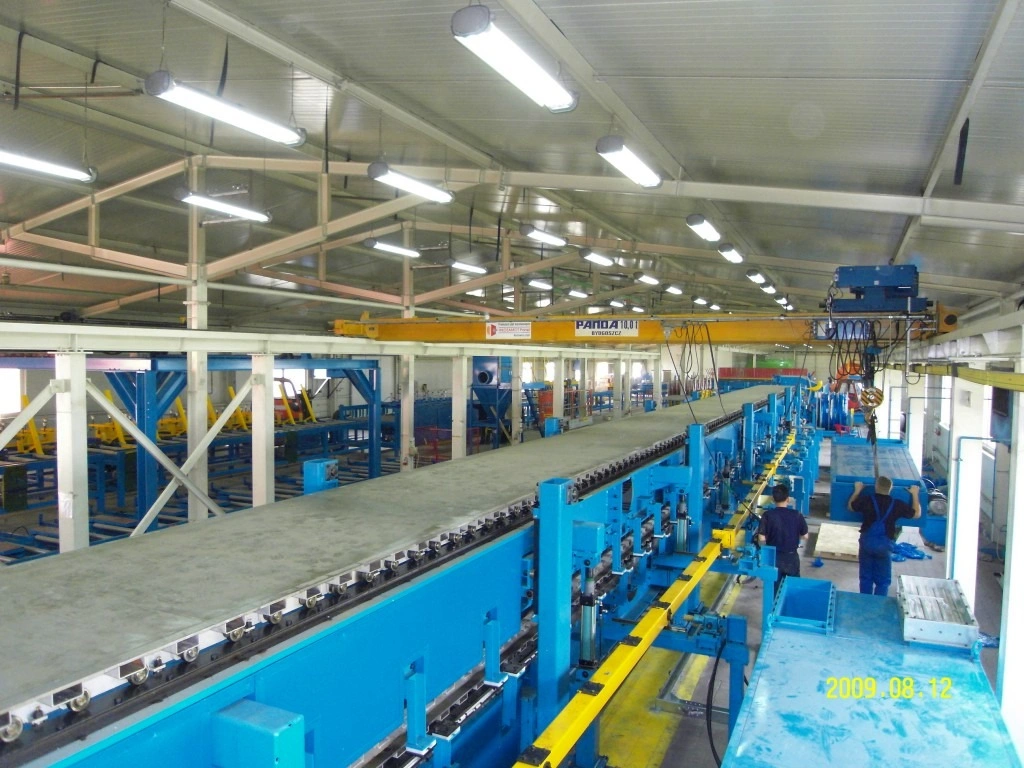
Rather than treating fire performance as a single feature, the engineering approach addresses the full assembly — core forming, facing handling, adhesive control, curing, and joint profiling — as an integrated system, and configures lines for either PIR or mineral wool routes according to the classifications a manufacturer must reach. Lines can be configured for fire-resistance output across the common EI 30 to EI 120 band depending on the panel build and installed detail, with the traceability infrastructure that certification bodies expect from routine production. For manufacturers deciding between routes, or planning capacity for both, this assembly-first, certification-aware philosophy is what turns a production ambition into panels that pass.
Frequently Asked Questions
Can a PIR sandwich panel achieve the same fire classification as mineral wool?
No. PIR panels are built from a combustible organic core and typically reach Euroclass B-s1,d0 or B-s2,d0, which is a strong result for a foam core but remains below the non-combustible A1 and A2-s1,d0 classes that mineral wool panels typically achieve. Where a specification mandates a non-combustible core, mineral wool is the route; PIR competes on thermal efficiency, weight, and cost where a B-class reaction is acceptable.
Is fire resistance determined only by the core material?
No. Reaction to fire is driven largely by the core, but fire resistance in the sense of integrity and insulation — the EI ratings under EN 13501-2 — depends heavily on joint design, fastener detail, and how the panel is installed. Two panels with the same core can post different resistance results depending on their seam engineering, which is why joint profiling is a fire-safety function on the production line.
What does a production line need to produce certified fire-rated panels?
It needs tight control of core density and cure, verified bond integrity under heat, facing and coating held to the tested specification, precise joint profiling, and traceability linking finished stock to the certified build. Certification assumes the tested panel represents routine output, so consistency and documentation matter as much as the panel design itself.
Ready to evaluate production capability for A-class or B-class fire-rated output?