For companies looking to enter sandwich panel manufacturing, the right mindset is not buying a single piece of equipment — it is designing an entire factory system. The more systematically you prepare each stage, from market analysis through permitting, equipment layout, and workforce planning, the faster you will move from initial investment to stable production. This guide walks through the essential steps for building a sandwich panel factory from the ground up.
Market Research and Feasibility Analysis
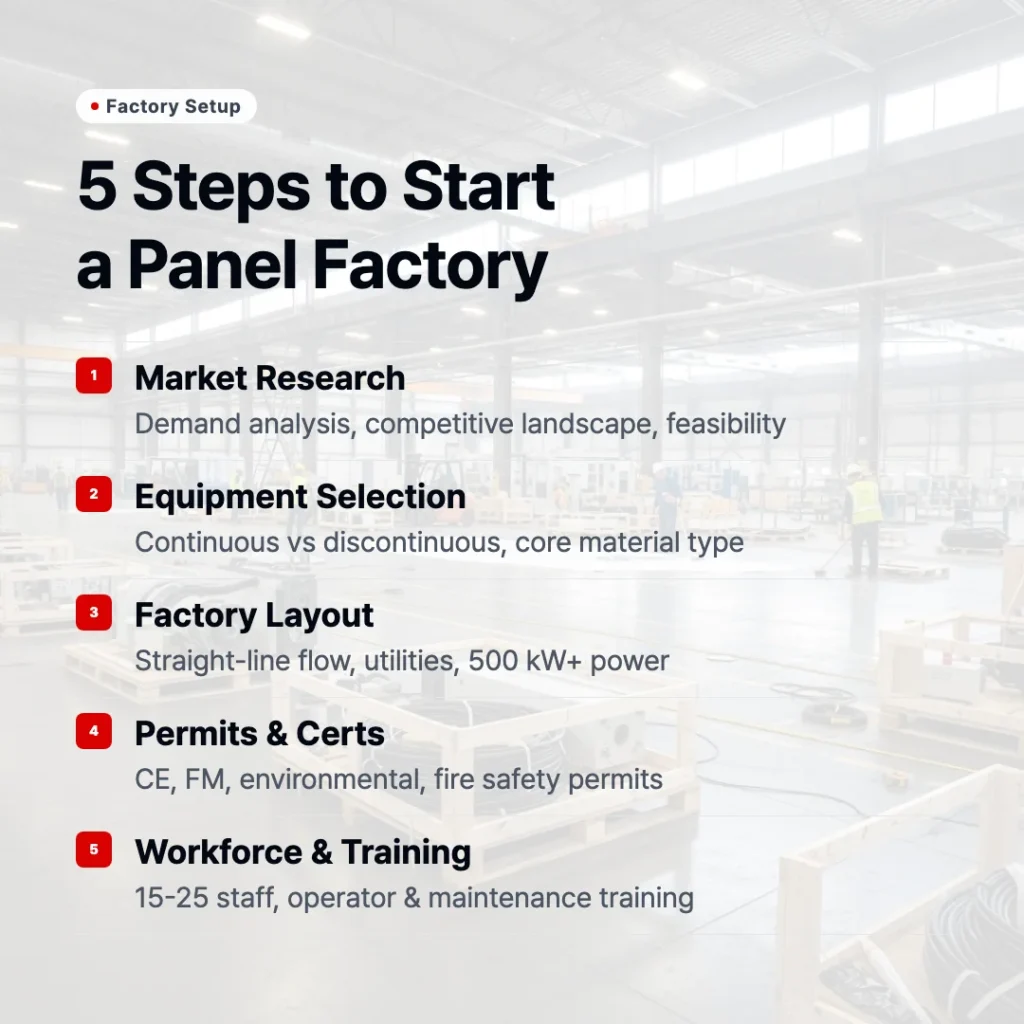
The first step in establishing a factory is confirming that real demand exists. Sandwich panels are used across industrial construction, cold storage, clean rooms, logistics centers, and modular residential buildings. You need to identify which applications generate the strongest demand in your target region and which sectors offer the greatest growth potential.
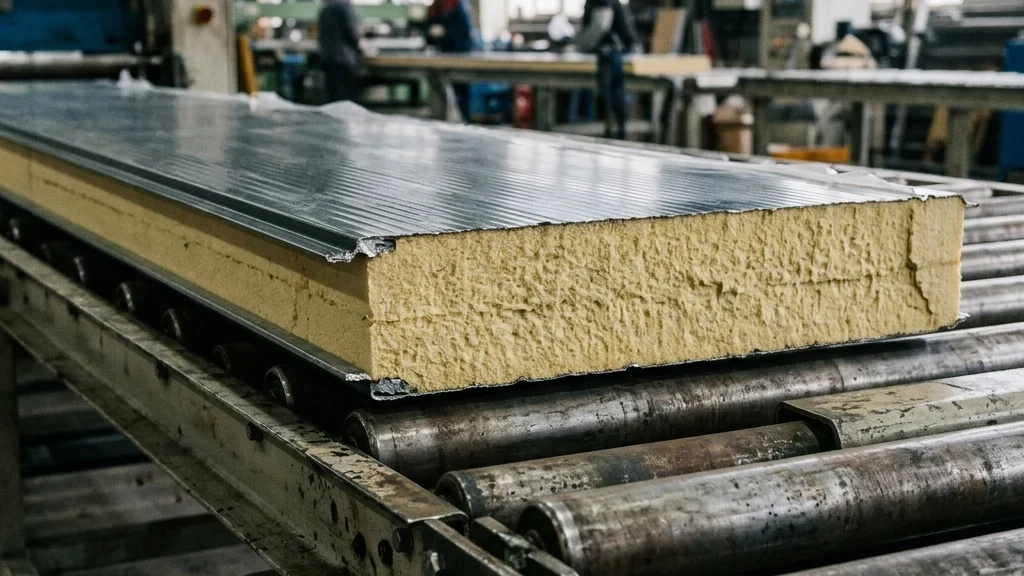
Competitive landscape analysis is equally essential. If panel factories are already operating in the area, investigate their product range, pricing, delivery capabilities, and capacity. Look for gaps that existing suppliers fail to fill — for example, a shortage of specific core materials (PIR, mineral wool) or a lack of custom specification capability.
The feasibility analysis should calculate the break-even point based on initial investment, operating costs, projected production volume, and selling price. Estimate total investment including land, construction, equipment, raw material procurement, and labor costs, then apply a realistic utilization rate (typically 60 to 70% in the early stage) against annual production capacity to assess profitability.
Sandwich Panel Equipment Selection and Factory Layout
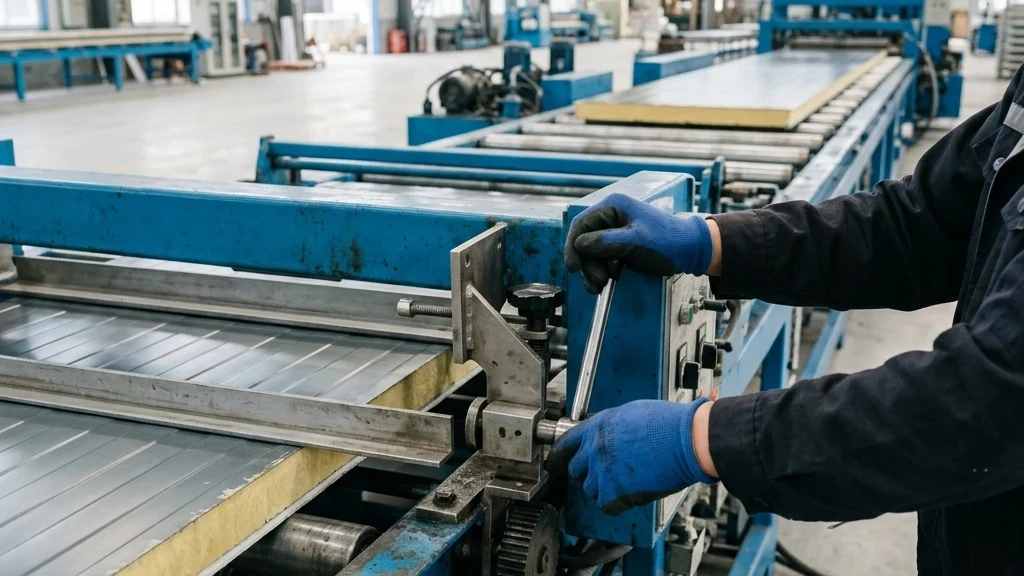
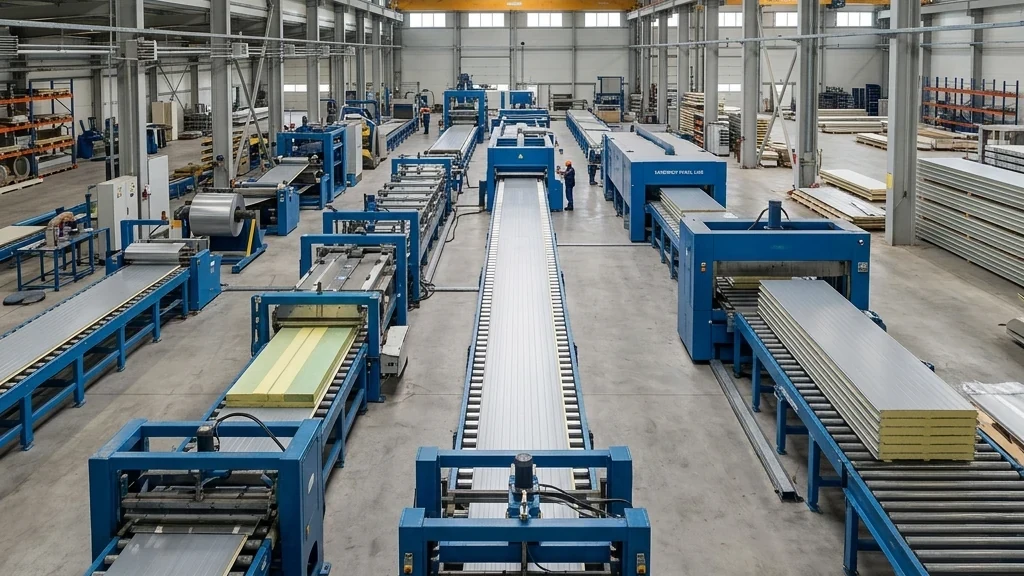
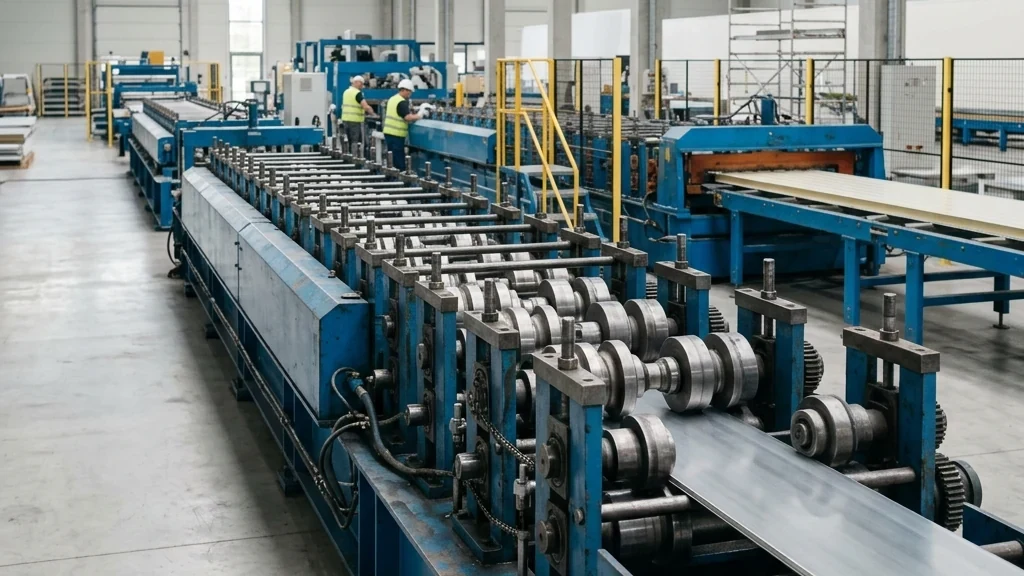
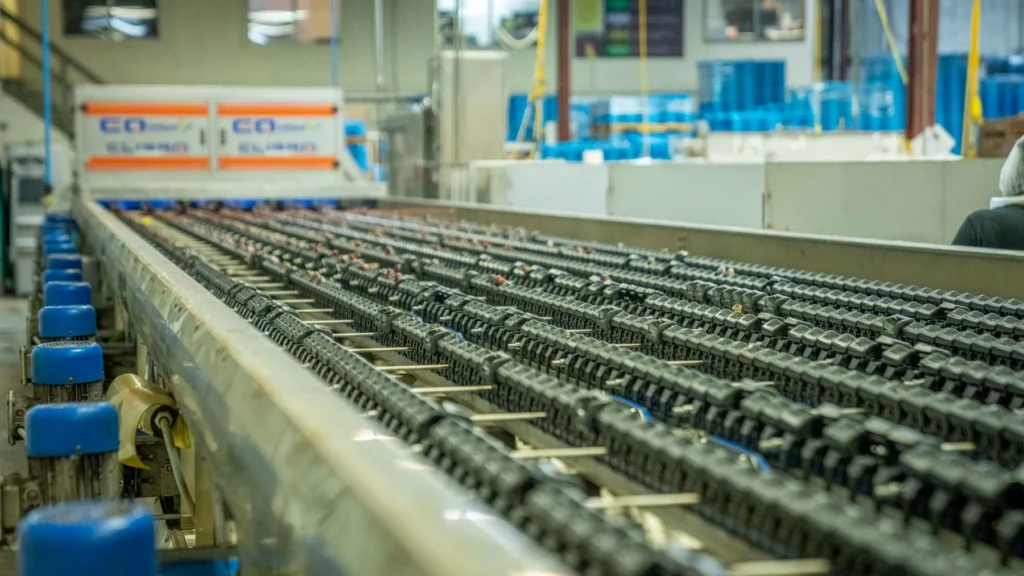
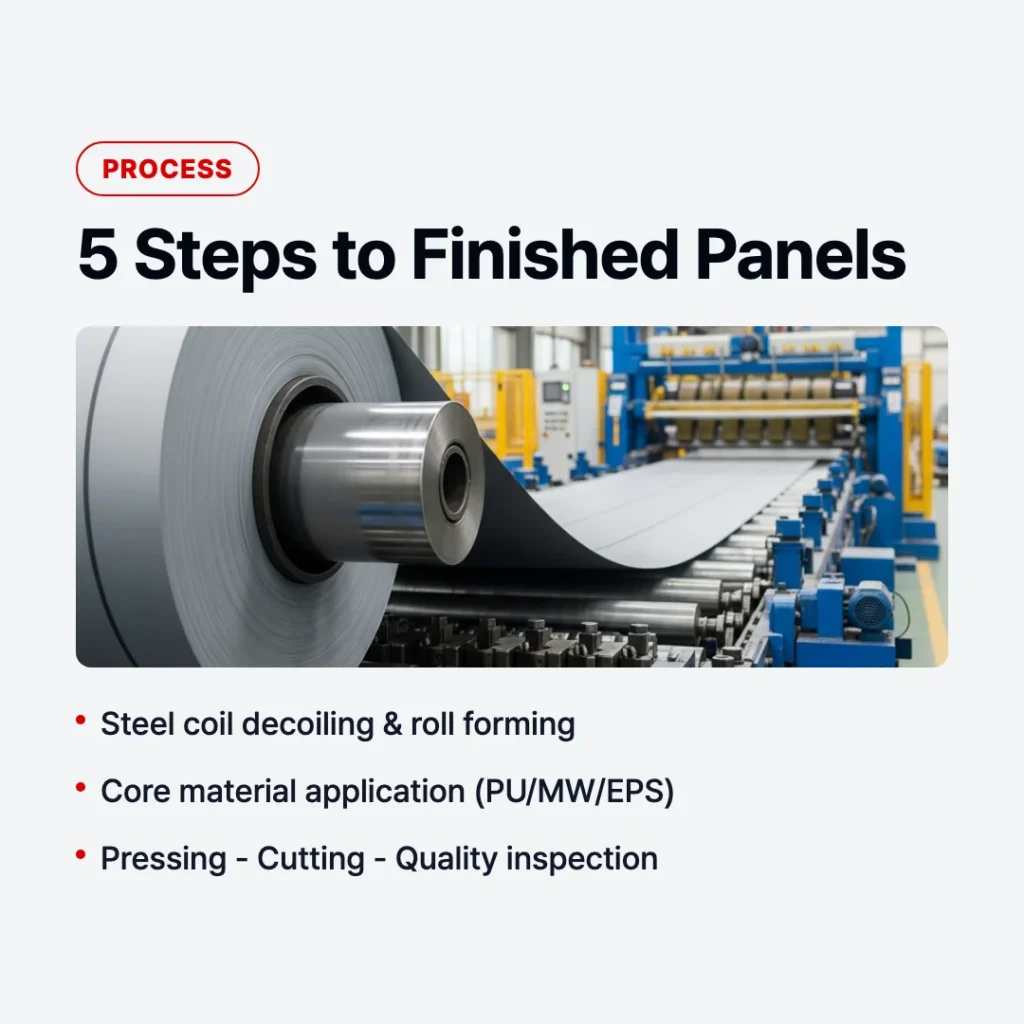
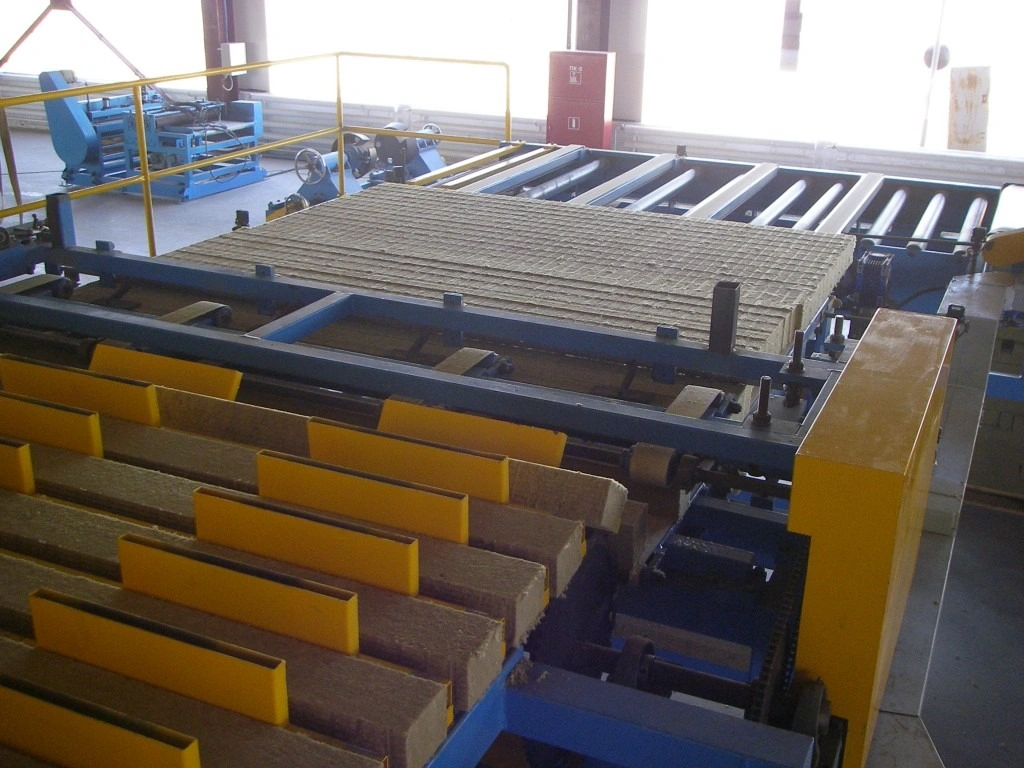
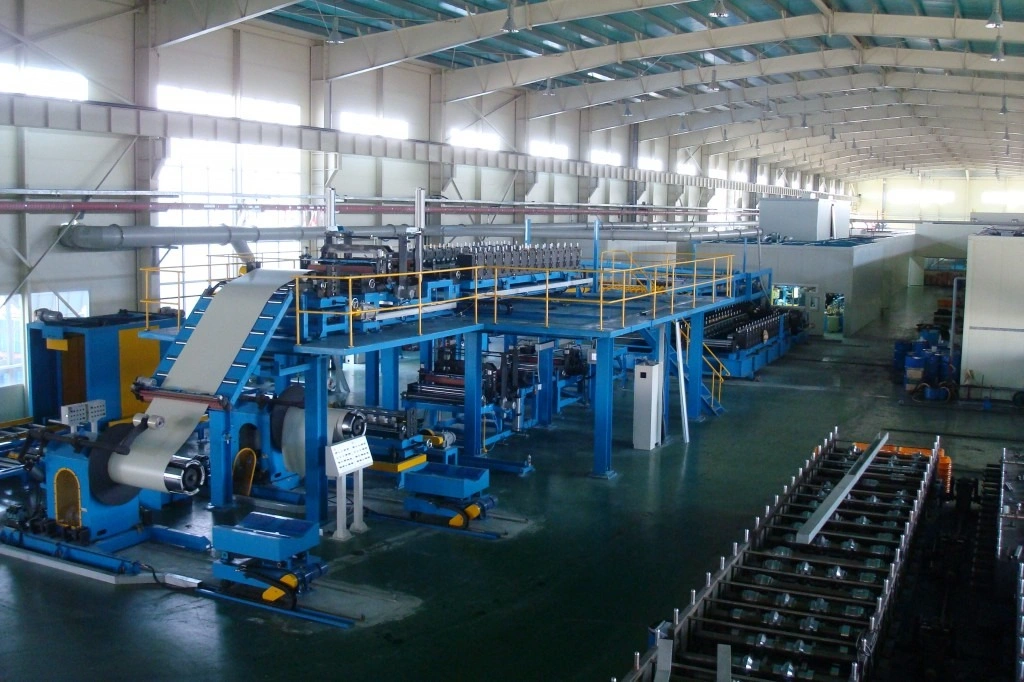
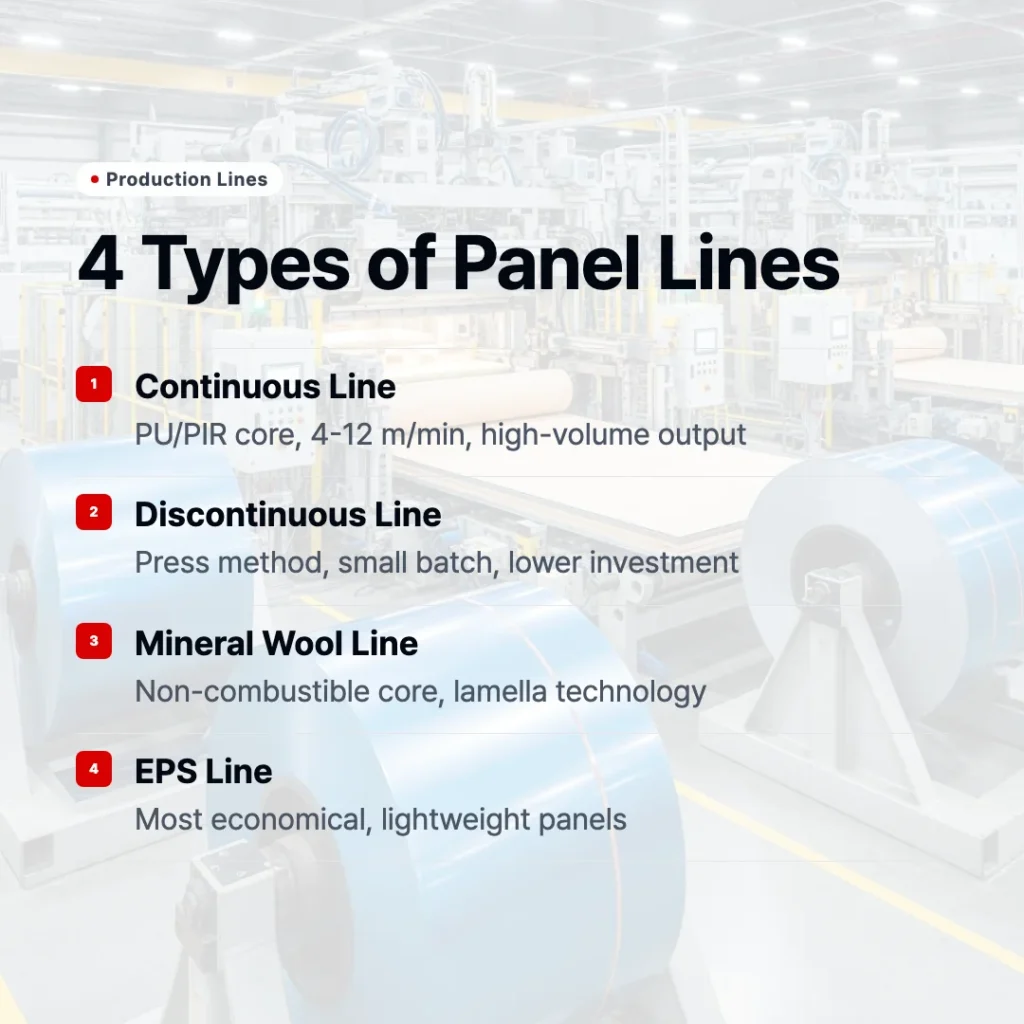
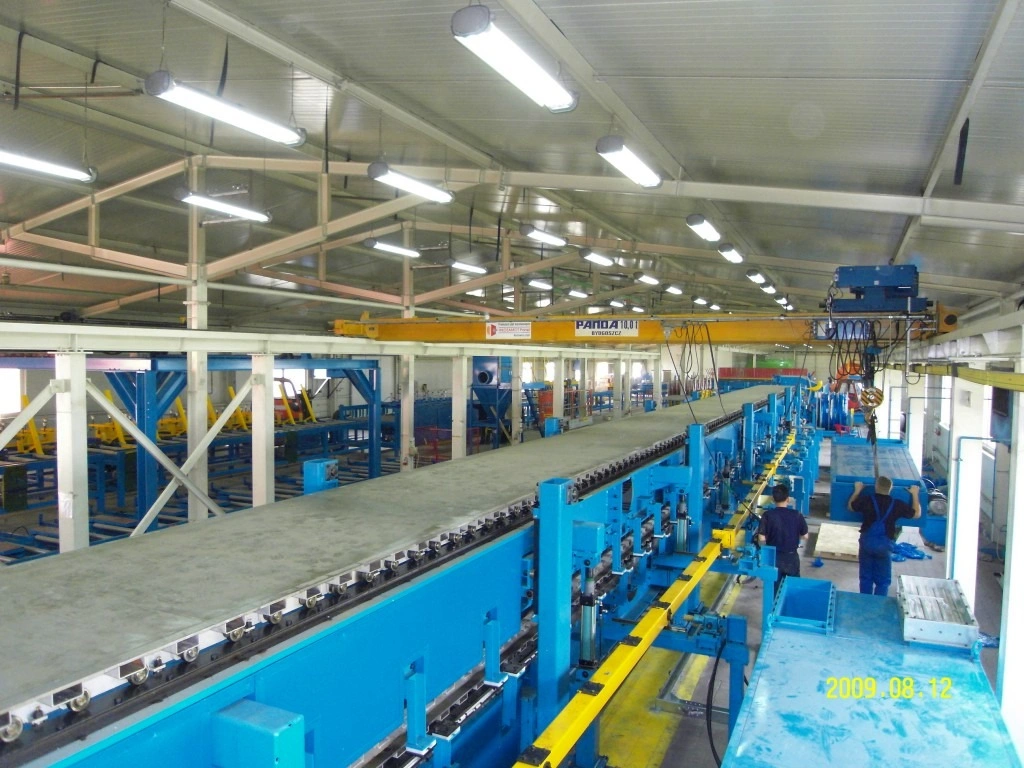
The production line is the heart of the factory. Sandwich panel production lines are broadly divided into continuous lines and discontinuous lines. Continuous lines are suited for high-volume production with faster output speeds, while discontinuous lines are better for small-batch, multi-specification production or specialty panel requirements. Select the appropriate line type based on your target output and product mix.
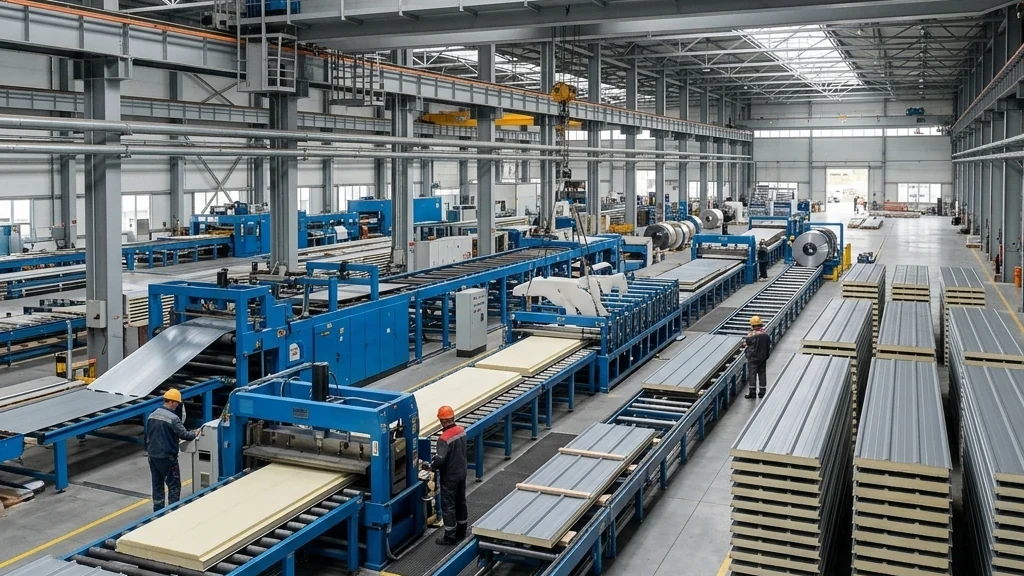
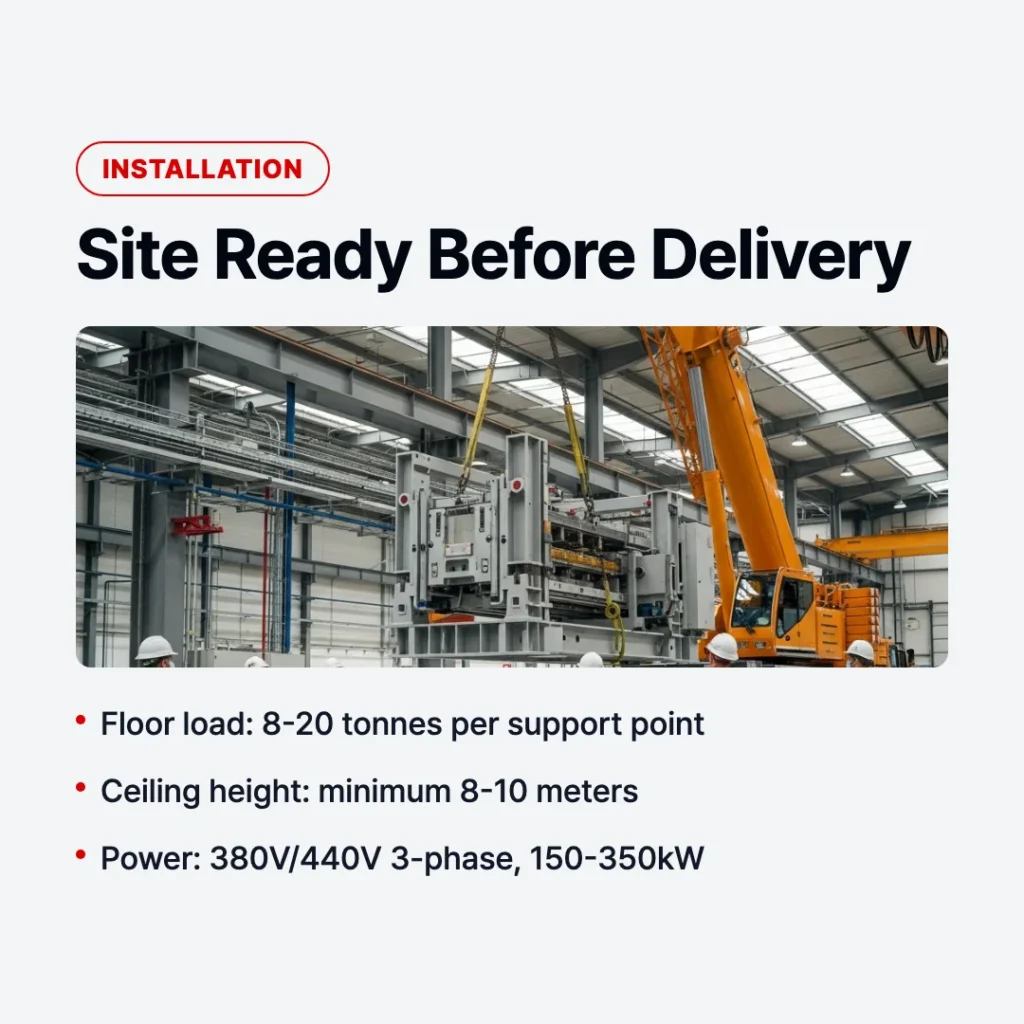
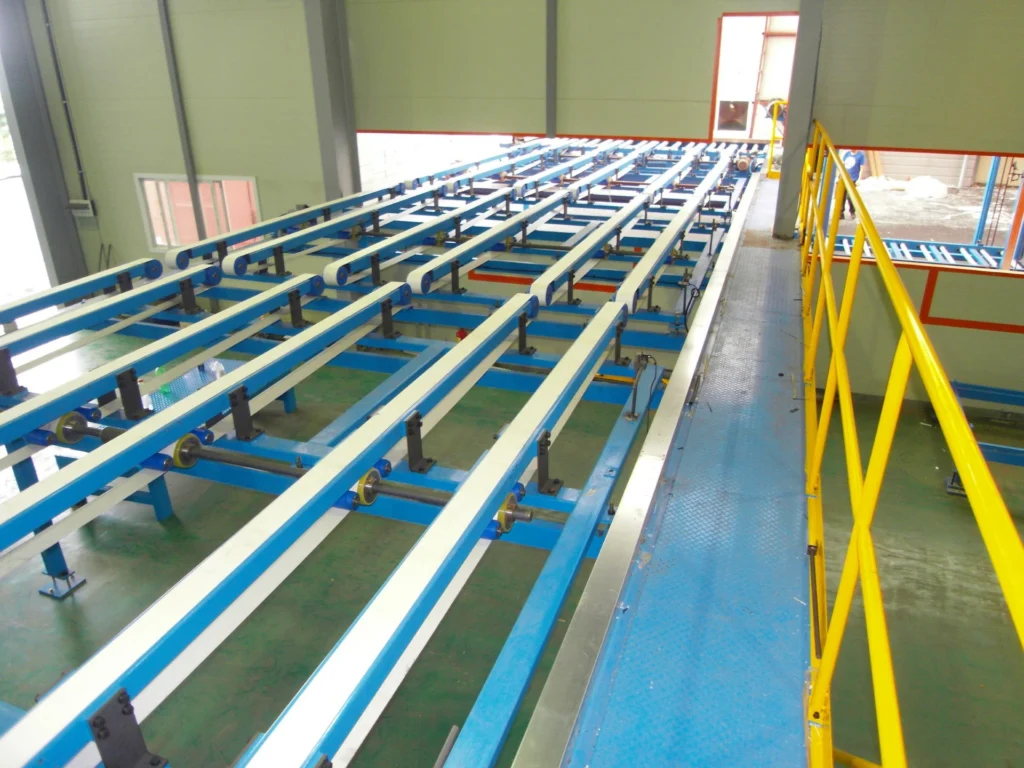
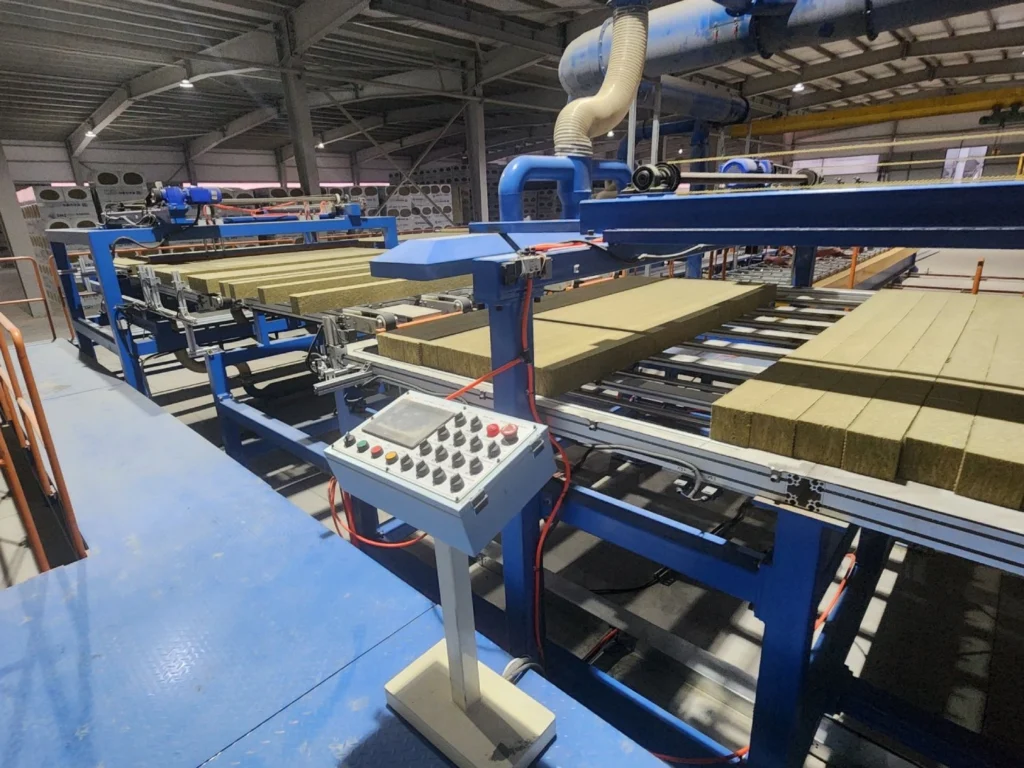
Factory layout should follow the principle of a straight-line flow from raw material receiving to finished product dispatch. Coil storage, decoiler and roll forming zones, foaming or lamination zones, cutting zones, stacking and packaging zones, and finished goods storage areas should be arranged in sequence to minimize material handling distances. On the utilities side, plan in advance for power capacity (500 kW or more for large lines), compressed air supply, ventilation systems, and chemical storage facilities for foaming agents.
For a deeper understanding of production line types and technical differences, refer to the article “Sandwich Panel Production Line: Types, Technology & How to Choose.”
Permits and Certifications
Operating a factory requires compliance with national and local government permitting requirements. Common requirements include factory registration, environmental impact assessment, fire safety permits, and building permits. Depending on the country, industrial park admission approval or foreign investment permits may also be required.
Product certifications vary by sales market. For the European market, CE marking is mandatory and compliance with EN 14509 and related standards is required. The North American market may require FM Approval or UL certification. Middle Eastern countries have their own certification frameworks such as SASO and ESMA. Since certification typically takes 3 to 6 months to obtain, it is advantageous to begin the process in parallel with factory construction.
Environmental permits should not be overlooked. VOC (volatile organic compound) emissions from the PU foaming process, wastewater treatment, and noise standards must be identified in advance, and mitigation equipment should be incorporated into the facility design.
Workforce and Training
The minimum workforce required to operate a sandwich panel production line varies by line scale, but for a single continuous line including shift operations, 15 to 25 people is typical. The team consists of line operators, quality control staff, maintenance technicians, raw material and logistics personnel, and management.
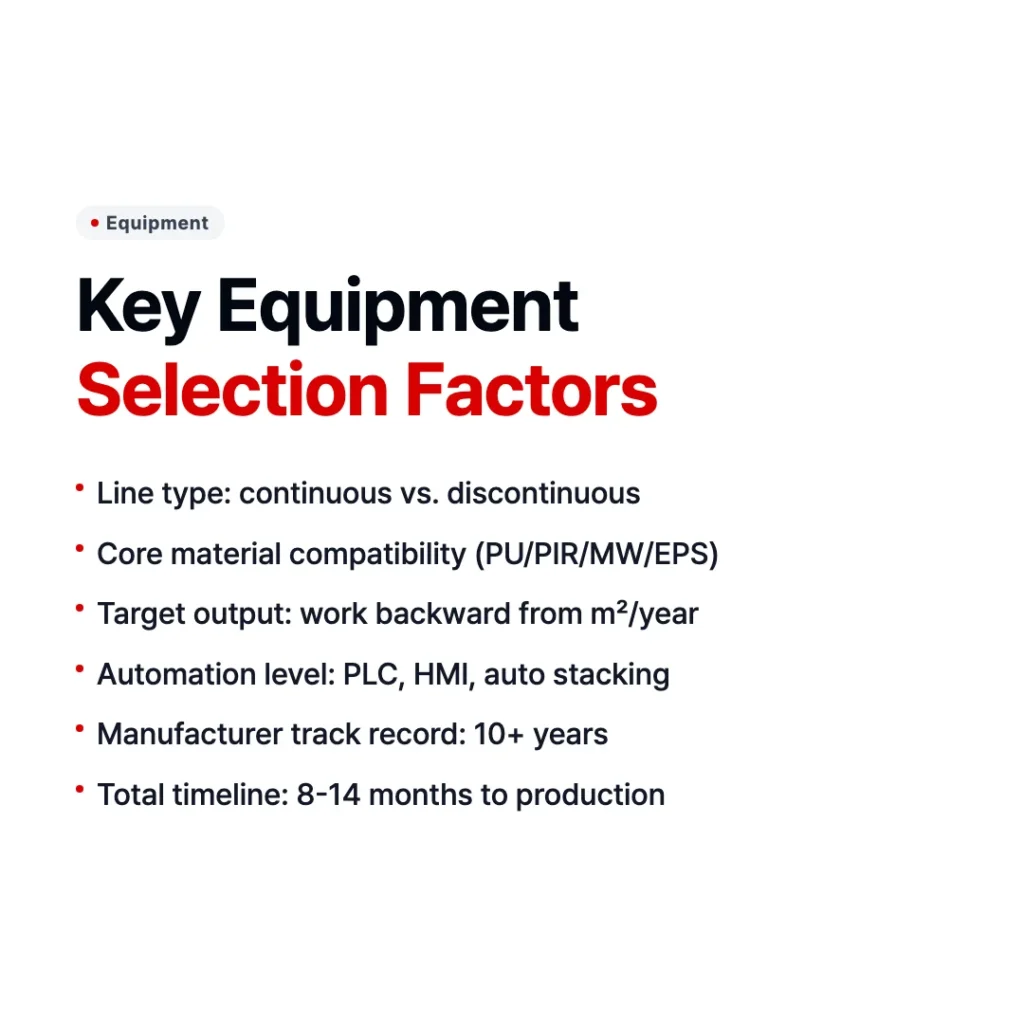
The critical factor is technical training. Structured training in line operation, foam formulation adjustment, roll forming die changeover, PLC program understanding, and routine maintenance is essential to minimize defect rates during initial startup. Confirm at the contract stage whether the equipment supplier provides on-site training after installation, and clarify the duration and scope of that training.
Maintenance training also warrants separate attention. When a facility builds in-house capability for preventive maintenance scheduling, key consumable replacement cycles, and emergency breakdown response procedures, equipment uptime can be maintained at 90% or above.
KINDUS Turnkey Factory Solution
When managing the entire factory setup process independently is not feasible, a turnkey factory solution offers a practical alternative. KINDUS provides an integrated project package covering market analysis consulting, factory layout design, equipment manufacturing and delivery, installation, commissioning, and operator training.
The greatest advantage of the turnkey approach is eliminating interface risks between stages. When design and equipment are procured separately, problems frequently arise — layout and equipment specification mismatches, utility capacity shortfalls, and installation schedule delays. A single point of responsibility eliminates these coordination issues at their source.
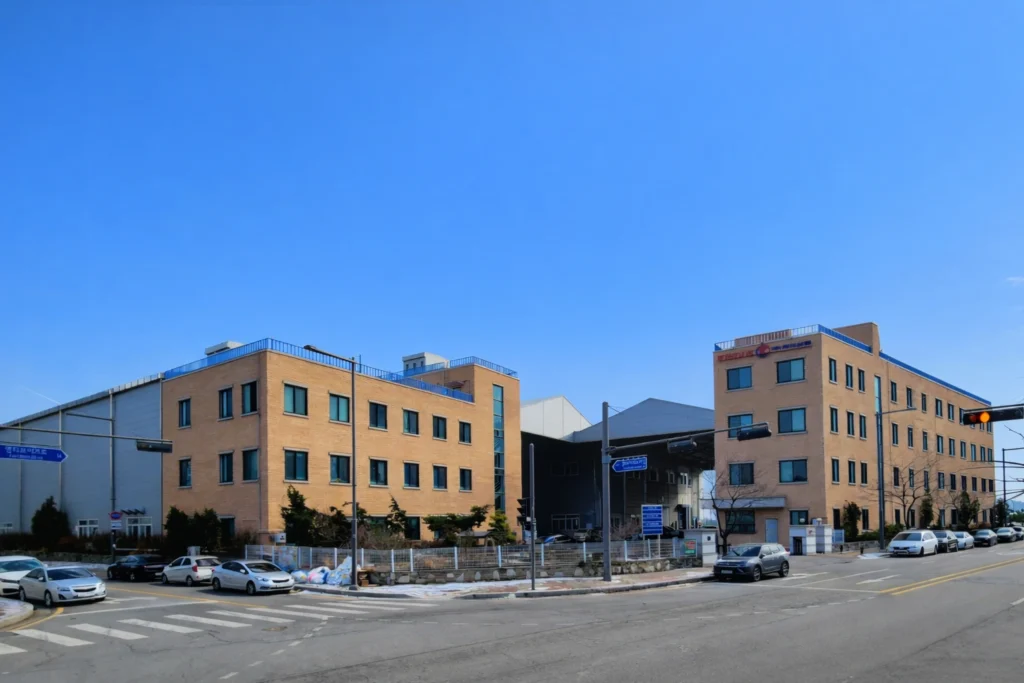
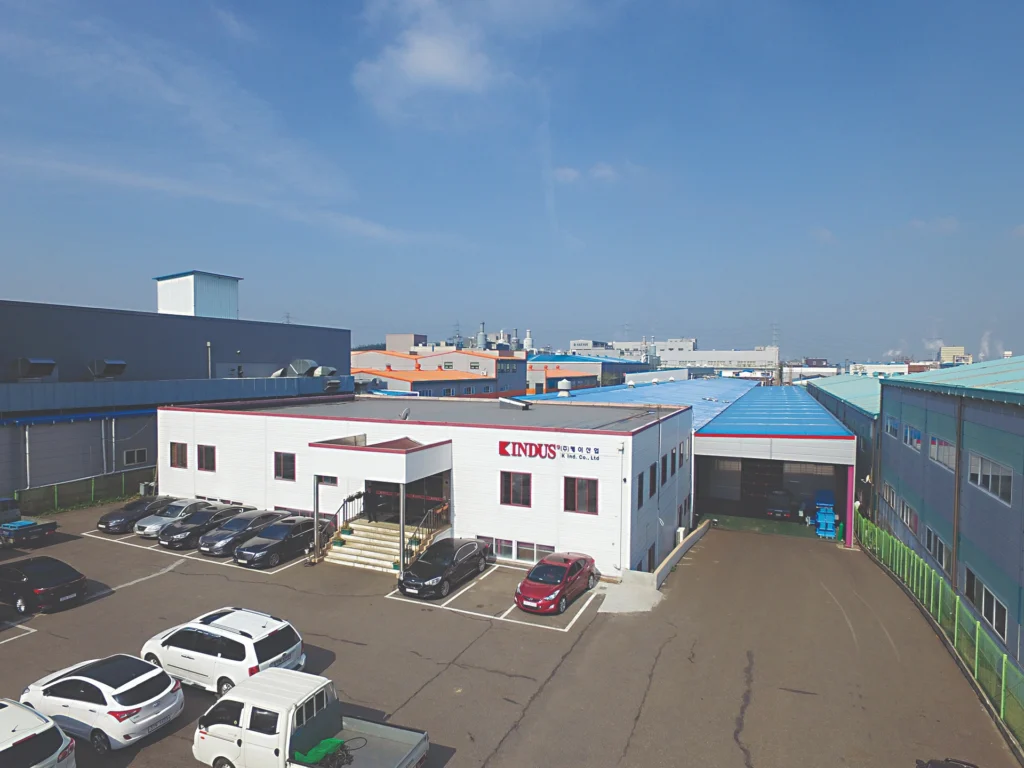
The KINDUS turnkey scope includes production line design and manufacturing, factory construction advisory, utility design, equipment shipping and installation, commissioning and quality verification, operator and maintenance training, and initial production support. After project completion, remote technical support and a consumables supply system are maintained to ensure long-term operational stability.
For detailed guidance on the criteria for selecting a sandwich panel equipment manufacturer, refer to the article “How to Choose a Sandwich Panel Machine Manufacturer: Expert Guide.”
Frequently Asked Questions
How long does it take to set up a factory?
From securing the factory site through construction, equipment manufacturing, installation, and commissioning, the typical timeline is 8 to 14 months. A turnkey approach can shorten the overall schedule by 2 to 3 months since design and equipment manufacturing can proceed in parallel. However, permitting timelines vary by country and should be confirmed separately.
What is the minimum number of employees needed?
For a single continuous line operating on two shifts, a minimum of 15 to 20 people is required. This includes 8 to 10 line operators, 2 quality control staff, 2 maintenance technicians, 3 to 4 raw material and logistics personnel, and 2 to 3 management staff. A gradual hiring approach aligned with production volume growth helps reduce the initial cost burden.
What does a turnkey solution cover?
A turnkey solution includes factory layout design, production line manufacturing and delivery, on-site installation, utility connections, commissioning, quality testing, and operator training. Depending on the provider, additional services such as initial raw material procurement support, product certification consulting, and buyer connection assistance may also be included. Before signing a contract, it is important to clearly define included and excluded items through a detailed SOW (scope of work).