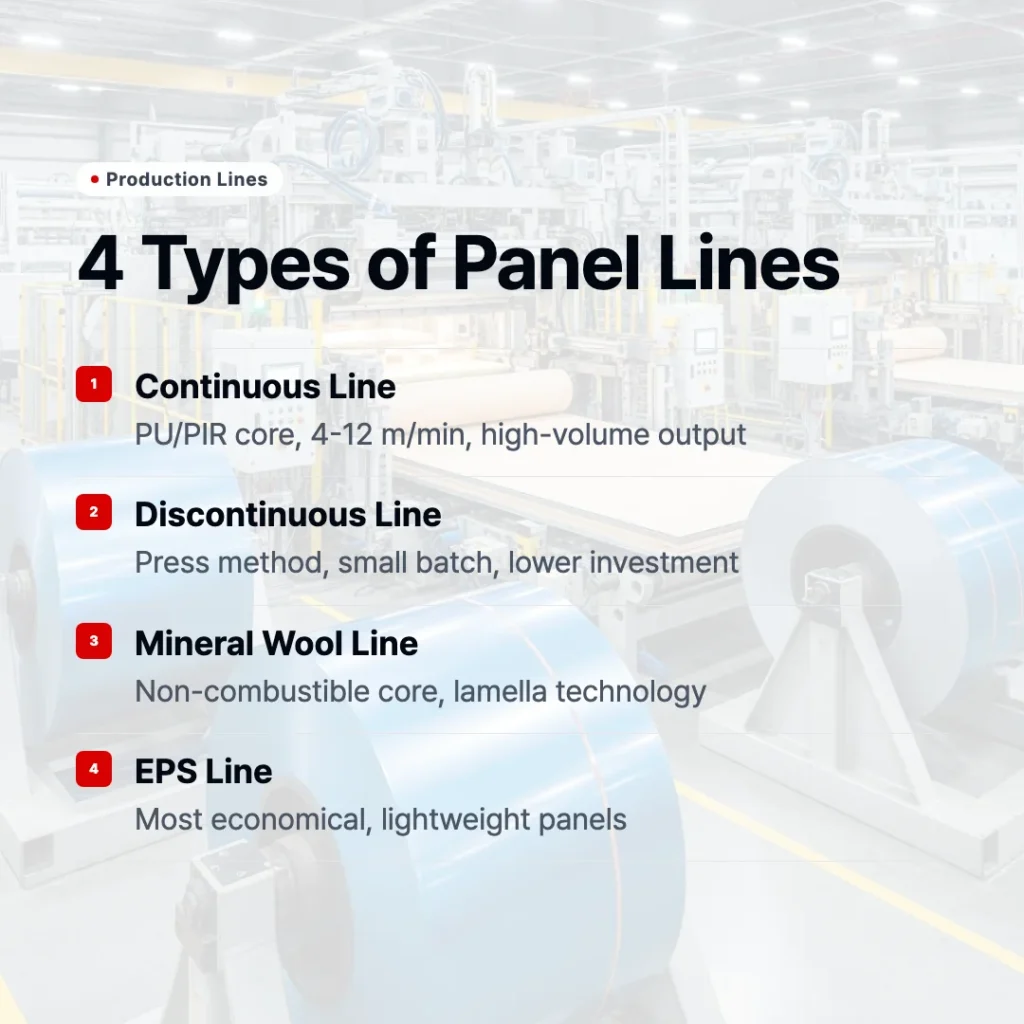
One of the most critical decisions when investing in sandwich panel production equipment is selecting the right manufacturer. Machine performance, durability, and the level of post-delivery support all depend on who builds the equipment. This guide outlines the key evaluation criteria, regional characteristics of manufacturers, and verification methods for making an informed choice.
Why Sandwich Panel Machine Manufacturer Selection Matters
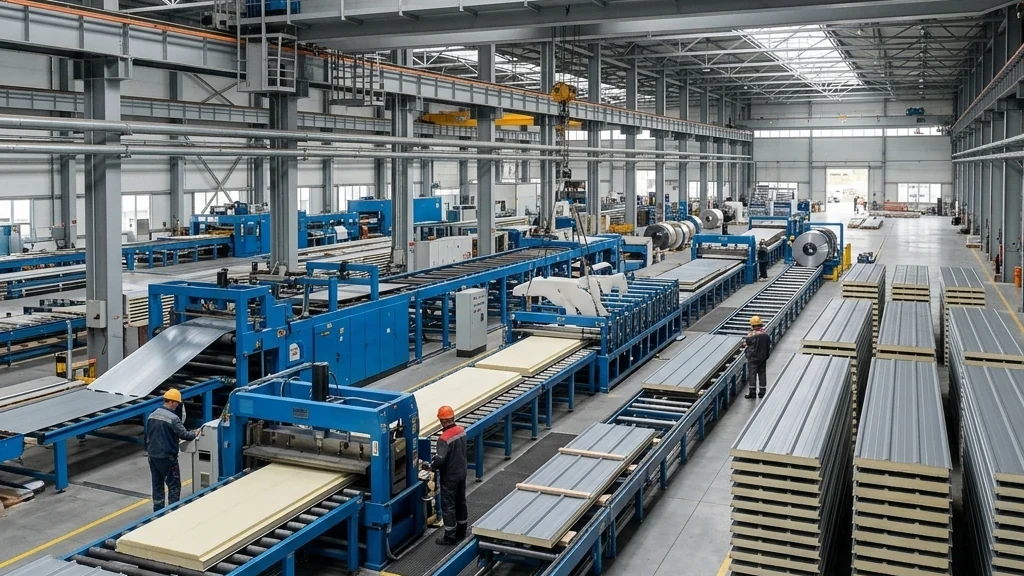
A sandwich panel production line is a long-term capital asset designed to operate for 15 years or more. The manufacturer’s design capability directly affects equipment lifespan, production speed, and panel quality consistency. Cases where a low-cost equipment purchase leads to frequent breakdowns and rising defect rates — ultimately driving total cost of ownership (TCO) higher — are all too common in the industry.
A manufacturer’s technical level encompasses far more than a single machine. It includes the ability to design an integrated line, the stability of the control system, and the flexibility to handle various core materials. Choosing a manufacturer is, in effect, determining your production competitiveness for the next decade or more.
7 Criteria to Evaluate
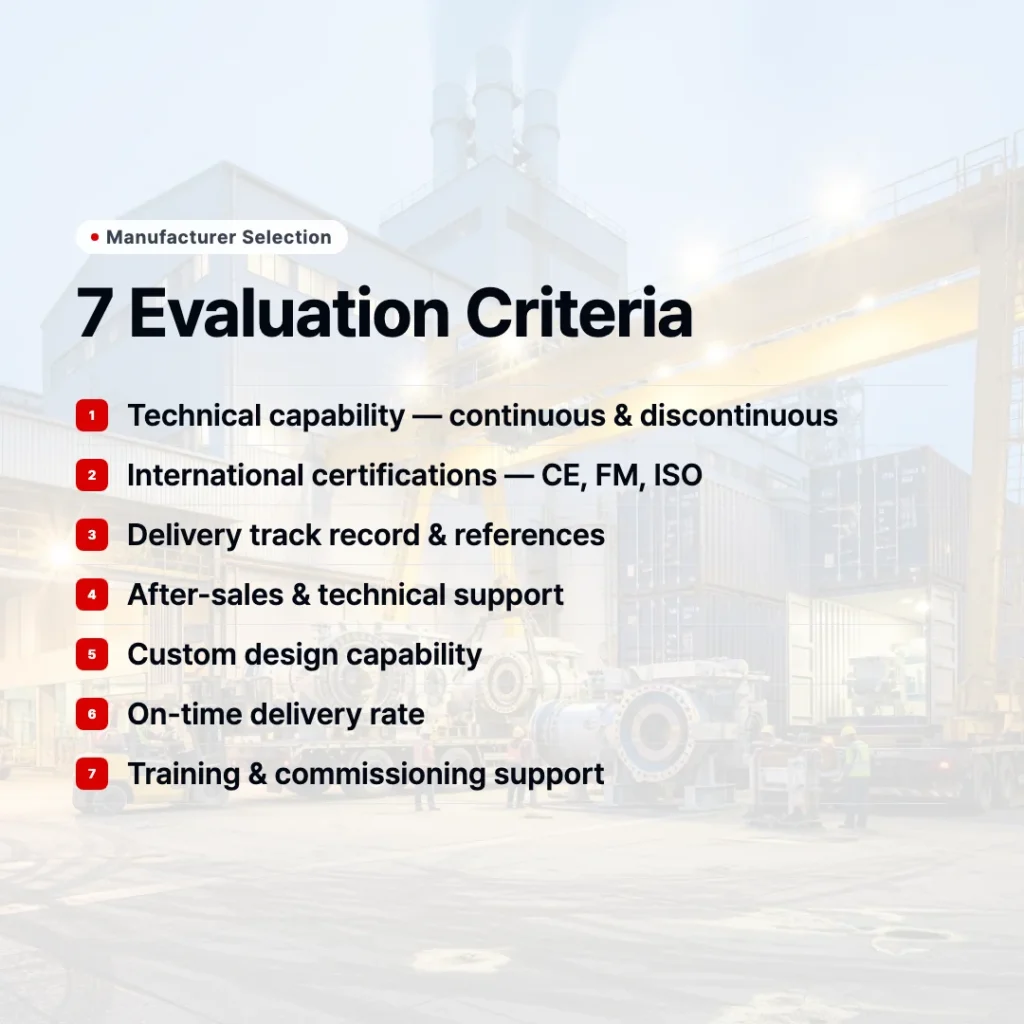
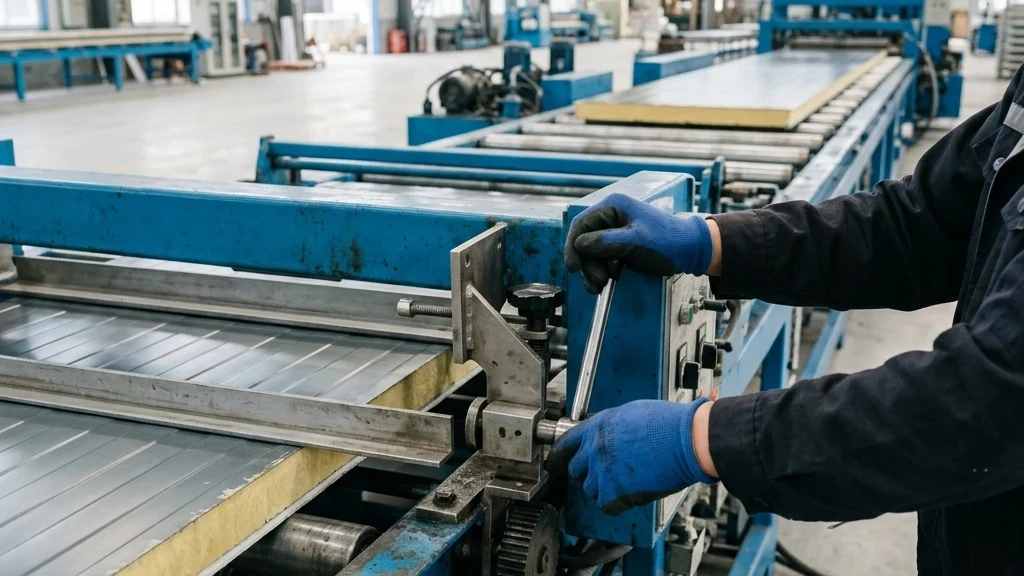
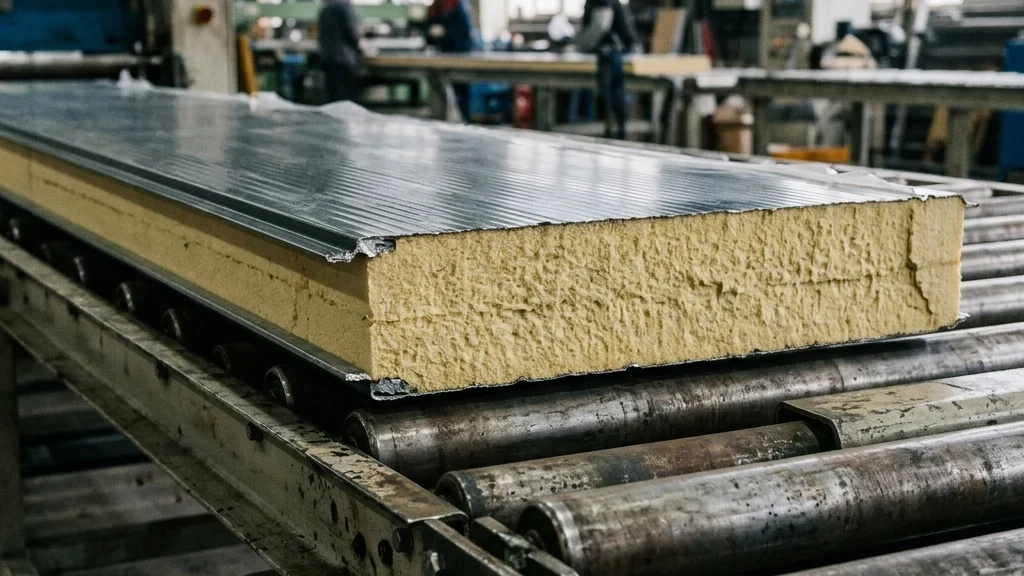
First, technical capability. Determine whether the manufacturer can design both continuous and discontinuous lines, and whether they have experience with a range of core materials including PUR/PIR, EPS, and mineral wool. Second, international certifications. CE marking, FM approval, and similar credentials provide objective evidence that the equipment meets quality standards accepted in global markets.
Third, delivery track record. The number of operational references and the geographic diversity of installations are key indicators of manufacturer reliability. Fourth, after-sales and technical support. Verify that remote diagnostics, on-site engineer dispatch, and consumables supply remain available after overseas installation.
Fifth, custom design capability. The manufacturer must be able to tailor the line to your factory layout, production targets, and panel specifications. Sixth, on-time delivery rate. The ability to complete manufacturing and installation on schedule directly affects when you start recouping your investment. Seventh, training and commissioning support. Systematic training for operations staff and hands-on support during the commissioning period determine how quickly production stabilizes.
For a deeper understanding of production line types and their technical differences, refer to the article “Sandwich Panel Production Line: Types, Technology & How to Choose.”
Korean vs. Chinese vs. European Sandwich Panel Machine Manufacturers
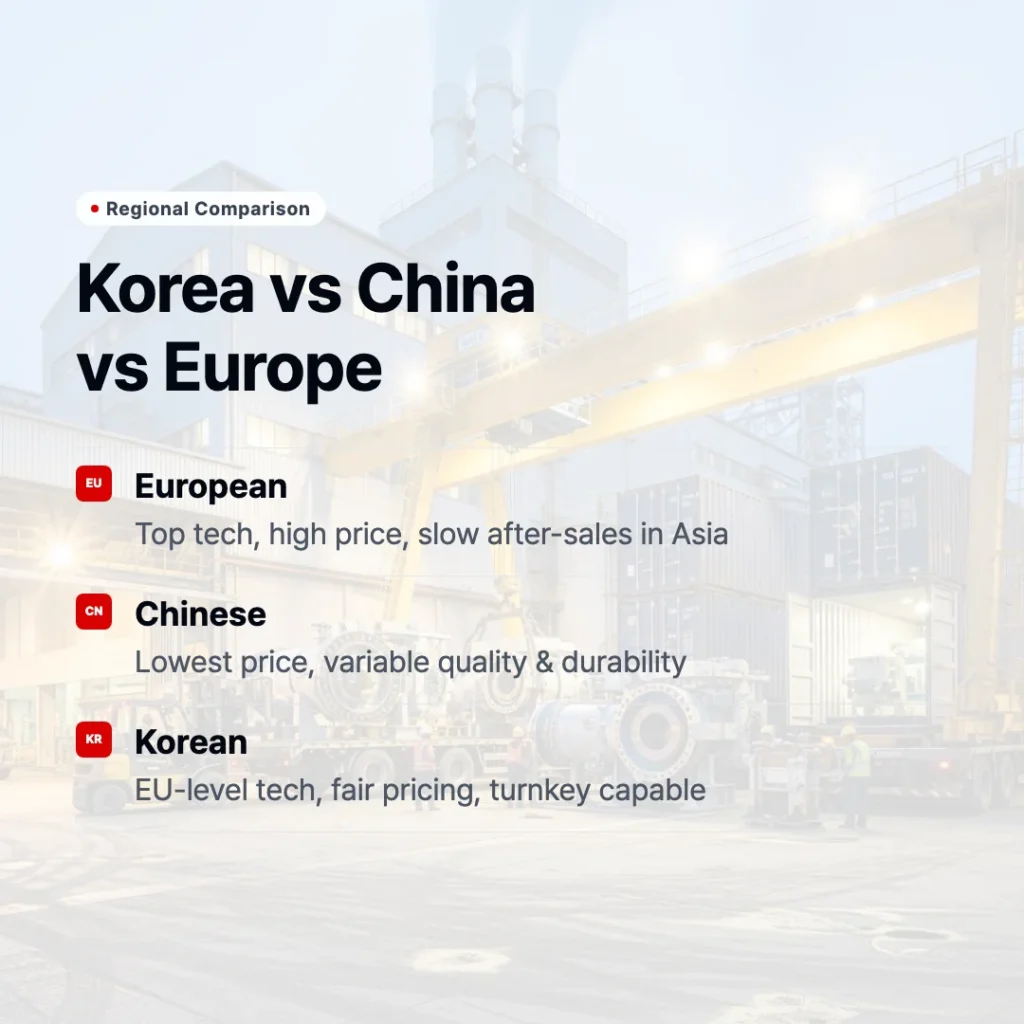
European manufacturers are known for their long heritage and high technical standards. They possess deep know-how in continuous line design and offer advanced levels of automation. However, pricing is considerably higher, lead times tend to be longer, and the cost and speed of dispatching engineers for after-sales service can be disadvantageous for factories located in Asia.
Chinese manufacturers offer the strongest price competitiveness. However, quality can be inconsistent, and they may show limitations in projects requiring top-tier control systems and precision. There is also variability in long-term durability and the consistency of post-delivery support.
Korean manufacturers occupy a position that combines European-level technology with reasonable pricing and fast after-sales response for the Asian region. Notably, certain Korean companies offer turnkey capabilities — covering everything from design through installation, commissioning, and training in a single package — making them particularly suitable for overseas investors setting up a factory for the first time.
How to Verify Certifications and References
Certifications presented by a manufacturer must be verified against the original source. For CE marking, confirm that a Notified Body number from an EU-accredited certification agency is clearly stated. For FM approval, check whether the certification can be looked up in FM Global’s official database.
The most reliable way to verify references is to visit an operational site in person. When a manufacturer readily arranges a reference visit upon request, it signals confidence in their equipment. During the visit, ask the on-site operators directly about line uptime, defect rates, and maintenance frequency.
If you are planning a factory from the ground up, the article “How to Start a Sandwich Panel Factory: Step-by-Step Planning Guide” provides a comprehensive overview of the entire process.
The KINDUS Approach
KINDUS has been exclusively designing and manufacturing sandwich panel production equipment since 1995 — a track record spanning three decades. With over 170 completed projects worldwide, the company delivers turnkey solutions tailored to the specific requirements of each site.
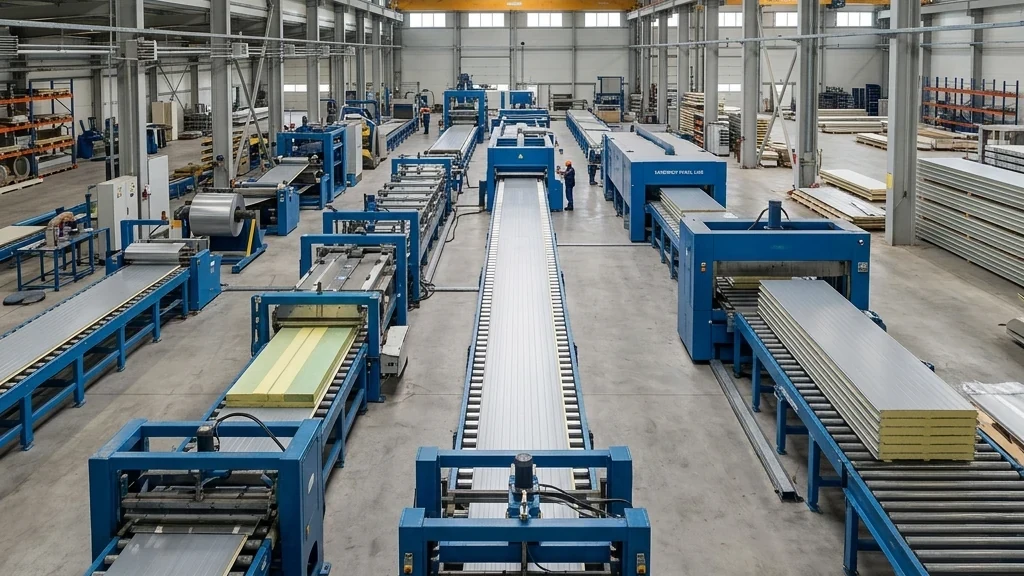
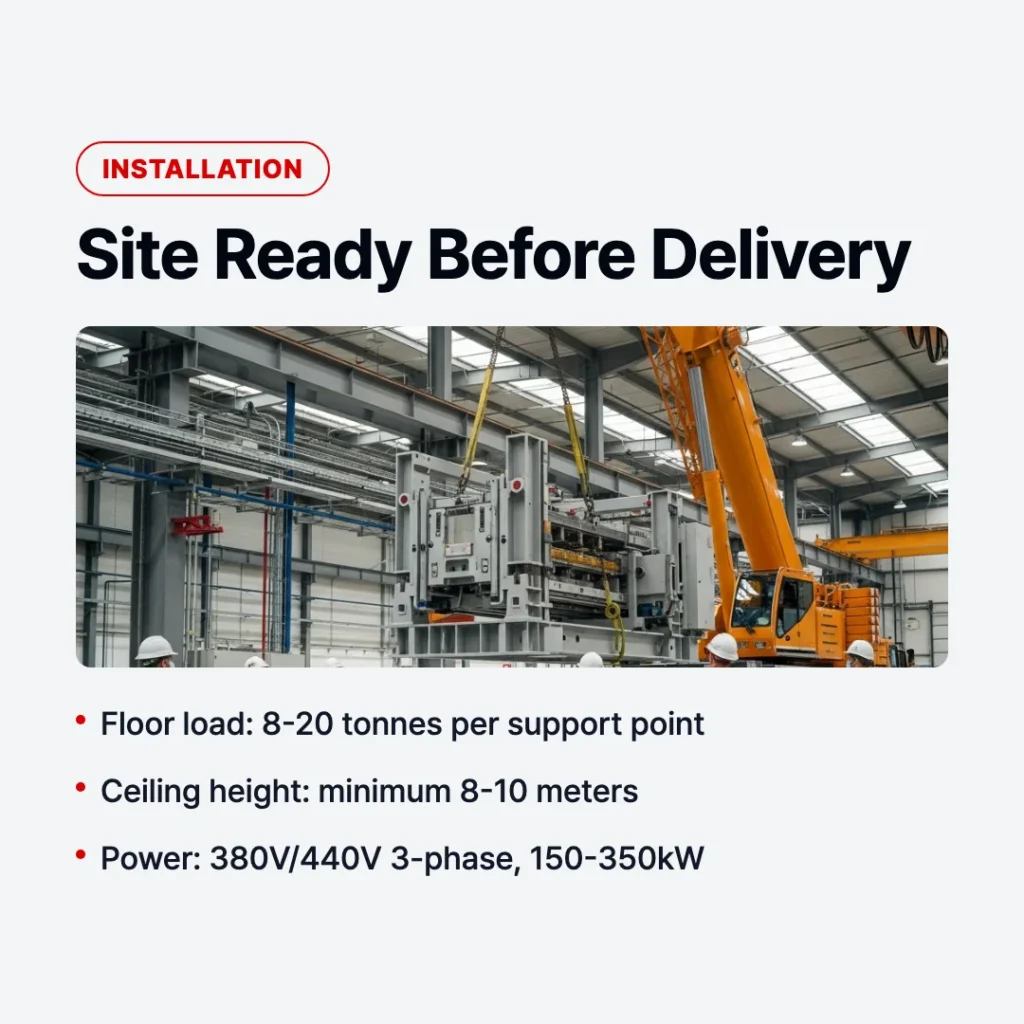
A turnkey solution means more than simply delivering machines. It encompasses factory layout design, equipment manufacturing, ocean freight, on-site installation, commissioning, and operator training — all under a single point of responsibility. KINDUS executes this entire process with its own engineering team and continues to support stable equipment operation through remote monitoring and on-site after-sales visits following installation.
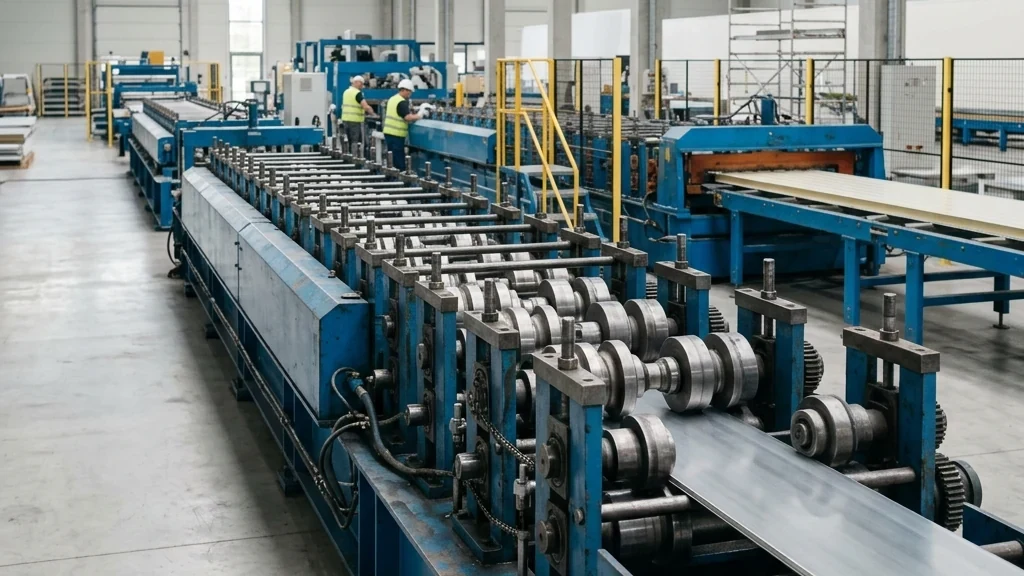
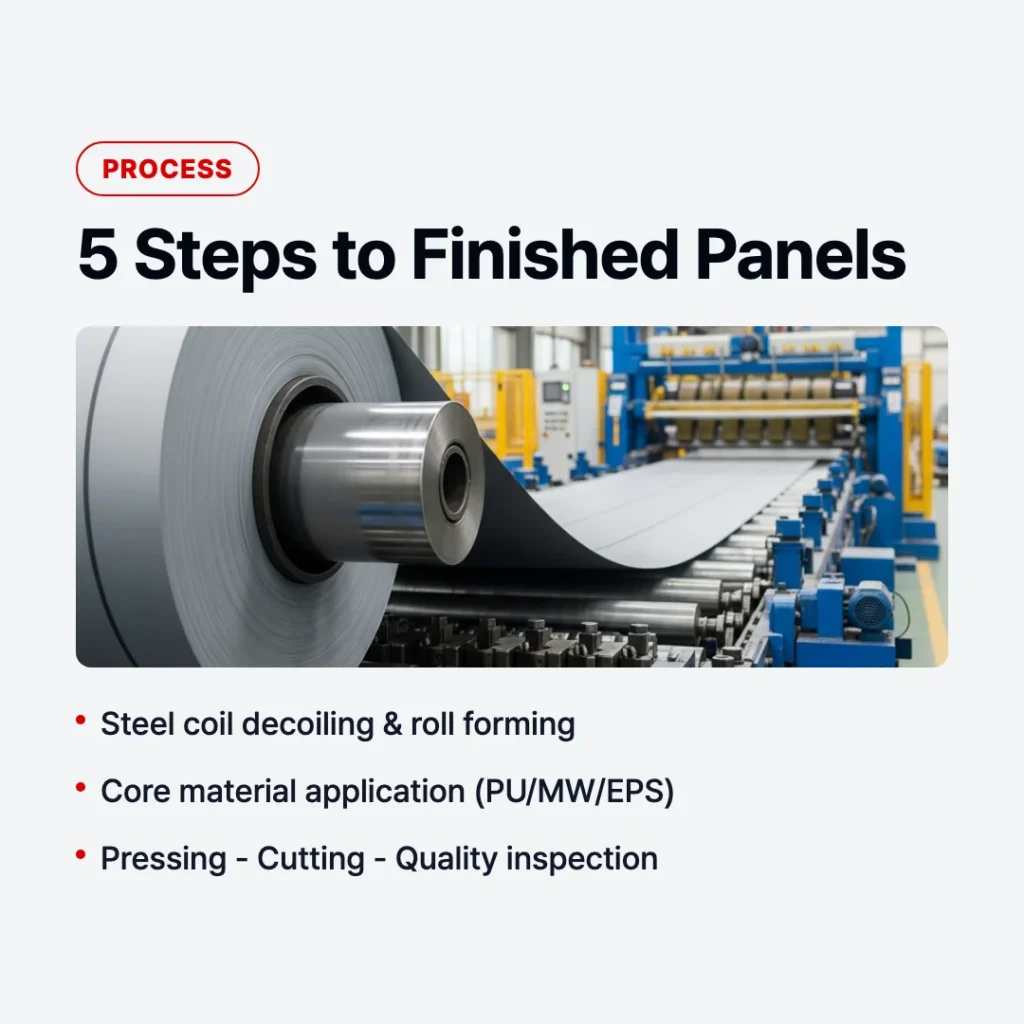
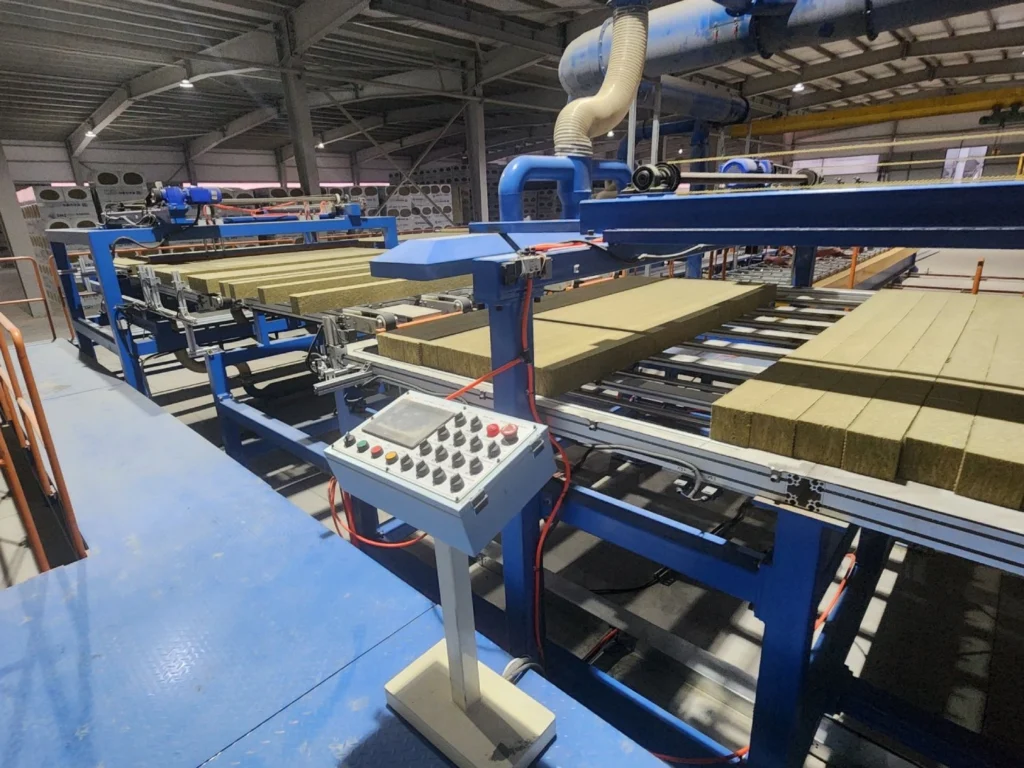
The company’s technical portfolio covers continuous PUR/PIR lines, EPS lines, mineral wool lines, and more. KINDUS also provides consulting to recommend optimal specifications based on each client’s production goals and market environment.
Frequently Asked Questions
What are the strengths of Korean manufacturers?
They offer European-level technology while providing a balanced package of pricing, lead time, and after-sales response speed. This is especially advantageous when exporting equipment to growth markets in Asia, the Middle East, and Africa, where geographic proximity and time zone alignment provide logistical benefits. The availability of turnkey services from a single provider makes Korean manufacturers particularly well suited for first-time investors.
What certifications should I look for?
CE marking is mandatory for the European market. FM approval is important for insurance requirements and specific industries such as cold storage. ISO 9001 (quality management) is a baseline certification reflecting the manufacturer’s production management system. Required certifications vary depending on the regulatory environment of the target market where the equipment will be exported, so confirm requirements with the manufacturer in advance.
What is a turnkey solution?
A turnkey solution means everything is provided up to the point where you can turn the key and start production. Specifically, it covers factory layout design, equipment manufacturing, shipping, installation, piping and electrical connections, commissioning, and operator training — all handled by a single company. The primary advantage is eliminating the burden of coordinating multiple suppliers independently, while unifying project timelines and quality control under one responsible party.